In this biography
Quick facts
- Born
- 21 February 1933
- Died
- 21 April 2003
- Birthplace
- Tryon, North Carolina, United States
- Country
- United States
- Nationality
- American
- Known for
- Genre-crossing piano and vocal performances, Mississippi Goddam and civil rights music
- Birth name
- Eunice Kathleen Waymon
- Musical foundation
- Classical piano training and church music
- Stage name
- Used Nina Simone while performing in Atlantic City in 1954
- Early breakthrough
- I Loves You, Porgy became a hit in 1959
- Political composition
- Mississippi Goddam, written in response to the violence of 1963
- Memoir
- I Put a Spell on You, with Stephen Cleary, 1991
Why this life matters
Simone challenged the boundaries imposed on Black women performers. Her piano, arrangements, compositions and direct engagement with audiences made her a distinctive musical voice of the civil rights era.
Timeline
Key moments
Born Eunice Waymon
Born in Tryon, North Carolina, where church music and formal piano lessons shaped her early life.
The Nina Simone name
Began singing as well as playing piano at the Midtown Bar and Grill in Atlantic City.
An early recording breakthrough
Her interpretation of I Loves You, Porgy reached a national audience, and she recorded a concert at New York's Town Hall.
Nina Simone in Concert
The Philips album included Mississippi Goddam and drew on Carnegie Hall recordings made in March and April.
To Be Young, Gifted and Black
The song honored Lorraine Hansberry and expressed a message of Black dignity and possibility.
Death in France
Died at her home in Carry-le-Rouet after decades of recording and international performance.
A pianist's ambitions in segregated America
Nina Simone was born Eunice Kathleen Waymon on 21 February 1933 in Tryon, North Carolina. Church music and classical piano shaped her early training. Local supporters helped finance lessons, and Bach became a lasting musical reference. She attended the Allen High School for Girls in Asheville before pursuing further study and a hoped-for career as a concert pianist.
She studied at Juilliard while preparing to apply to Philadelphia's Curtis Institute of Music. Curtis did not admit her, a rejection she believed was racially motivated. She continued teaching, accompanying and taking private lessons. This background remained audible in her later work: piano technique and formal musical thinking were not a discarded apprenticeship, but foundations she carried into a different professional life.
Becoming Nina Simone without accepting a musical box
In 1954 Waymon took a job at Atlantic City's Midtown Bar and Grill, where playing piano also required singing. She adopted the name Nina Simone, drawing its second part from actress Simone Signoret. The work led toward a repertoire that crossed the boundaries of nightclub standards, blues, gospel and folk rather than reproducing a single established style.
Her debut album Little Girl Blue appeared in 1958, and I Loves You, Porgy became a hit in 1959. That September she recorded at New York's Town Hall. The live-session credits identify her as vocalist, pianist and arranger, a useful reminder of the several kinds of work inside a Simone performance. Although often marketed as jazz, her music retained classical structures and a breadth of sources that resisted a narrow genre label.
Turning the events of 1963 into a composition
Simone's friendships with Black writers and activists, especially Lorraine Hansberry, deepened her engagement with the freedom struggle. The murder of Medgar Evers and the bombing of Birmingham's Sixteenth Street Baptist Church in 1963 became catalysts for Mississippi Goddam. She wrote the song herself, giving political anger a deliberately forceful place within her professional repertoire.
The 1964 Philips album Nina Simone in Concert included it among performances recorded at Carnegie Hall. Its presence did not make the album a simple sequence of slogans: political songs stood alongside interpretations of other writers' material. Simone used arrangement, dramatic address and the encounter with an audience as parts of her argument. The song's restricted airplay also showed that reaching the recording studio did not guarantee unrestricted circulation.
Civil rights work beyond a single anthem
Simone performed benefits for civil rights organizations, including the Congress of Racial Equality and the Student Nonviolent Coordinating Committee. She also challenged demands that Black performers soften their anger for an audience's comfort. Her relationship to the movement included Black pride and increasingly militant positions, not only the reassuring image of an entertainer supporting a cause from a distance.
Her musical choices developed alongside those commitments. Four Women examined racialized experience through distinct female characters, while To Be Young, Gifted and Black honored Hansberry and addressed a younger generation's sense of possibility. Collaborations and friendships with writers such as Langston Hughes extended the conversation between words and music. Political engagement enlarged her repertoire without exhausting it: love songs, borrowed melodies and experiments in musical style continued beside the explicitly activist work.
An international life and a continuing musical legacy
From the 1970s Simone spent much of her life outside the United States, living in several countries before settling in southern France. She continued to tour and record, even as her circumstances and relationships with the music business changed. Her 1991 memoir I Put a Spell on You, written with Stephen Cleary, offered her own account of the life behind the stage persona.
A Single Woman followed in 1993. Simone died in Carry-le-Rouet on 21 April 2003, aged seventy. The Rock & Roll Hall of Fame inducted her in 2018, recognizing a career that crossed its own stylistic boundaries. Her enduring importance rests on that breadth: a pianist could remake a familiar song, a composer could confront public violence, and a performer could require listeners to consider their own position in the room.
Quick answers
Frequently asked questions about Nina Simone
- What was Nina Simone's birth name?
- She was born Eunice Kathleen Waymon in Tryon, North Carolina, on 21 February 1933. She used Nina Simone professionally while performing in Atlantic City in 1954.
- Was Nina Simone only a jazz singer?
- No. She was also a pianist, arranger and songwriter whose work crossed classical music, gospel, blues, folk, jazz and popular song. She resisted being confined to a single genre.
- Did Simone write Mississippi Goddam?
- Yes. She composed it in response to the racial violence of 1963, including Medgar Evers's murder and the Birmingham church bombing. It appeared on Nina Simone in Concert in 1964.
- Did she stop making music after leaving the United States?
- No. Simone continued international touring and recording. Her later work included A Single Woman in 1993, and she lived in southern France during her final years.
Keep exploring
Lives connected to this story
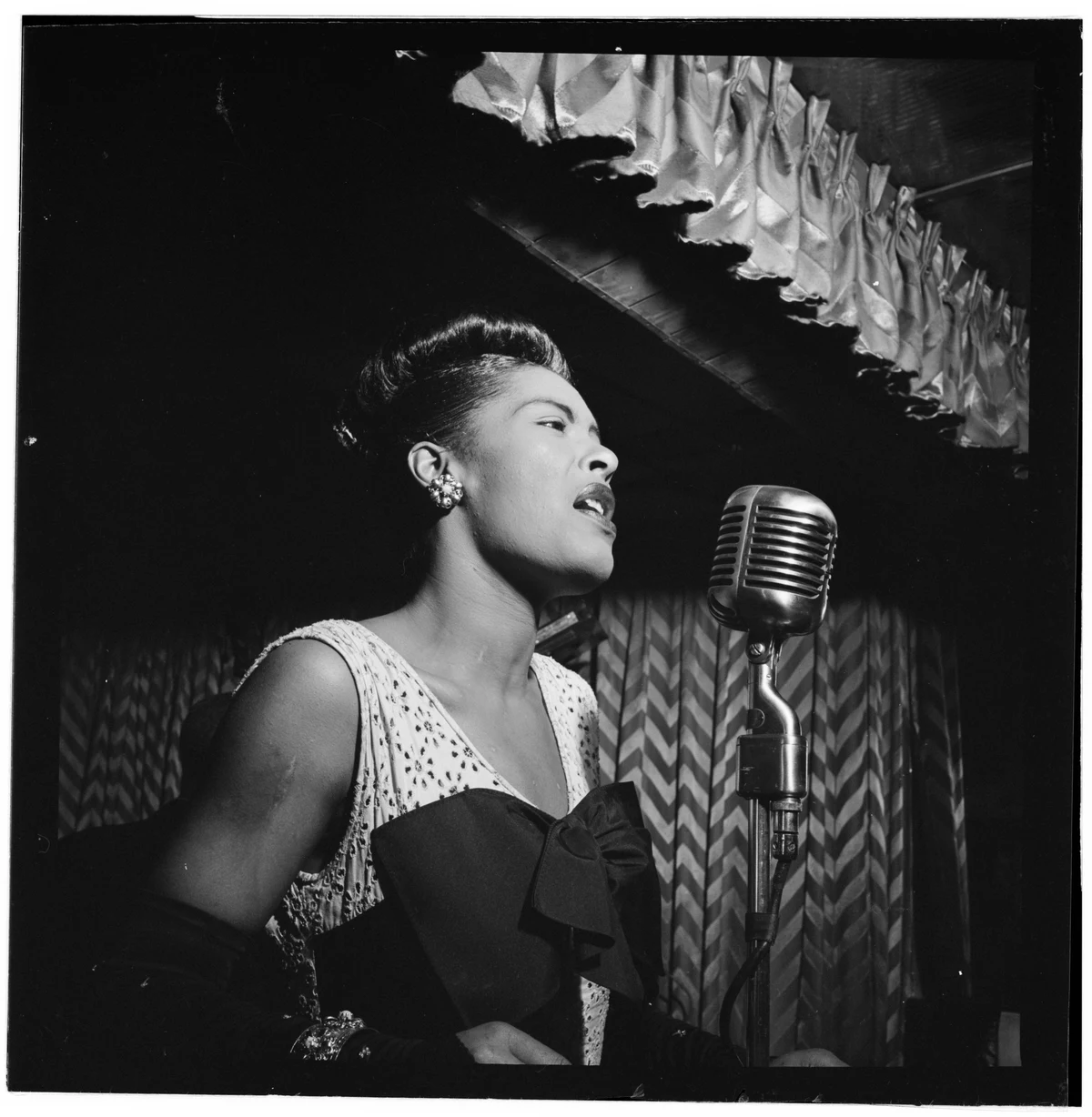
- Billie Holiday
Explore an important influence and an earlier example of a performer carrying political meaning through interpretation.
- Langston Hughes
Read about a poet in Simone's circle whose work also entered her musical repertoire.
- Paul Robeson
Compare another artist's connection between musical performance, racial justice and political conviction.
Sources and further reading
Explore the evidence
These references support the biography and offer further reading. Official records, first-person accounts and independent reporting provide different perspectives; image records document attribution and licensing.
- 1. Nina Simone artist legacy websiteBiography
- 2. National Women's History MuseumMariana Brandman: Nina Simone
Used for training, career and memoir authorship. Sources differ on the duration of Juilliard study and the date/form of later Curtis honors; those specifics are omitted. Her explanation of the Curtis rejection is attributed to her, not asserted as an independently proved admission finding.
- 3. North Carolina Department of Natural and Cultural ResourcesHigh Priestess of Soul Nina Simone Born
- 4. Nina Simone artist legacy websiteLive Sessions: original album credits and session information
Read the relevant Town Hall and 1964 In Concert credits. Kept Little Girl Blue's 1958 release separate from the 1959 Porgy hit. Did not adopt the site's conflicting first-Carnegie-concert claims or assign every In Concert track to one session date.
- 5. Rock & Roll Hall of FameNina Simone: 2018 inductee
- 6. Library of CongressAfrican Americans on the Recording Registry: Mississippi Goddam
The registry describes limited radio airplay. This biography does not infer a comprehensive legal ban across the South or a single documented cause for every commercial difficulty.
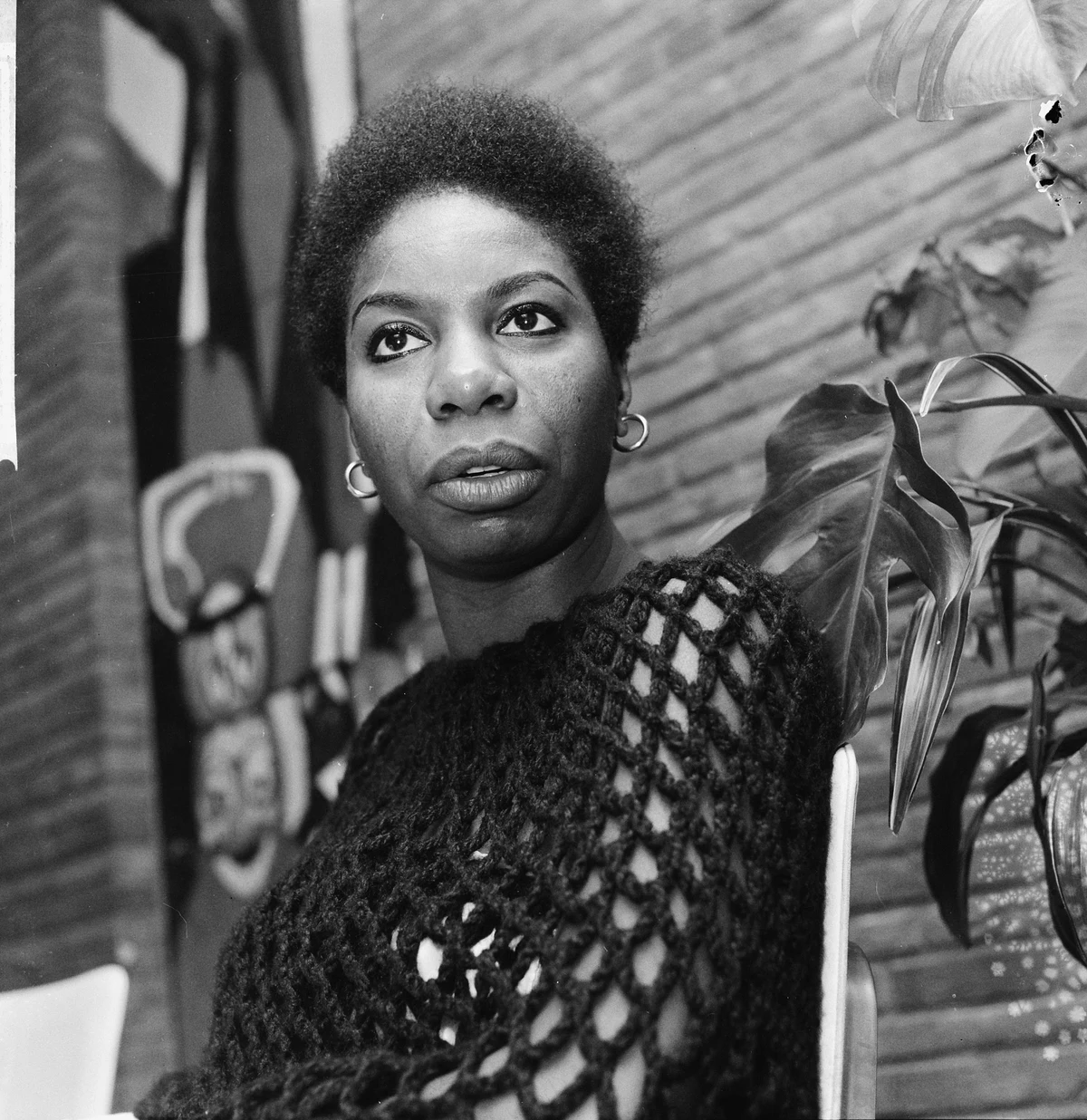
- 7. Nationaal ArchiefRon Kroon: portrait of Nina Simone, 14 December 1965, inventory 918-5601