In this biography
Quick facts
- Born
- 27 February 1858
- Died
- 1910
- Birthplace
- Near St George, Upper Canada
- Country
- Canada
- Nationality
- Not independently established
- Known for
- Domestic science teaching and the Women’s Institute movement
Why this life matters
Her work made household practices subjects for public instruction, while the records reveal distinct roles for authors, teachers and community organisers.
Timeline
Key moments
Stoney Creek institute
Encourages an organising effort for rural women.
School book
Publishes Public School Domestic Science.
Teacher education
Works to establish institutions for household science.
Growing up and entering public education
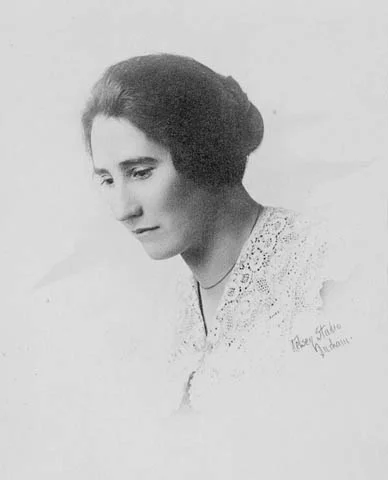
Born Adelaide Sophia Hunter near St George in what was then Upper Canada, Hoodless became an advocate of domestic science. Biographical authorities disagree about her birth year: the Dictionary of Canadian Biography gives 1858 and explicitly identifies 1857 as a common variant, while the national historic designation uses 1857. The difference is best retained as a source note instead of letting an anniversary silently settle it.
A curriculum rather than a collection of recipes
In Public School Domestic Science, Hoodless connected practical kitchen and household work to lessons on measurement, health and observation. The preface and directions for teachers describe a course in which explanation and practice support each other. Putting those activities into school made them a matter of teacher preparation and curriculum time as well as inherited family practice.
Institute organisation was collaborative
Hoodless encouraged the founding of the Stoney Creek Women’s Institute in 1897. The historic designation also credits Janet Lee with drafting its constitution and identifies Erland Lee’s support. This division of work helps explain the institute’s shape: a speaker can articulate a purpose, while local organisers establish rules, arrange meetings and keep the association working after its first event.
Sources for this section: [3]
Teaching capacity and social expectations
Her subsequent efforts promoted formal household science instruction and training. The work expanded the public recognition of skills associated with the home, while the textbook also reflects assumptions about who would perform that work. Both sides matter when reading the reform. The institutions made a field more visible and teachable without necessarily redistributing the responsibilities it addressed.
Quick answers
Frequently asked questions about Adelaide Hoodless
- Did Hoodless write the Stoney Creek institute constitution?
- Parks Canada credits Janet Lee with drafting it and Hoodless with inspiring the organising effort.
Keep exploring
Lives connected to this story
- Thérèse Casgrain
Read another Canadian reformer who organised through associations.
- Octavia Hill
Compare the use of practical training and management in a different reform movement.
Sources and further reading
Explore the evidence
These references support the biography and offer further reading. Official records, first-person accounts and independent reporting provide different perspectives; image records document attribution and licensing.
- 1. Dictionary of Canadian Biography, University of Toronto and Université LavalHunter, Adelaide Sophia (Hoodless)
Uses 27 February 1858 and flags 1857 as a variant. Parks Canada’s designation uses 1857.
- 2. Parks CanadaAdelaide Hunter Hoodless, National Historic Person
- 3. Parks CanadaFirst Women’s Institute, National Historic Event
- 4. Adelaide Hoodless, Canadiana digitised editionPublic School Domestic Science, 1898
- 5. Adelaide Hoodless, digital transcription of 1898 bookPublic School Domestic Science: preface and teacher’s directions