
The short answer
Banishment did more than move a prominent activist away from Johannesburg. It combined distance with rules governing meetings and everyday contact. The Brandfort case shows how repression could enter household life, why practical solidarity mattered, and why neither official isolation nor later political influence produced one uniform local experience.
Chronology
A timeline of the turning points
Removal to Brandfort
Winnie Mandela and daughter Zindzi are taken to a restricted residence.
Supporters travel to find them
Helen Joseph describes the distance and arrangements required for a visit.
Another visit attracts police attention
Joseph recalls questioning after a birthday visit.
Local connections develop
Community initiatives and youth involvement coexist with surveillance and unease.
House attacked
A petrol-bomb attack precedes her refusal to return from Johannesburg.
Retrospective investigation
The TRC records repression, community work and conflicting local responses.
Removal combined an unfamiliar setting with material deprivation
On 16 May 1977, Winnie Mandela was removed to Brandfort with her younger daughter Zindzi. House 802 lacked basic services. Helen Joseph, who travelled there the following morning with Barbara Waite and Father Leo Rakale, recalled a small house without internal doors or ceilings and with water outside.
SAHO’s account also identifies a language barrier: few local residents spoke her home language, isiXhosa. The policy attacked access to familiar people and settings, not merely freedom to give speeches. Supporters first had to discover where the family had been placed and then organise a lengthy journey.
Restrictions changed the shape of an ordinary visit
Joseph described separating the visitors so that Winnie spoke to one person while Joseph, herself a listed person, remained with Zindzi. Rules against gatherings and communication with listed people made an apparently simple reunion difficult. Daily police reporting and restrictions at night and weekends further structured the household’s time.
These details show why banishment and banning were connected but distinct controls: one fixed a place of residence, while the other constrained relationships and activity. Zindzi was not herself banned. Nevertheless, a daughter’s presence could not restore an ordinary family life insulated from surveillance or the rules imposed on her mother.
Distance and police attention made solidarity costly
In Joseph’s recollection, transport and distance made family visits uncommon. Police questioned other supporters and attempted to obtain statements that could be used against Winnie. Joseph and Waite later encountered police during a birthday visit, despite taking care over whom each person could meet.
Communication could also demand long waits at a public telephone, as SAHO recounts through Helen Suzman’s observation. These were practical costs borne by a wider network, not only by the person named in the order. Joseph’s account is a participant’s memoir excerpt, not a complete record of every visit or prosecution.
Local relationships complicated the intended isolation
In 2018, former neighbour Nora Moahlodi recalled greeting Winnie despite official attempts to discourage contact. Her account, reported by Andrew Moses, describes encouragement and support that residents remembered long afterwards. It is valuable local testimony, but her affection should not be expanded into a claim that everybody responded identically.
A clinic became part of the household’s community work, its existence also documented in later restoration reporting. The TRC recorded parental anxiety about influence over young people. Community activity challenged isolation, while growing prominence could generate local tensions. Both support and disagreement belong in the account.
Leaving Brandfort was not the same as receiving unrestricted freedom
The TRC records an August 1985 petrol-bomb attack while Winnie was in Johannesburg. She stayed in Soweto rather than returning as police demanded. Its account also preserves testimony about security-police involvement; testimony and an adjudicated criminal conviction are not interchangeable.
Her departure ended this period of forced residence in practice, not apartheid’s broader machinery of repression. Nor does the Brandfort experience decide the separate questions about violence surrounding her later household. Those require their own evidence, examined in the biography. Understanding state abuse and scrutinising later public authority are compatible responsibilities, rather than competing versions of remembrance.
Continue the chronology
Related history guides
Biography context
Explore Brandfort, Free State, South Africa through connected lives
Winnie Madikizela-Mandela
Continue into political service, court outcomes and distinct commission findings.
Explore the biographiesDirect observation and interventionHelen Suzman
Compare prison advocacy and efforts to expose the consequences of restrictions.
Explore the biographiesFamily separationNelson Mandela
Place forced residence alongside a different experience of imprisonment.
Explore the biographiesConnected biographies
Lives connected through restrictions and practical support

1936–2018
Winnie Madikizela-Mandela
Social worker, anti-apartheid activist and politicianWinnie Madikizela-Mandela was an activist in her own right, subjected to detention, torture and forced residence while Nelson Mandela was imprisoned. Her community work and political prominence coexist with criminal convictions and serious commission findings that require precise, separate treatment.Read biography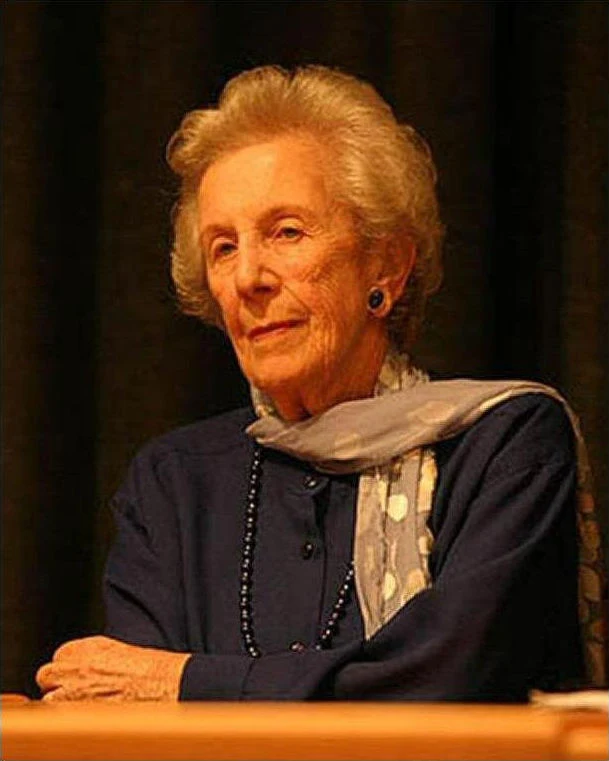
1917–2009
Helen Suzman
Parliamentarian and human-rights advocateHelen Suzman used a seat in the whites-only Parliament to challenge discriminatory laws and investigate their consequences. Her visits and interventions mattered to prisoners and their families. Her liberal politics also involved positions, including opposition to economic sanctions, that divided opponents of apartheid.Read biographyQuick answers
Common questions
- Was Brandfort a voluntary move?
- No. It was forced residence under a banishment order.
- Was her daughter also banned?
- No. Zindzi was affected by the restrictions but was not herself banned.
- Did every local resident respond in the same way?
- No. Supportive recollections coexist with recorded anxiety and disagreement.
- Did returning to Soweto mean apartheid restrictions had ended?
- No. Departure from Brandfort was not general political freedom.
Primary and institutional sources
How this history was checked
Joseph’s selected Brandfort passages were compared with independent historical synthesis, a reported neighbour interview and the TRC’s limited regional account. No whole memoir or complete commission record reading is claimed. The image is a 2008 portrait, not a photograph of the removal. This article was reviewed on Reviewed 24 October 2026.
- Helen Joseph / SAHO archiveSide by Side: selected Brandfort visits in Acts of conscience
- South African History Online16 May 1977 banishment: household, language and communication
- Andrew Moses / IOL6 April 2018: Brandfort house and a neighbour’s recollection
- Loyiso Sidimba / IOL24 March 2019: selected house and clinic history in restoration reporting
- Truth and Reconciliation Commission / O’Malley ArchivesVolume 3, chapter 4, paragraphs 57–66: Brandfort
- Nelson Mandela Foundation3 April 2018 remembrance of Winnie Madikizela-Mandela
- Truth and Reconciliation Commission / Polity archiveVolume 2, chapter 6: selected Mandela United Football Club findings
- Rotational / Wikimedia CommonsWinnie Mandela00: photographer’s own-work public-domain release