
The short answer
The Programme of Action adopted in December 1949 is often reduced to a list of protest methods. Its text also addressed resources, education and economic organisation. Comparing the resolution with the next year’s executive report shows the distance between agreeing on a programme and making collective decisions under pressure.
Chronology
A timeline of the turning points
Youth League established
A younger organising current presses for more active resistance.
National Party takes office
The political setting sharpens demands for a different response.
Programme adopted
The conference endorses a national policy and organisational programme.
Council of Action appointed
The executive reports creating the body intended to implement it.
Decisions and joint protest
Disputes over authorisation precede a national day of protest and mourning.
Defiance Campaign
Later coordination gives practical form to civil disobedience.
Youth pressure concerned methods as well as generational succession
The Youth League emerged in 1944 to develop younger leadership and intensify resistance to segregation. Its founders included Anton Lembede, Nelson Mandela, Oliver Tambo and Sisulu, alongside other organisers. SAHO traces its promotion of boycotts, strikes and defiance into the programme adopted by the parent organisation in 1949. The National Party’s arrival in government in 1948 provided an increasingly hostile setting.
Richard Monroe’s later Marxist interpretation places the change beside wartime worker mobilisation and the repression of the 1946 mine strike. This is an interpretation of pressure from below, not evidence that one small group single-handedly invented mass resistance. The programme resulted from an existing movement confronting changing conditions.
Political independence required an organisation capable of sustained action
The adopted text rejected white domination and demanded direct representation. Alongside boycott, strikes, civil disobedience and non-cooperation, it proposed a national fund, political communication and a Council of Action.
Resources and authority belonged beside tactics. A continuing campaign required money and communication, not only a decision to protest. The resolution described intended organising capacity, not proof that every branch already possessed it.
Sources for this section: [1]
Education and economic organisation were not peripheral additions
The programme proposed enterprises, stronger worker organisation and study of rural economic conditions. Educational plans connected intellectuals, peasants and workers, youth training and overseas scholarships; cultural work joined the national struggle.
This was broader than a demonstration timetable. Livelihoods and future organisers mattered alongside immediate protest. Yet proposed institutions were not completed achievements: adopting a plan did not itself establish its schools or enterprises.
Sources for this section: [1]
The first implementation disputes concerned who could authorise action
The December 1950 executive report says the Council of Action was appointed that February under James Moroka. It also records disagreement over the Transvaal Defend Free Speech Convention’s proposed May Day action: provincial branches were initially told to await a national ruling. The convention involved Congress organisations and communists, creating an immediate question about overlapping responsibilities.
This was not a simple opposition between action and inactivity. Different bodies were making decisions with different mandates. The report’s own introduction admitted that popular mobilisation was moving ahead of leadership. That contemporary acknowledgement complicates the idea of a perfectly controlled national plan unfolding without internal friction after the conference vote.
Sources for this section: [2]
Later campaigns translated a mandate rather than mechanically copying it
The executive report describes further consultations before 26 June 1950 became a national day of protest and mourning. Monroe argues that the strike calls of 1950–1951 helped the ANC become a focus for a broader movement. His class-based explanation should be read as a stated analytical position, not as the programme’s own words.
SAHO identifies the 1952 Defiance Campaign as a subsequent expression of the new approach. That campaign required its own joint planning and volunteer machinery. The programme supplied direction; later organisers still had to choose targets, build alliances and respond to repression. It was neither an immediate victory nor a fully specified script for everything that followed.
Continue the chronology
Related history guides
From programme to coordinated defiance
Follow the distinct planning, volunteer training and support work of the later campaign.
Read the timeline1977–1985How restrictions targeted political connections
Compare building an organisation with the state’s later attempts to isolate an activist.
Read the timelineBiography context
Explore Bloemfontein, South Africa through connected lives
Connected biographies
Organisers within a wider institutional change
1912–2003
Walter Sisulu
ANC organiser, political prisoner and deputy presidentWalter Sisulu helped turn political commitments into durable organisation. His work linked the Youth League, mass campaigns, underground resistance and prison education. After release, he returned to rebuilding the ANC and supporting negotiations rather than becoming a government president.Read biography
1918–2013
Nelson Mandela
Anti-apartheid leader and President of South Africa, 1994–1999Nelson Mandela was a lawyer, ANC organiser, co-founder of Umkhonto we Sizwe and political prisoner who became South Africa’s first Black president after an election open to all races. His public life joined resistance and negotiation, followed by the difficult work of governing a deeply unequal country.Read biography
1917–1993
Oliver Tambo
Teacher, lawyer and ANC president in exileOliver Tambo moved from teaching and legal practice into the leadership of the ANC during its long prohibition. Exile placed him at the centre of international advocacy, organisational disputes and armed struggle. His return preceded democratic elections, which he did not live to see.Read biographyQuick answers
Common questions
- Was the programme only a list of protest tactics?
- No. Funding, political communication, economic organisation and education also featured.
- Did adoption mean immediate agreement over every action?
- No. The 1950 executive report records disputes over authority and timing.
- Was it itself the Defiance Campaign?
- No. The 1952 campaign was a later organised initiative.
- Did it report that its proposed institutions already existed?
- No. Proposals and instructions must not be read as completed achievements.
Primary and institutional sources
How this history was checked
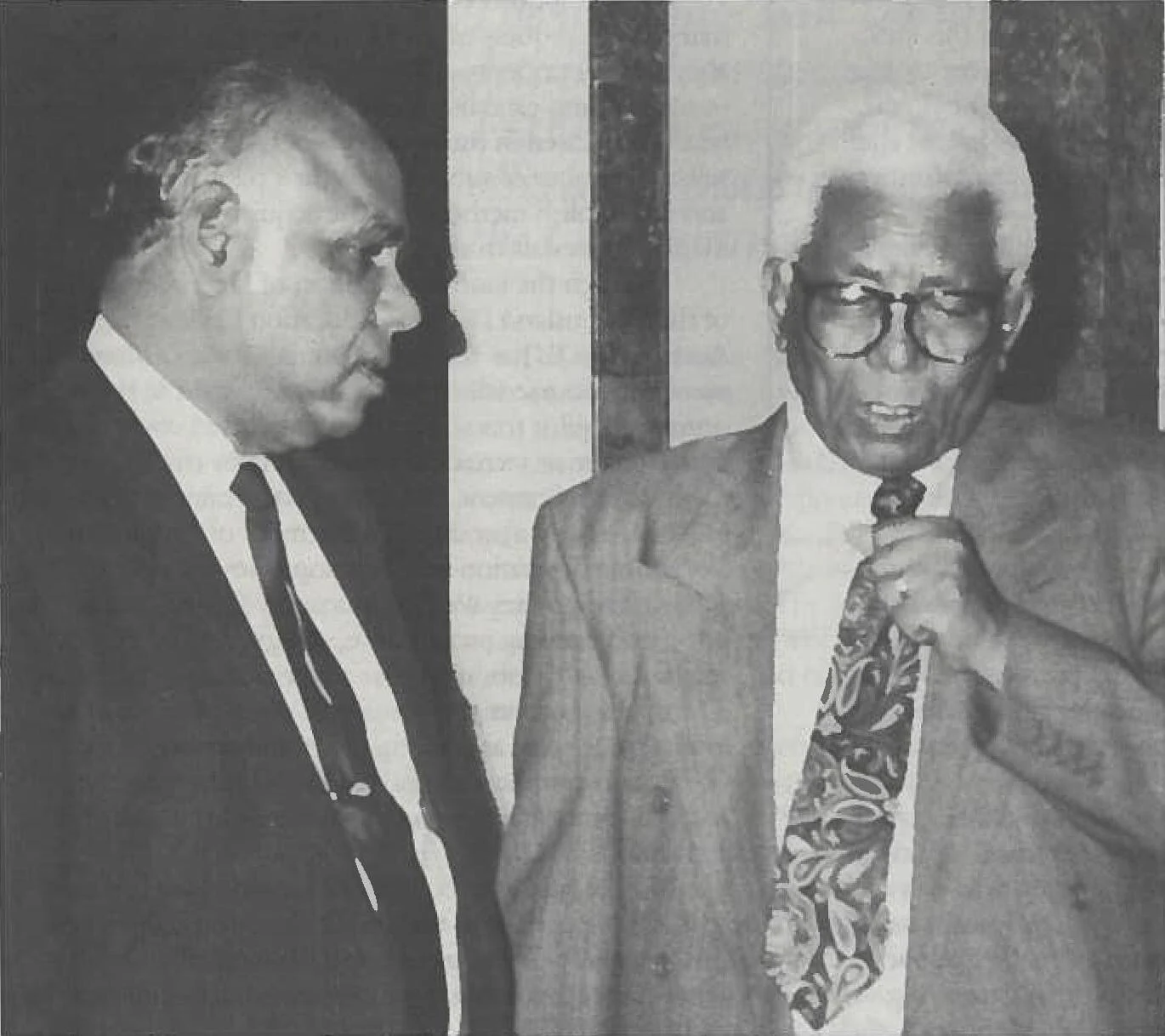
The adopted programme was read on the official ANC page. Selected contemporary executive-report passages were compared with organisational history and Monroe’s explicitly Marxist interpretation. No complete book reading is claimed. The photograph shows a 1991 education visit, not the 1949 conference. This article was reviewed on Reviewed 24 October 2026.
- African National Congress17 December 1949 Programme of Action: adopted policy
- ANC National Executive Committee / SAHO archiveDecember 1950 draft report: Council of Action and protest decisions
- South African History OnlineANC Youth League: selected 1944–1952 organisational history
- Richard Monroe / SAHO archiveLessons of the 1950s: selected opening of The Rise of the ANC
- Commonwealth of Learning / Wikimedia CommonsSisulu visits Commonwealth of Learning: complete supplied photograph