
The short answer
How did the Rosenwald school programme combine grants, public funds and Black community contributions?
Read the records together
Evidence, functions and interpretation
Compare the particular records and mechanisms discussed in this study.
| Record or mechanism | What it establishes | The distinct question |
|---|---|---|
| NPS biography | Explains the donor’s business and wider philanthropy. | It is not an individual school’s complete account. |
| Programme lesson | Identifies matching, labour, materials and plans. | Matching should not be described as the donor paying every cost. |
| Library of Congress totals | Separate schools from other educational buildings. | Different categories produce different totals. |
The grant was one part of a funding arrangement
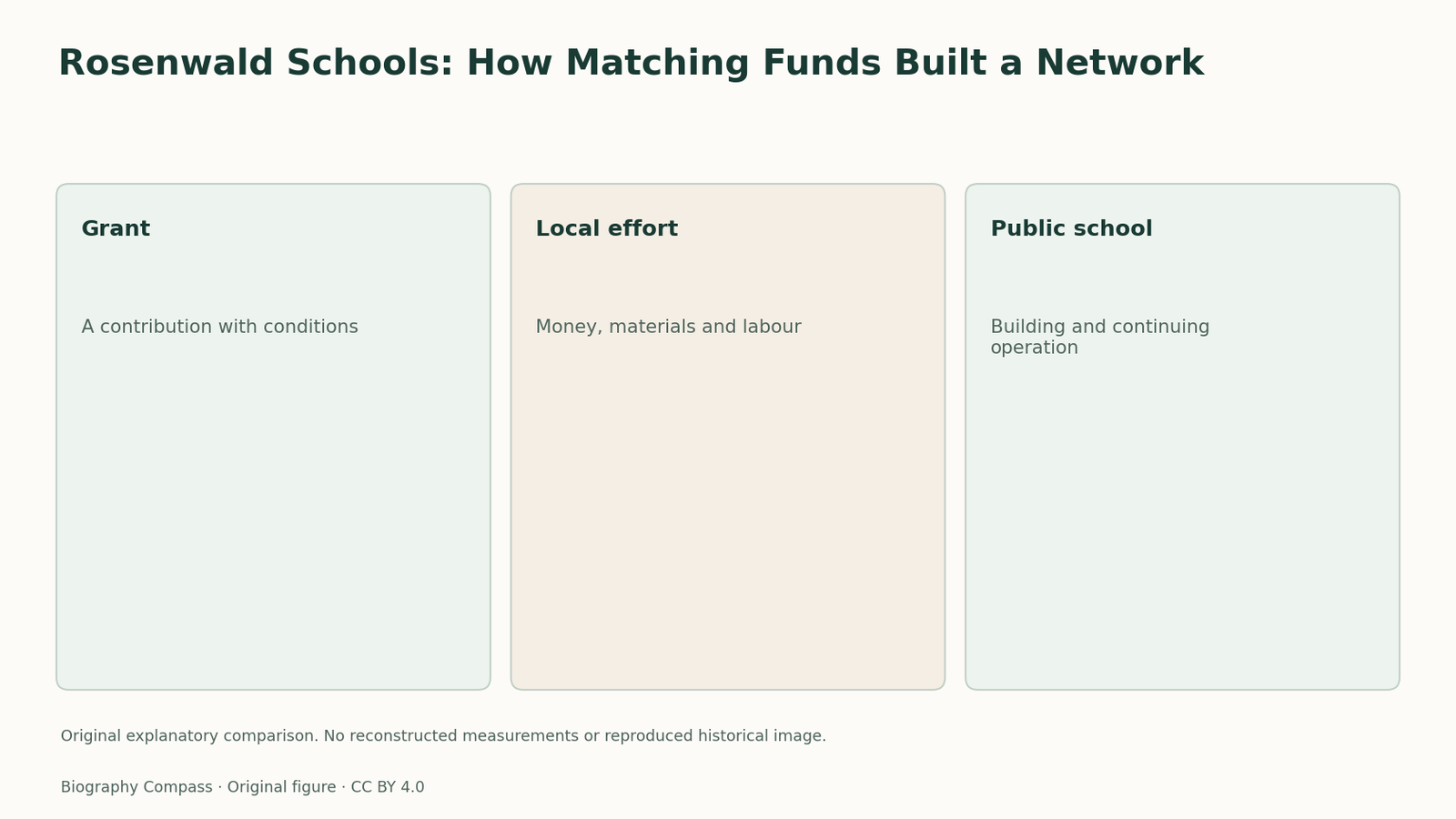
The Rosenwald school programme grew from the early partnership with Booker T. Washington and Tuskegee. Its later matching requirements made a grant conditional on contributions from the community and public school authorities. This matters for interpreting the buildings. A plaque carrying a donor’s name can suggest a complete private gift, whereas the financing depended on several sources. The grant was intended to help make a project possible, while the local contribution demonstrated commitment and supplied part of the necessary resources.
Community contributions were more than cash
The National Park Service lesson identifies building materials and labour alongside money raised through local events. Those forms of contribution had real value even when a financial table records them differently. For communities with limited cash, fundraising and practical work required substantial effort. The programme operated within a system that disproportionately neglected Black education. A matching requirement could mobilise action, but it also asked already disadvantaged people to help supply facilities that a public system should have provided adequately. Both aspects belong in the explanation.
Sources for this section: [3]
Plans connected the money with a usable building
The programme supplied schoolbuilding plans as well as grants. The lesson traces an early Tuskegee design phase and later planning from the fund’s Nashville office. Such requirements linked expenditure with an intended educational setting. A completed structure needed classrooms fit for use, while a continuing school also needed teachers and an operating budget. These are separate requirements. A construction fund can improve the physical setting without itself supplying every element of education. This distinction explains why public participation and later maintenance were consequential parts of the model.
Sources for this section: [3]
Count the category before comparing totals
The Library of Congress gives 4,977 schools together with separate figures for teachers’ homes and shop buildings. Adding all educational facilities produces a different total from counting schools alone. The distinction is useful when comparing sources that round the programme to about 5,000 schools or describe a larger number of buildings. It is not necessary to force every total into one number. The appropriate question is what each count includes and which end date it uses. Construction dates also need not be the same as the date of an initial grant.
An original grant-reading task
Consider a hypothetical school budget with a private grant, public money, community cash and donated labour. If only the grant is named on a memorial, has that memorial described the entire financing? The checked answer is no. Next ask which of those entries would establish that teachers were paid five years later. None necessarily does: a construction budget and an operating account answer different questions. Finally, separate schools from ancillary buildings before calculating a programme total. This original exercise makes the financing and counting distinctions visible without inventing a historical school’s accounts or a universal matching ratio.
Continue the chronology
Related history guides
Sears’s 1906 Chicago Plant: Catalogue to Dispatch
Explore the different jobs of printing, administration, merchandise handling and power at Sears’s Chicago plant, using dated records to distinguish later additions.
Read the timeline1862–1870sThe Peabody Donation Fund: Gift, Homes and Access
Explore the Peabody fund’s housing model, from trustees and the 1864 Spitalfields estate to shared facilities, tenancy conditions and the limits of affordability.
Read the timelineBiography context
Explore United States through connected lives
Julius Rosenwald
Julius Rosenwald was a retail executive and philanthropist, known for leading Sears and supporting Black education through partnerships with Booker T. Washington, public authorities and local communities.
Explore the biographiesWider contextAndrew Carnegie
Read Andrew Carnegie’s steel industrialist and philanthropist career as a separate contextual comparison.
Explore the biographiesConnected biographies
People and wider context
1862–1932
Julius Rosenwald
Retail executive and philanthropistJulius Rosenwald was a retail executive and philanthropist, known for leading Sears and supporting Black education through partnerships with Booker T. Washington, public authorities and local communities.Read biography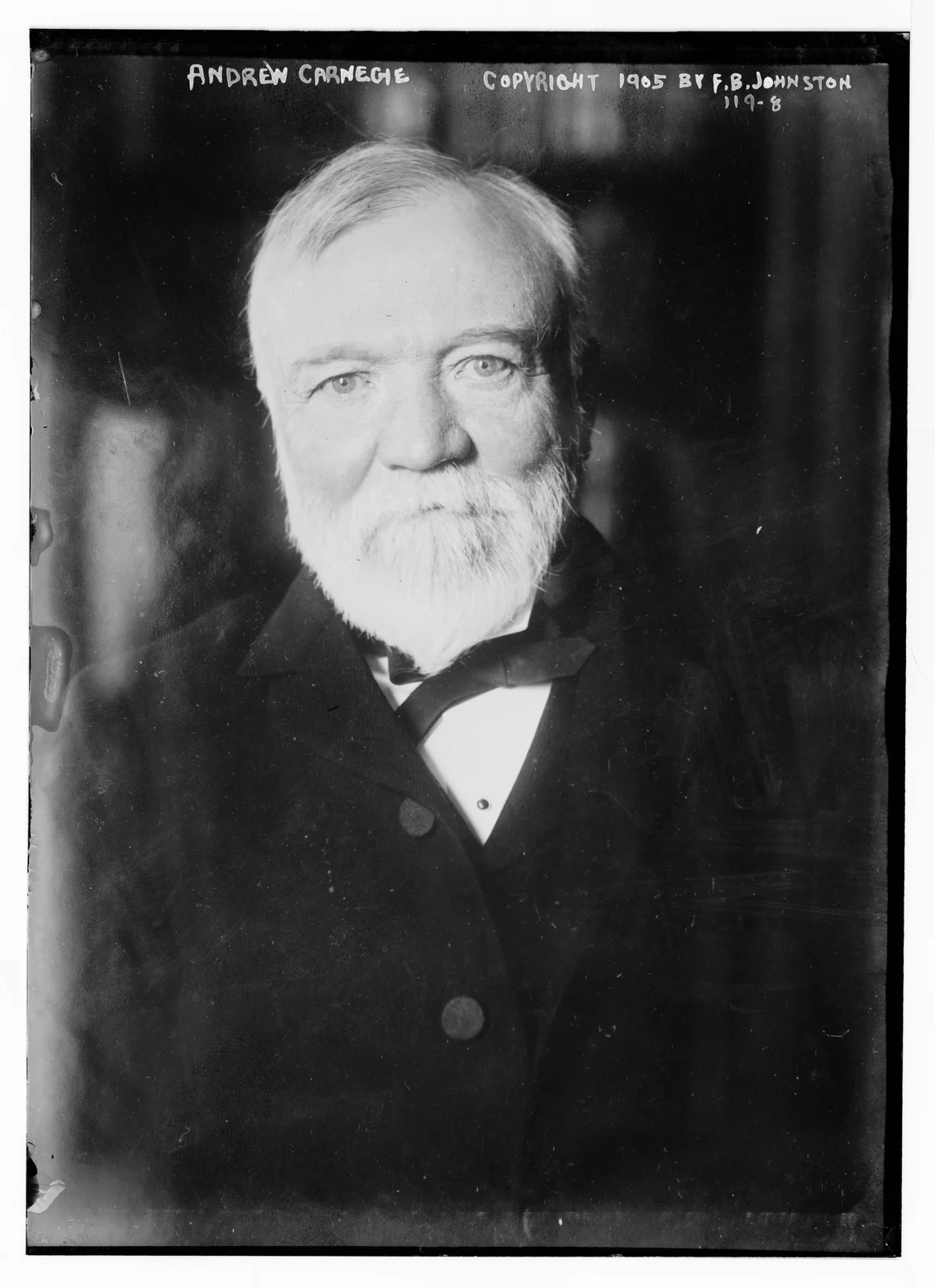
1835–1919
Andrew Carnegie
Steel industrialist and philanthropistA Scotland-born American industrialist who expanded steel production, supported the management campaign against the Homestead union and devoted his later life to philanthropy.Read biography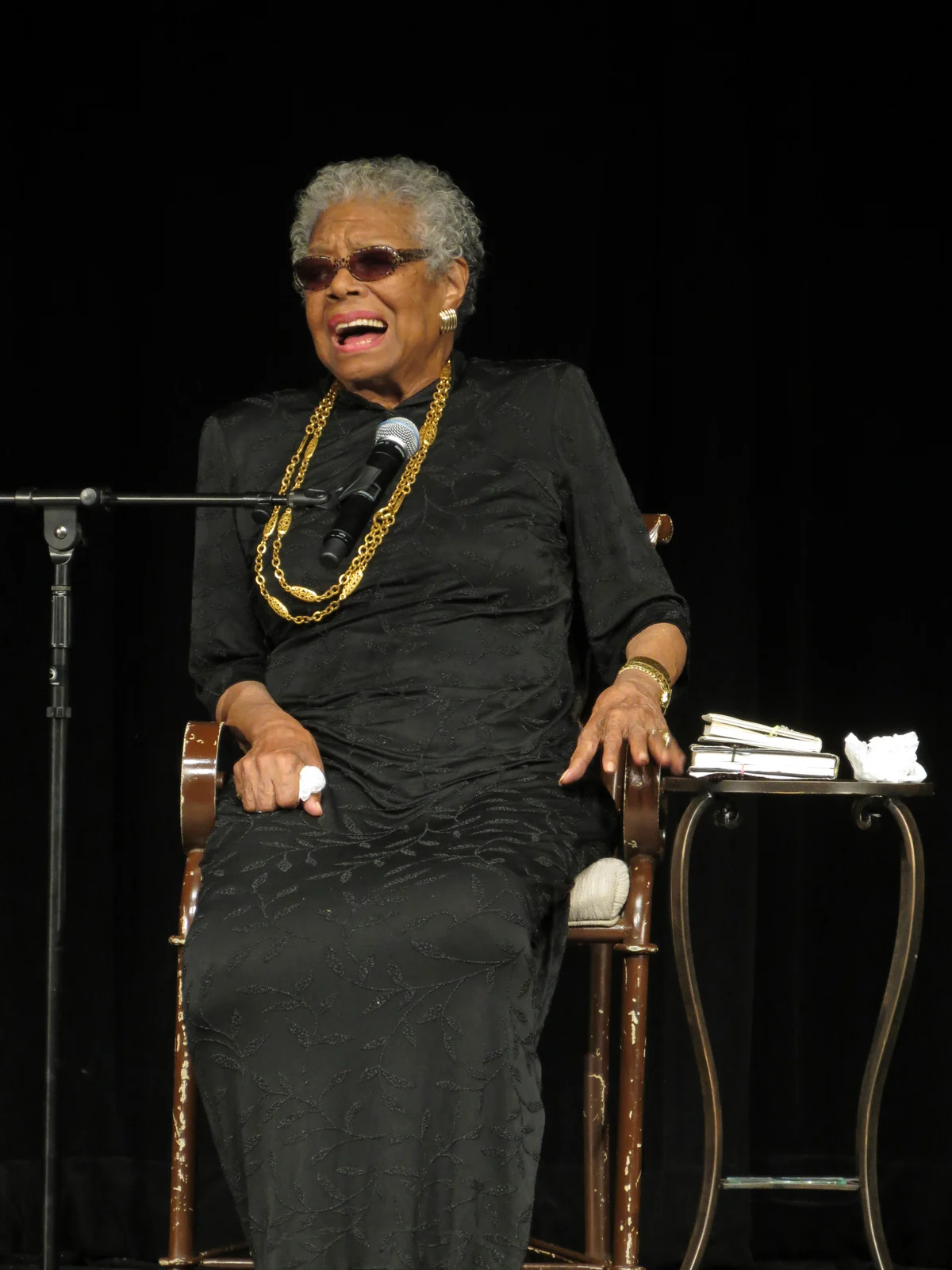
1928–2014
Maya Angelou
Memoirist, poet, performer, teacher and civil rights activistAn American writer and performer who brought experiences of childhood, racism, work and survival into memoir and poetry, and shared literature through teaching and public performance.Read biographyQuick answers
Common questions
- Did Rosenwald pay the full cost of every school?
- No. The programme used grants alongside public funding and local contributions, including Black community fundraising and practical work.
- Why do programme building totals vary?
- Sources may count schools alone or add teachers’ homes and other facilities, and may use different dates.
Primary and institutional sources
How this history was checked
Primary records, institutional catalogues and historical interpretation answer different questions. The comparison and worked example are original editorial analysis. This article was reviewed on 8 November 2026.