In this biography
Quick facts
- Born
- 4 April 1928
- Died
- 28 May 2014
- Birthplace
- St. Louis, Missouri, United States
- Country
- United States
- Nationality
- American
- Known for
- I Know Why the Caged Bird Sings, And Still I Rise and the 1993 inaugural poem On the Pulse of Morning
- Birth name
- Marguerite Johnson, as given by her estate; also recorded as Marguerite Ann Johnson
- First autobiography
- I Know Why the Caged Bird Sings, 1969
- Poetry collection
- And Still I Rise, 1978
- University role
- Reynolds Professor of American Studies, Wake Forest University, appointed 1982
- Inaugural poem
- On the Pulse of Morning, delivered at Bill Clinton’s first inauguration in 1993
- Presidential Medal of Freedom
- 2010 award cohort; medal presented on 15 February 2011
Why this life matters
Angelou’s autobiographical writing helped make a Black woman’s life a central subject of American literature, while her performances and teaching carried that work to broad audiences.
Timeline
Key moments
Born in St. Louis
Marguerite Johnson was born in Missouri and later spent important childhood years in Stamps, Arkansas.
Performance and travel
Worked as a singer and dancer and toured internationally with Porgy and Bess.
Writing and civil rights
Joined the Harlem Writers Guild, worked with the Southern Christian Leadership Conference and later lived in Egypt and Ghana.
First autobiography
Published I Know Why the Caged Bird Sings, recounting her childhood and adolescence.
And Still I Rise
Published the poetry collection associated with one of her best-known poems.
Wake Forest professorship
Was appointed the university’s first Reynolds Professor of American Studies.
Inaugural reading
Read On the Pulse of Morning at President Bill Clinton’s first inauguration.
National Medal of Arts
Was named a National Medal of Arts recipient as a poet and writer.
Medal of Freedom ceremony
Received the Presidential Medal of Freedom at the White House as part of the 2010 award cohort.
Death in North Carolina
Died at her home in Winston-Salem, aged 86.
A childhood carried into literature
Maya Angelou was born Marguerite Johnson in St. Louis, Missouri, on 4 April 1928. She grew up between St. Louis and Stamps, Arkansas, where she lived with her paternal grandmother. Her brother Bailey supplied the childhood nickname Maya. Family movements, segregated communities and the experience of being a Black girl in the American South later became material for her writing.
Childhood sexual abuse was followed by a period when she stopped speaking. Reading, memorizing poetry and attending closely to language remained important during those years. Her eventual autobiography would describe both traumatic events and the relationships that sustained her, refusing to let injury become the only way a childhood could be understood.
Stage work and a widening political world
Before becoming widely known for books, Angelou built a career in performance. She sang in San Francisco clubs and toured internationally with Porgy and Bess in the 1950s. Work in music and theater gave her experience of audiences, timing and the expressive possibilities of a spoken voice, resources that remained visible in her later readings.
In New York she joined the Harlem Writers Guild and worked with the Southern Christian Leadership Conference under Martin Luther King Jr. During the early 1960s she lived in Egypt and Ghana and worked in journalism. These experiences brought artistic practice into contact with civil rights activism and African political life; her memoirs would return to the difficulty and promise of belonging across borders.
Memoir as a sustained literary project
I Know Why the Caged Bird Sings was first published in 1969. Angelou shaped recollections of childhood and adolescence into an autobiography that addressed racism, sexual violence and the development of a sense of self. Its frank treatment of abuse also drew challenges from schools, even as readers found language for experiences often pushed outside public discussion.
She continued telling her life across further volumes. Gather Together in My Name, The Heart of a Woman and All God’s Children Need Traveling Shoes follow different periods of work, motherhood, activism and travel. The sequence makes self-understanding an ongoing process. Angelou’s papers at the Schomburg Center preserve drafts and galleys, showing the deliberate work behind a voice often remembered for its apparent ease.
Poetry and national occasions
Angelou also published poetry, including Just Give Me a Cool Drink of Water ’fore I Diiie in 1971 and And Still I Rise in 1978. Her poems reached people through books, recordings and performance. Public delivery connected the written page with her earlier experience as a singer and actor.
In 1993 she read On the Pulse of Morning at Bill Clinton’s first presidential inauguration, bringing her work to a much larger audience. She received the National Medal of Arts in 2000. President Barack Obama presented her with the Presidential Medal of Freedom on 15 February 2011; the ceremony honored the recipients designated for the 2010 award cohort.
Teaching and the work beyond celebrity
Wake Forest University appointed Angelou its first Reynolds Professor of American Studies in 1982. Her courses ranged across poetry, Shakespeare, race, politics and African culture. Students remembered a teacher who expected them to defend their ideas and who treated literature as a source of intellectual and personal engagement.
The title Dr. recognized honorary degrees, rather than an earned doctorate. Her teaching, screenwriting, directing and performances belonged to a career broader than any single book or ceremonial appearance. Angelou died at home in Winston-Salem, North Carolina, on 28 May 2014, aged 86. Her literary papers and teaching records allow later readers to examine that range through working documents, alongside the finished works and the public image of an inspirational speaker.
Quick answers
Frequently asked questions about Maya Angelou
- What was Maya Angelou’s birth name?
- Her estate and the Academy of American Poets give Marguerite Johnson. Other institutional records, including the White House ceremony transcript, use Marguerite Ann Johnson. Maya began as a childhood nickname.
- When was I Know Why the Caged Bird Sings first published?
- The first publication year is 1969, as recorded by the Library of Congress and the Schomburg Center’s archival finding aid. Some estate and memorial pages give 1970; later editions also have their own publication dates.
- Did Maya Angelou receive the Medal of Freedom in 2010 or 2011?
- Both dates occur because they refer to different things: she belonged to the 2010 recipient cohort, and the presentation ceremony took place on 15 February 2011. The White House archive identifies both explicitly.
- Did Maya Angelou have an earned doctorate?
- Her doctoral honors were honorary. She nevertheless held a substantive teaching appointment: Wake Forest named her its first Reynolds Professor of American Studies in 1982.
Keep exploring
Lives connected to this story
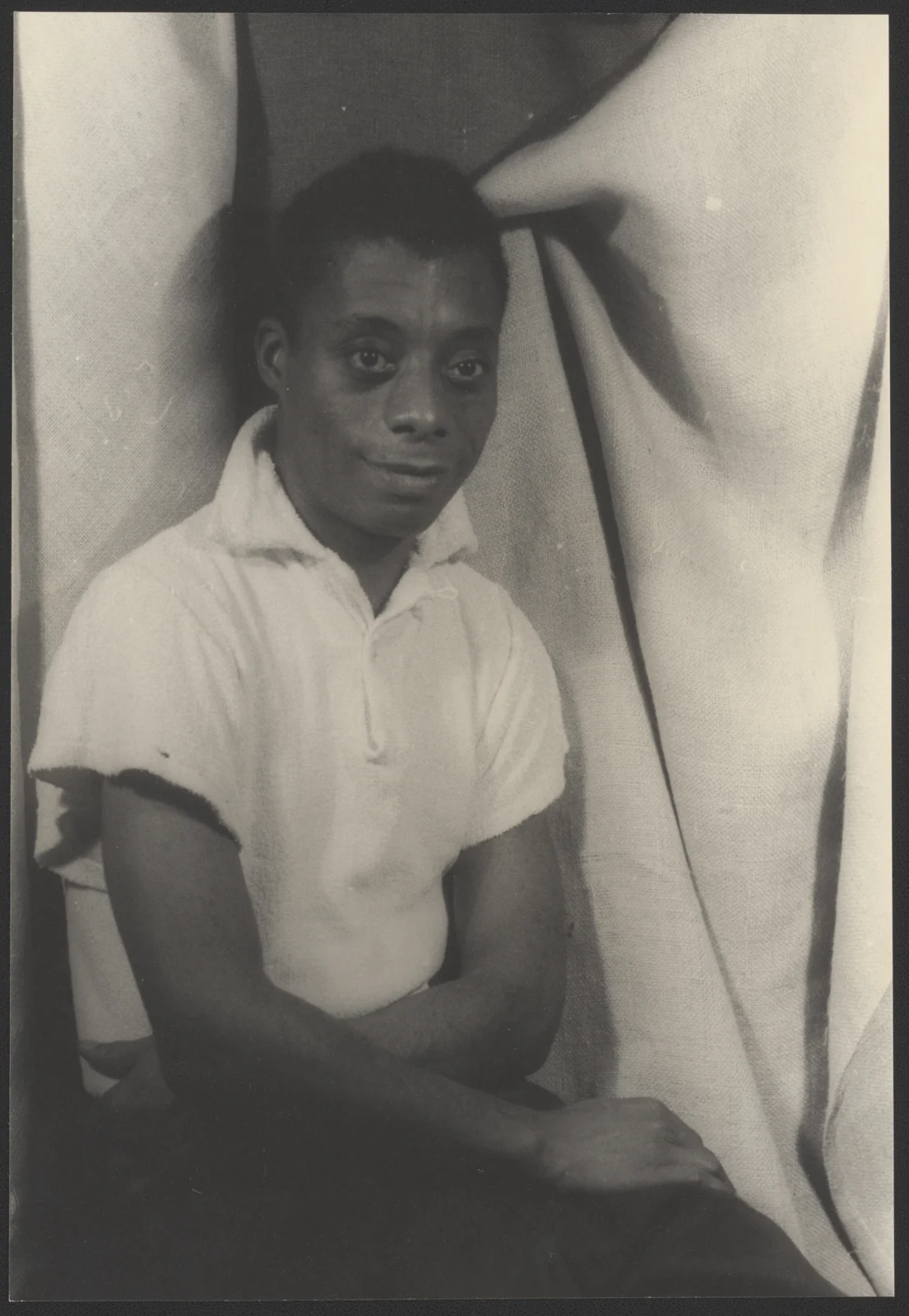
- James Baldwin
Angelou’s friend Baldwin encouraged her autobiographical writing; compare their distinct uses of lived experience and literary craft.
- Toni Morrison
Read another Black American woman who reshaped literature, approaching memory and community chiefly through fiction rather than autobiography.
Sources and further reading
Explore the evidence
These references support the biography and offer further reading. Official records, first-person accounts and independent reporting provide different perspectives; image records document attribution and licensing.
- 1. Caged Bird LegacyMaya Angelou — biography
Used for the estate’s birth name Marguerite Johnson and explicit honorary status of doctoral degrees. The 1970 date for Caged Bird conflicts with LOC and the Schomburg finding aid; 1969 is used.
- 2. National Women’s History MuseumMaya Angelou
- 3. Library of Congress, National Library ServiceMaya Angelou: Author and Poet
Checked for 1969 first autobiography, the sequence of later autobiographical volumes and original poetry-collection years. No poem text is reproduced.
- 4. New York Public Library, Schomburg CenterGuide to the Maya Angelou papers
Creator history and scope read on PDF pages 1–3. Supports performance, SCLC, Egypt and Ghana, manuscripts, and the absence of college attendance. Its controlled subjects explicitly include American authors and poets, supporting American nationality beyond the country archive assignment. Unrelated biographical claims in the finding aid are not adopted wholesale.
- 5. Academy of American PoetsAbout Maya Angelou
- 6. Wake Forest UniversityMaya Angelou: Teacher
Wake Forest’s own appointment history gives 1982. The museum’s 1981 wording is an offer date and is not used as the start of her professorship. The 1977 Wake Forest degree was honorary.
- 7. Maya Angelou’s family, hosted by Wake Forest UniversityFamily obituary
Family-supplied record supports exact birth and death dates and death at home in Winston-Salem. Its Caged Bird 1970 date and its attribution of Georgia, Georgia direction are not relied upon.
- 8. National Endowment for the ArtsMaya Angelou — 2000 National Medal of Arts recipient
- 9. The White House, archived by the National Archives2010 Presidential Medal of Freedom Ceremony, 15 February 2011
The archived event is titled 2010 Presidential Medal of Freedom Ceremony but explicitly dated 15 February 2011. Award cohort and presentation date are separated. Its transcript also records the name Marguerite Ann Johnson. No poem lines are reproduced.
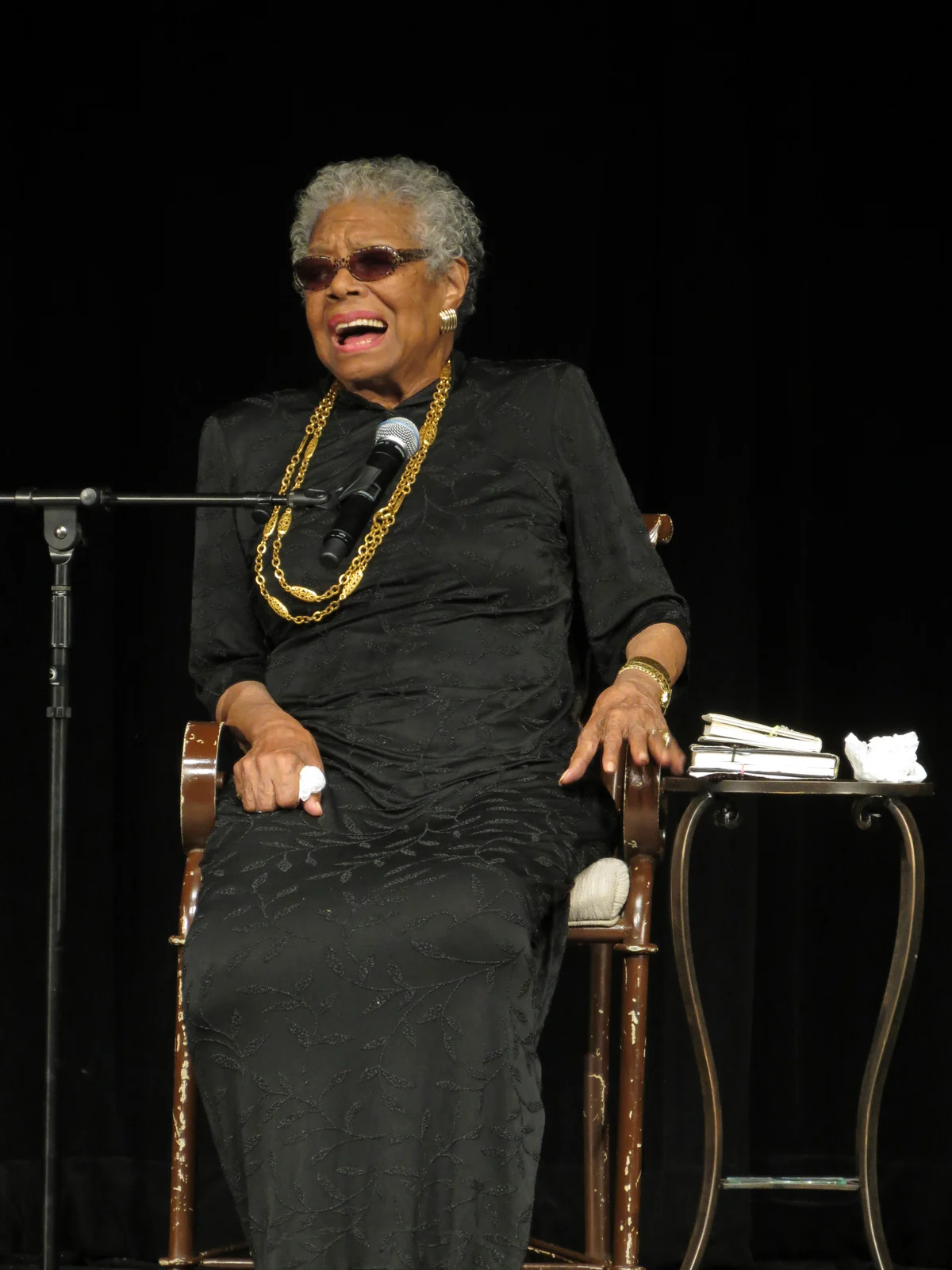
- 10. Wikimedia CommonsMaya Angelou visits YCP! 2413.jpg — original photograph and CC BY 2.0 record
Exact full original downloaded and visually inspected at 3000×4000. Creator credit is York College ISLGP, taken 4 February 2013. Commons confirms the original Flickr CC BY 2.0 license in its upload review. One original upload; no cropped/restored/upscaled derivative selected. EXIF shows ordinary Photoshop processing by the source, so no claim of untouched camera RAW is made.