
The short answer
Quebec’s 1995 referendum nearly produced a victory for the sovereignty side. It did not settle how secession could lawfully occur. The Supreme Court’s 1998 reference and Parliament’s Clarity Act in 2000 addressed that later problem: how democratic expression, constitutional duties and negotiation would interact after a future vote.
Chronology
A timeline of the turning points
Referendum
Quebec votes on sovereignty following an offer of economic and political partnership with Canada.
Secession Reference
The Supreme Court rejects unilateral constitutional secession but identifies a duty to negotiate after a clear democratic mandate.
Clarity Act
Federal legislation sets out how the House of Commons would assess a future question and majority.
The ballot combined sovereignty with a proposed partnership
The 1995 question asked Quebec voters about becoming sovereign after offering Canada a new economic and political partnership. It referred to a bill and an agreement among sovereignty supporters. That framing matters: the ballot was not a short, unconditional sentence simply asking whether Quebec should immediately leave Canada.
Jean Chrétien’s government opposed sovereignty. The provincial campaign nevertheless contained actors, organizations and arguments beyond the federal prime minister. Treating the outcome as his personal victory would obscure both the work of other campaigners and the extent of support for constitutional change within Quebec.
The No side won narrowly in a very high-turnout vote
Élections Québec records 2,362,648 votes for No and 2,308,360 for Yes: 50.58 and 49.42 per cent respectively. The difference was 54,288 votes. Turnout was 93.52 per cent. These are official results, not an estimate of what people would have chosen under a different question.
The result meant the sovereignty proposal was defeated. It did not show overwhelming consensus about the federation or resolve the constitutional implications of a future Yes vote. The narrow margin helps explain why clarity about both the question and the consequence became a major federal concern afterward.
Sources for this section: [1]
The Supreme Court rejected a unilateral constitutional right
In the 1998 Reference re Secession of Quebec, the Supreme Court held that Quebec could not unilaterally secede under the Canadian Constitution. It considered federalism, democracy, constitutionalism and the rule of law, and minority rights together rather than allowing one principle to cancel the others.
The Court also concluded that a clear majority on a clear question in favour of secession would create an obligation to negotiate. This was not an automatic entitlement to independence on specified terms. Nor was the absence of a unilateral right a declaration that a democratic vote could be ignored without constitutional consequence.
Sources for this section: [2]
The Clarity Act gave the House of Commons an assessment role
The Clarity Act received royal assent on 29 June 2000. It provides for the Commons to assess whether a proposed referendum question clearly asks about leaving Canada. After a vote, it provides for an assessment of whether a clear majority has expressed that wish.
The Act is not a federal licence that must be issued before a province can hold any referendum. Its operative consequence concerns the federal government’s participation in secession negotiations. It rejects treating a question about negotiation alone, or one mixing secession with other possibilities, as necessarily a clear mandate to cease being part of Canada.
Sources for this section: [3]
A clear majority is not a statutory fixed percentage
The statute does not prescribe a universal numerical threshold such as 50 per cent plus one or two-thirds. It directs the Commons to consider the size of the majority, turnout and other relevant circumstances. Whether the result is clear is therefore not reduced in the law to a single number applicable to every possible vote.
This does not mean that counting votes is unimportant. It means that the constitutional and statutory framework asks a different question from identifying the winning side under the rules of the 1995 provincial referendum. Retrospectively substituting the Clarity Act for the rules governing that earlier ballot would confuse chronology and legal purpose.
Negotiations would still have to address rights and terms
A qualifying democratic mandate would begin a constitutional negotiation, not complete it. The Clarity Act identifies matters including the rights and interests of Indigenous peoples, minority rights, borders, assets and liabilities. Constitutional amendment would be required for lawful secession.
The framework consequently combines democratic legitimacy with obligations to people who are not exhausted by a province-wide majority. The 1995 vote, the 1998 judgment and the 2000 statute are three connected stages with different functions: an electoral result, an interpretation of constitutional duties and rules for the federal response.
Continue the chronology
Related history guides
Biography context
Explore Quebec, Canada through connected lives
Connected biographies
The prime minister across the referendum and federal response
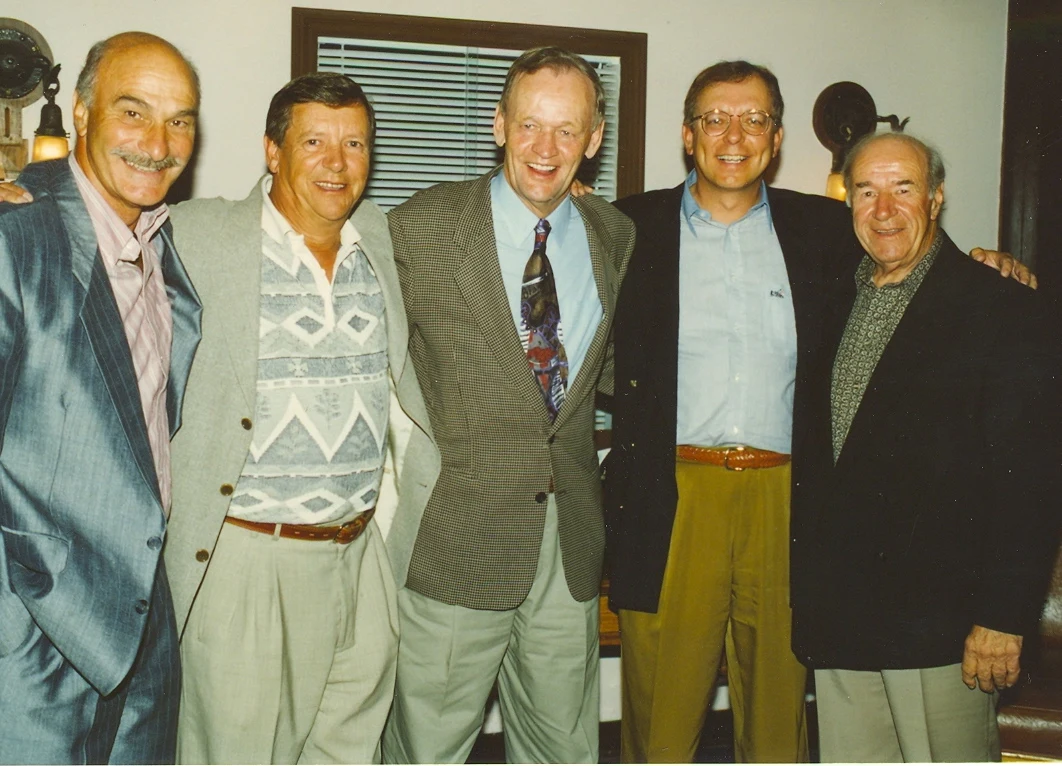
1934–
Jean Chrétien
Lawyer, Liberal cabinet minister and prime minister of CanadaJean Chrétien was Canada’s prime minister from 1993 to 2003 after a long career in Liberal cabinets. He helped negotiate the 1982 constitutional settlement, led the government through the 1995 Quebec referendum and backed the Clarity Act. His record also includes the rejected 1969 White Paper, fiscal restraint and the sponsorship scandal.Read biographyQuick answers
Common questions
- Who won Quebec’s 1995 referendum?
- No won 50.58 per cent of valid votes, compared with 49.42 per cent for Yes, a margin of 54,288 votes.
- Did the Supreme Court say Quebec could never leave Canada?
- No. It rejected unilateral constitutional secession but held that a clear majority on a clear question would create an obligation to negotiate.
- Does the Clarity Act set a fixed winning percentage?
- No. It requires consideration of the majority’s size, turnout and other circumstances, without prescribing one universal numerical threshold.
- Would a clear Yes vote create immediate independence?
- No. It would trigger a duty to negotiate; terms and constitutional amendment would still be required.
Primary and institutional sources
How this history was checked
Official election results, the Supreme Court judgment and the statute answer different questions and are kept separate. This is historical explanation, not legal advice about a hypothetical future referendum. This article was reviewed on 23 October 2026.
- Élections Québec1995 referendum on Québec’s accession to sovereignty: official results
- Supreme Court of CanadaReference re Secession of Quebec, [1998] 2 SCR 217
- Department of Justice CanadaClarity Act, assented to 29 June 2000
- Canadian Museum of HistoryPortrait of a prime minister: Jean
- Wikimike123 / Wikimedia CommonsJean Chrétien, 1996: self-made photograph and author public-domain release