
The short answer
How did the harbour project connect a contested entrance design with public construction?
Read the records together
Contributions,evidence and scope
Different records illuminate different parts of this particular undertaking.
| Record | What the record establishes | What remains distinct |
|---|---|---|
| Engineering biography | Explains competing proposals and public approval. | Later success does not reproduce the earlier evidence. |
| Museum account | Records the intervention and Nyoongar cultural context. | Navigation function is not the place’s only meaning. |
| Operational milestones | Identify opening and later mail-steamer use. | Ceremony and full operating history are not identical. |
Two harbour plans answered the entrance problem differently
The Swan River mouth had a limestone bar that obstructed the entrance. John Coode’s earlier proposal favoured an outer harbour. O’Connor investigated an inner-harbour alternative, using observations, soundings and local maritime knowledge to assess the conditions. His scheme removed the obstruction and deepened the entrance through blasting and dredging, with protective harbour works. The contrast was not simply between an old engineer and a new one. It concerned where the port would be placed, what ground and water conditions it faced, and how vessels could reach sheltered berths.
A recommendation needed public commitment
Forrest’s government had to consider estimates and obtain support for the works. The Australian Dictionary of Biography describes parliamentary examination of the competing plans and Forrest’s acceptance of O’Connor’s presentation. The engineering case therefore moved through a political and financial process before becoming a functioning harbour. The 1897 opening and 1900 mail-steamer milestone were later evidence of use. They should be placed after, not substituted for, the earlier decision about which scheme to build. This sequence makes the collaboration between public authority, technical advice and construction visible without attributing all agency to one person.
Sources for this section: [1]
The entrance was also a cultural place
The Western Australian Museum’s account explains that the rock bar belonged within a Nyoongar creation story associated with the Wagyl. Removing it was therefore more than an alteration to a navigation chart. An engineering description of an obstruction and a cultural account of a place can refer to the same physical feature while explaining different meanings. Keeping both records in view avoids treating the river mouth as an empty site awaiting improvement. This topic reports the museum’s account rather than claiming to speak for all Nyoongar people or supplying an original interpretation of their traditions.
Sources for this section: [2]
Compare requirements, design and consequences
Draw three headings: shipping requirement, proposed intervention, and changed place. Put access for large vessels in the first, removal of the bar and dredging in the second, and the altered river mouth in the third. Now compare the outer- and inner-harbour proposals under the same headings. The checked answer is that technical alternatives require evidence about the local conditions and different physical works; an opening ceremony alone cannot explain the earlier choice. This original exercise adds a fourth note for cultural meaning, so the positive account of a working harbour remains connected to the place altered by construction. No bathymetric measurements or uninspected cost comparison are invented.
Continue the chronology
Related history guides
Albert Dock: Structure, Storage and Ships
Examine Albert Dock’s warehouse materials, cargo handling and waterside layout, distinguishing the 1846 opening from the completion of its buildings.
Read the timeline1892–1904Elan Valley: Gravity, Authority and Displacement
Explore how Elan Valley linked an upstream intake and gravity supply with surveys, land acquisition and the public powers granted by the 1892 Act.
Read the timelineBiography context
Explore Australia through connected lives
Connected biographies
People behind this work
1843–1902
Charles Yelverton O’Connor
Public works and harbour engineerCharles Yelverton O’Connor is remembered for engineering Fremantle Harbour and Western Australia’s Goldfields Water Supply Scheme.Read biography1761–1821
John Rennie
Civil engineer and millwrightJohn Rennie the elder developed a broad civil engineering practice; several major projects, including London Bridge, were completed after his death by his sons.Read biography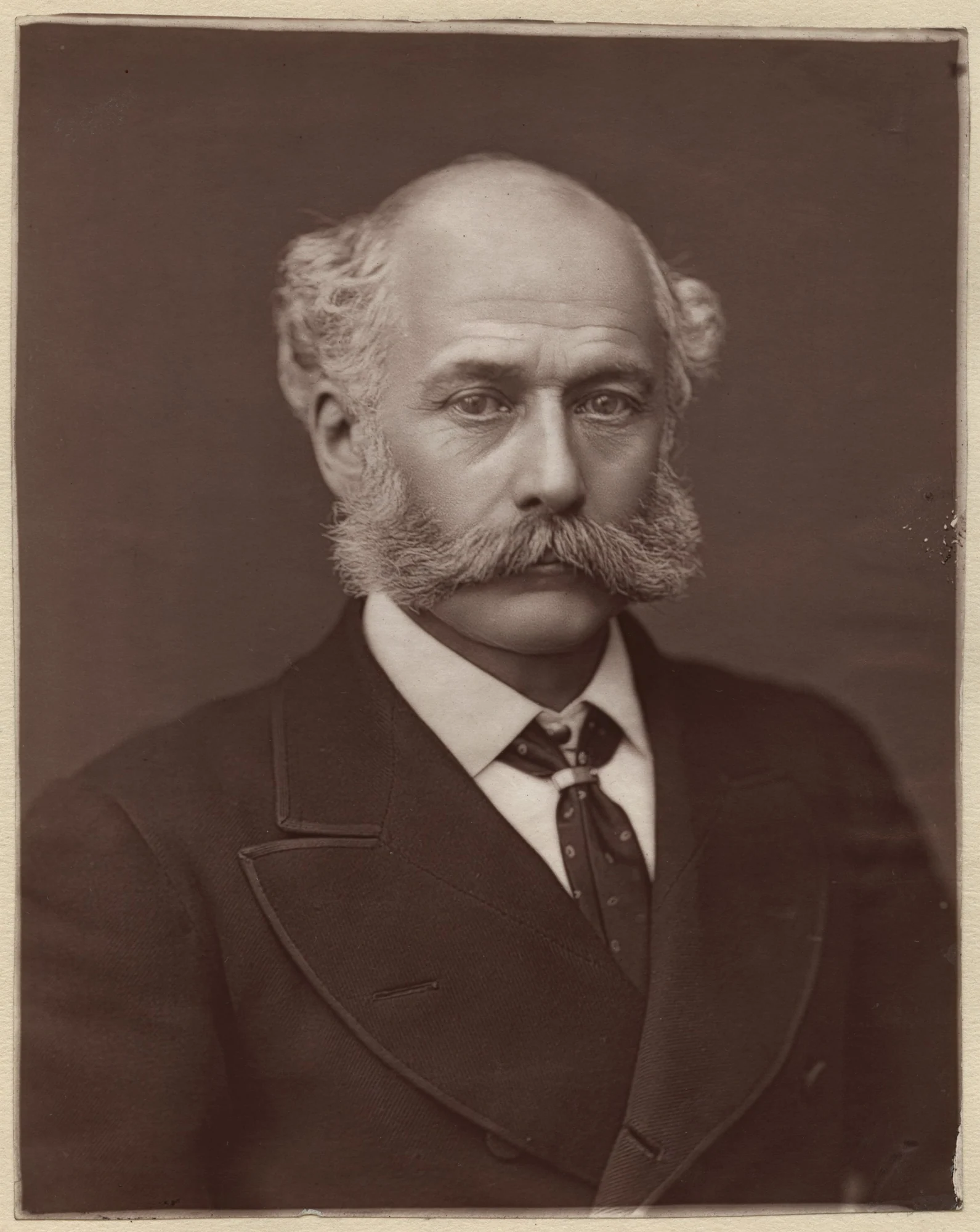
1819–1891
Joseph Bazalgette
Civil engineer and metropolitan drainage designerBazalgette designed main drainage works that carried much of London’s sewage away from central river outlets.Read biographyQuick answers
Common questions
- Why did O’Connor prefer an inner harbour?
- His investigations supported removing the river-mouth bar and dredging an inner harbour, rather than adopting the earlier outer-harbour proposal.
Primary and institutional sources
How this history was checked
The cited records distinguish contemporary accounts,official catalogues and later institutional or scholarly interpretation. The comparison and worked exercise are original editorial material. This article was reviewed on 7 November 2026.