
The short answer
Why did Johannesburg’s gold industry develop investment groups rather than only independent mines? JCI provides a way to distinguish capital, portfolio control and operating businesses—and to see who bore the costs.
Chronology
A timeline of the turning points
A mining town meets capital constraints
Expensive extraction and a financial crisis expose the limits of the initial gold rush.
JCI is established
Barnato’s network creates an enterprise connecting mining and other investments.
Group organisation develops
Holding companies coordinate expertise, finance and portfolios of operating interests.
A much later restructuring
Industrial, mining and platinum groupings show why corporate continuity needs precise names.
Gold extraction required more than a promising claim
The early Witwatersrand rush did not provide an easy route from finding gold to paying dividends. Work below the surface required machinery, technical knowledge and substantial spending before returns arrived. Local funds were insufficient for the industry’s ambitions, making connections with foreign investors central to its development.
Hart and Padayachee place JCI among the major mining houses formed in this environment. Established in 1889 through Barney Barnato and the Joel family network, it belonged to a competitive field of large groups. The relevant innovation was an organisation able to assemble and direct investment, not the invention of gold mining itself.
A holding company and its operating interests were different
The group model pooled financial administration and specialist expertise across investments. Investors could hold shares in a group or in an individual mining company. Those choices produced different exposures: a portfolio could spread dependence across assets, while a particular mine remained tied more closely to its own geology, costs and output.
This did not remove risk or make every subsidiary interchangeable. A finance house could provide capital, appoint directors or coordinate advice without becoming identical to each operating business. The distinction helps explain why company histories mention numerous mines beneath a group name and why that name alone cannot identify who performed every task.
Urban property linked the portfolio to Johannesburg’s growth
JCI’s interests extended beyond ore extraction into property and related urban activity. The city’s heritage account of the Consolidated Building illustrates a corporate presence in Johannesburg’s built environment. Land, offices and mining investments could sit within connected financial networks while serving different commercial purposes and producing different kinds of income.
That breadth mattered because the mining town also needed premises, infrastructure and services. It does not follow that a private investment house was the municipal government or that its projects benefited everyone equally. Commercial urban development and public administration were separate powers, even when the same city depended heavily on mining capital.
Information and labour were part of the financial system
Investment depended on credible information, not only on promoters’ promises. Lukasiewicz’s research abstract connects the stock exchange and Chamber of Mines with industrial statistics and the 1889 capital crisis. Institutions that organised information could influence confidence and coordination, although an exchange, an industry chamber and an investment company were not the same body.
Capital concentration also operated within racial inequality. The mining economy constrained African labour and rewarded white occupational privilege. Cripps describes group cooperation around recruitment alongside rivalry between employers. The financial model’s efficiency for investors must therefore be assessed together with its distribution of bargaining power and the conditions under which workers produced the returns.
Later restructuring explains why the name needs a date
Johnnic’s own historical account dates the original company’s incorporation to 28 September 1889. It records a 1995 separation into three listed groupings: the renamed industrial company, JCI and Amplats. This later event demonstrates why the original investment house should not be treated as a permanently unchanging container for every subsequent asset.
A useful reading of JCI therefore asks three questions: which legal company, which period and which operating interest? Barnato’s founding role explains an origin, not personal control over a century of later transactions. Keeping these levels separate makes the mining-finance mechanism clearer without turning the guide into either a founder’s biography or a modern investment recommendation.
Continue the chronology
Related history guides
Biography context
Explore Johannesburg, South Africa through connected lives
Connected biographies
People within a wider investment system
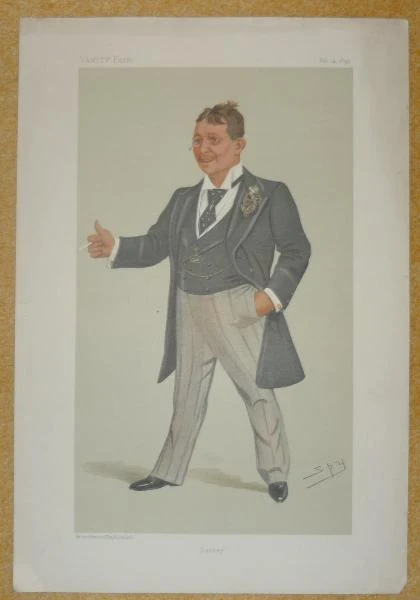
c.1851–1897
Barney Barnato
British diamond entrepreneur and Johannesburg mining financierBarney Barnato moved from London trading and entertainment into Kimberley diamonds, then Johannesburg gold and property finance. His rivalry with Rhodes was only part of a career built through relatives, companies and investment markets. Racial labour controls and speculative risk complicate the familiar story of a self-made mining fortune.Read biography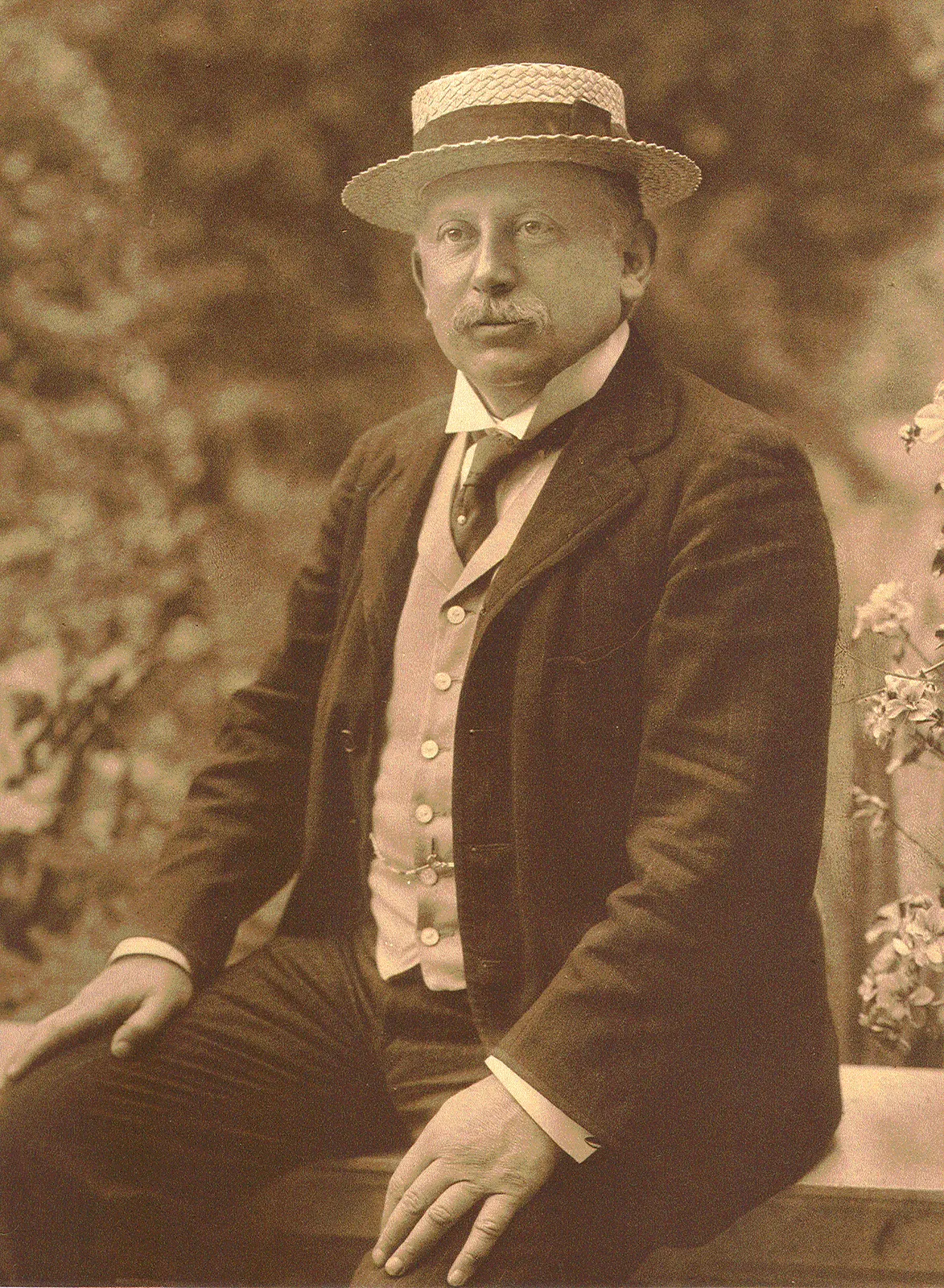
1853–1906
Alfred Beit
German-born British mining financier and imperial benefactorAlfred Beit combined diamond-trading knowledge, mining finance and London partnerships to accumulate substantial southern African wealth. His support for Rhodes’s imperial projects included the failed Jameson Raid. Educational gifts and a communications endowment produced lasting institutions, but their benefits cannot erase the coercive labour and colonial setting from which his fortune emerged.Read biographyQuick answers
Common questions
- Was JCI simply another name for one mine?
- No. The group connected a portfolio of mining and other interests rather than representing a single extraction site.
- Did the group model eliminate investment risk?
- No. Shared expertise and a portfolio could spread some risks, but costs, geology, finance and market confidence still mattered.
- Were the stock exchange, Chamber of Mines and JCI one institution?
- No. They could cooperate while performing different trading, industry-representation and investment functions.
- Why does the 1995 division matter to an 1889 history?
- It shows why a continuing name must not be mistaken for an unchanged legal company or asset perimeter.
Primary and institutional sources
How this history was checked
Company and archive context establish dates and corporate distinctions. Historical scholarship explains capital demands, group organisation, labour and information. Selected finding-aid, report and dissertation passages were read; this is not a full review of JCI’s securities, subsidiaries, archives or subsequent legal disputes. This article was reviewed on 24 October 2026.
- Keith Hart and Vishnu Padayachee / TransformationA history of South African capitalism in national and global perspective: printed pages 63–64
- Elizabeth Ann Cripps / University of South AfricaProvisioning Johannesburg, 1886–1906: selected historical-setting and mining-group passages
- Elizabeth Ann Cripps / transcription mirrorThe same dissertation: historical-setting passage, printed pages 8–10
- Historical Papers Research Archive, University of the WitwatersrandJCI finding aid: company context and the later division of its businesses
- Historical Papers Research Archive, University of the WitwatersrandJCIA-D, Shares: creator identity and archive-series description
- Johnnic Holdings / US Securities and Exchange Commission archive2004 annual report: Group history, 1889 incorporation and the three 1995 groupings
- City of JohannesburgConsolidated Building heritage record: selected company and property history
- Mariusz Lukasiewicz / Wits Institute for Social and Economic ResearchMines, Information and Imperialism: research abstract on the JSE, Chamber and 1889 capital crisis
- Leslie Ward / Wikimedia CommonsBarney Barnato, Vanity Fair, 14 February 1895: complete historical print scan
- National Portrait Gallery, LondonD44738: Barnett Isaacs Barnato, Men of the Day No. 612, by Sir Leslie Ward
- Creative CommonsPublic Domain Mark 1.0