In this biography
Quick facts
- Born
- 15 February 1853
- Died
- 16 July 1906
- Birthplace
- Hamburg, German Confederation (now Germany)
- Country
- South Africa
- Nationality
- British
- Known for
- Financing southern African diamond and gold enterprises and establishing the Beit Railway Fund by will
- Nationality distinction
- German-born; became a British subject in 1898
- South Africa connection
- Kimberley diamonds and Witwatersrand gold finance
- Business association
- Wernher, Beit & Co.; De Beers and gold-mining interests
- Institutional legacy
- Beit Railway Fund, established through his will in 1906
Why this life matters
The South Africa archive includes him for documented Kimberley and Witwatersrand business connections, not to assign him South African nationality.
Timeline
Key moments
Hamburg to diamond trading
Born in Hamburg; Amsterdam training precedes arrival in southern Africa.
Mining partnerships
Trading knowledge and capital support Kimberley consolidation and gold investments.
The Jameson Raid
Cooperation in the attempted intervention leads to parliamentary censure.
British subject
Beit’s nationality changes while his business remains internationally connected.
Death and bequests
Dies on 16 July; trustees inherit responsibilities under his communications and charitable provisions.
An evolving institution
Trustees change emphasis; parliamentary incorporation follows in 1954.
A German upbringing led to an international trading career
Alfred Beit was born in Hamburg on 15 February 1853. He learned the diamond trade in Amsterdam before being sent to southern Africa in 1875. His early advantage lay in judging stones and understanding transactions, rather than discovering the mineral deposits on which the mining economy depended.
He later made London a principal business base and became a British subject in 1898. His work nevertheless remained closely connected to Kimberley and the Witwatersrand. German origins, British nationality and southern African commercial influence are distinct parts of the biography; none requires inventing a South African citizenship.
Diamond consolidation depended on finance and partnerships
In Kimberley, Beit moved from dealing towards larger investments and relationships with Julius Wernher and Cecil Rhodes. The competing diamond claims and companies were being consolidated into larger enterprises. His role involved judging value, assembling financial support and linking local opportunities with European pools of capital.
The 1888 De Beers consolidation was therefore a collective commercial process, not Beit personally creating an entire industry. Historical accounts identify Rhodes, Barney Barnato, Beit and outside financiers within that struggle. His importance was partly the ability to translate a fragmented mining landscape into investments that partners could finance and control.
Gold investment enlarged both technical demands and labour dependence
Gold discoveries on the Witwatersrand drew Beit and his partners into another capital-intensive industry. Deep deposits required engineering expertise, equipment and sustained finance. He supported skilled engineers and investment in extraction methods, connecting commercial judgment with the expensive technical work needed to make deep-level mining profitable.
Those achievements depended on African workers within an unequal mining system. Historical research describes closed compounds, cheap labour and dangerous conditions associated with the mining economy. A financier’s expertise is not an adequate account of the whole enterprise when the people doing the underground work faced coercive controls and serious risks.
Imperial commitments were more than a personal friendship
Beit became a director of the British South Africa Company, whose expansion joined private enterprise to colonial power. His association with Rhodes included cooperation in the Jameson plan: an armed intervention intended to support an uprising against the Transvaal government. The raid’s failure in 1895–1896 exposed the political risks behind the commercial network.
A House of Commons inquiry censured his involvement. That record prevents a portrait limited to discreet financial genius or generosity. Company-backed imperial expansion affected African sovereignty and livelihoods, while the raid attempted to overthrow another government. These were material exercises of power, not simply adventurous episodes in a businessman’s private life.
Charitable institutions outlived a contested source of wealth
Beit died on 16 July 1906. His bequests supported educational and public causes in Britain, Germany and southern Africa. Contemporary reporting identified the communications fund alongside separate university and hospital gifts. The later trust should not be confused with every Beit-named donation or with the work of his brother Otto and nephew Alfred.
The Beit Railway Fund subsequently supported regional infrastructure and evolved towards education, health and other charitable work. Its continuity is a significant institutional legacy. Assessing that legacy also requires retaining the mining labour system and imperial interventions in view: later public benefits do not retrospectively cancel the conditions under which the founding fortune accumulated.
Quick answers
Frequently asked questions about Alfred Beit
- Was Alfred Beit South African by nationality?
- He was German-born and became a British subject in 1898. This archive placement reflects his southern African business connections.
- Did he build Beitbridge personally?
- No. He died in 1906; trustees later financed the bridge opened in 1929.
- Was the trust originally a general scholarship charity?
- No. The will first established a communications fund, with discretion for a later charitable change.
- Does philanthropy remove his colonial record?
- No. Educational benefits and infrastructure must be considered alongside labour exploitation and imperial intervention.
Keep exploring
Lives connected to this story
- Tokyo Sexwale
Compare investment institutions across sharply different political eras: colonial mining capital and post-apartheid empowerment are not equivalent systems.
- Cecil Rhodes
Examine the political and colonial partner whose ambitions Beit helped finance.
Sources and further reading
Explore the evidence
These references support the biography and offer further reading. Official records, first-person accounts and independent reporting provide different perspectives; image records document attribution and licensing.
- 1. Howard Bromberg / EBSCOAlfred Beit: selected early trading, mining, death and legacy passages
- 2. Rhodes TrustRhodes House visitor guide: selected Alfred Beit entry and British-subject status
- 3. Leonard Thompson / Yale University Press, archived by SAHOA History of South Africa: indexed mining-consolidation passage, printed page 116
- 4. Rooha Variava / South African History Online archiveDeployment of Racism in South Africa: selected compound-system and labour-control passages
- 5. Jill Pellew / University of London PressDonors to an imperial project: selected mining labour, raid and educational-benefaction passages
Selected scholarly passages connect institutional benefactions with mining labour and imperial power; no complete book claimed read.
- 6. Encyclopaedia Britannica, 1911 / WikisourceTransvaal, printed page 200: selected account of Beit’s cooperation in the Jameson plan
- 7. Popular Science Monthly, September 1906 / WikisourceThe Will of Alfred Beit: selected contemporary report of purposes and trustee discretion
Contemporary purposes and discretion used; apparent death-date and dollar-amount transcription errors are not reproduced.
- 8. The Beit TrustHistory: communications fund, discretionary change and 1946 shift
- 9. Carol Hardijzer / The Heritage PortalBeitbridge construction: selected biographical dates, 1929 opening and trust funding
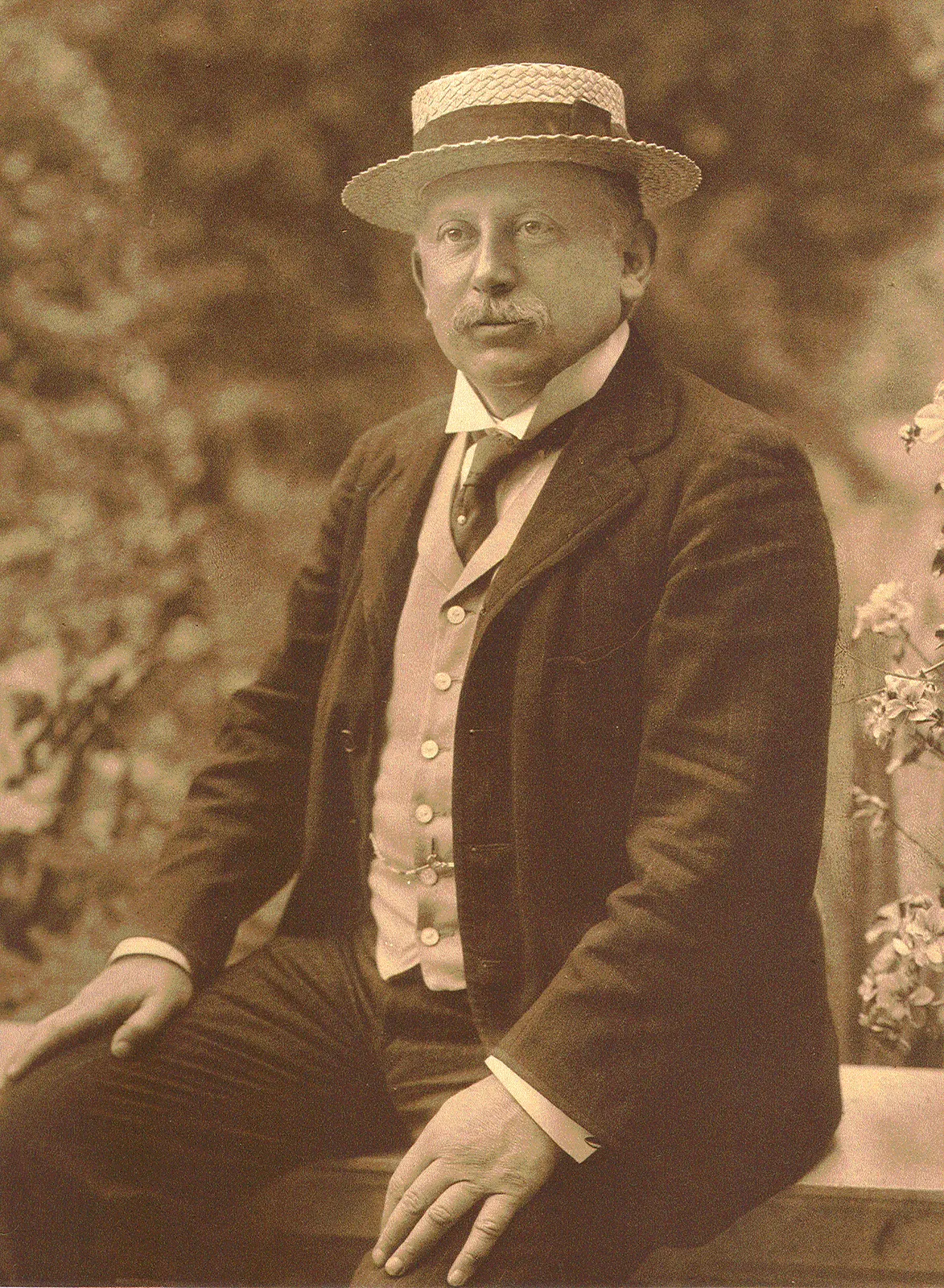
- 10. Rudolf Dührkoop / Wikimedia CommonsAlfred Beit, 1905 publication; original 2007 scan selected, not the later retouched binary
Original archived scan selected because current binary history explicitly records later retouching. Creator, 1905 publication and public-domain status independently corroborated by the museum.
- 11. Museum für Kunst und Gewerbe HamburgExact Alfred Beit photogravure, P1991.5101: creator, sitter, 1905 publication and public-domain record
- 12. Creative CommonsPublic Domain Mark 1.0