In this biography
Quick facts
- Born
- 1851 or 1852
- Died
- 14 June 1897
- Birthplace
- London, England
- Country
- South Africa
- Nationality
- British
- Known for
- Kimberley diamond enterprise, the Barnato network and Johannesburg Consolidated Investment
- Birth date
- 1851 or 1852; reference sources disagree
- Nationality
- British; South African business connection
- Investment institution
- Johannesburg Consolidated Investment, established in 1889
- Political role
- Cape House of Assembly member in the late 1880s and 1890s
Why this life matters
His South Africa archive association rests on Kimberley and Johannesburg business activity, not an invented change from British nationality.
Timeline
Key moments
London origins
Born Barnett Isaacs; the surviving reference accounts disagree about his exact birthday.
Arrival in southern Africa
Joins his brother Harry in the Kimberley diamond economy.
A diamond business expands
Trading, mining companies and consolidation enlarge the Barnato network.
Politics and new investment
Cape parliamentary service and the creation of JCI connect business with public institutions.
Speculation and death
A mining-share boom turns down; Barnato dies at sea on 14 June 1897.
A London upbringing became a contested origin story
Barney Barnato was born Barnett Isaacs in London. His exact birthday should not be presented as settled: South African History Online gives 21 February 1851, while two early reference works give different dates in 1852. London is secure; an unqualified day and year would conceal a genuine disagreement.
He worked in the East End and performed as an entertainer before joining his brother Harry in southern Africa in 1873. The stage name became a commercial identity. The contemporary DNB also challenges the later legend that he arrived entirely penniless, illustrating how a celebrated fortune generated its own simplifying myths.
Diamond knowledge grew into a family business network
Barnato first dealt in diamonds rather than commanding a large mining company. He learned to assess stones, worked with Harry and developed enterprises supported by relatives and associates. Barnato Brothers and the subsequent mining concerns were connected stages of expansion, not a single company created fully formed on his arrival.
Kimberley’s increasingly expensive underground workings favoured larger combinations. Barnato became a substantial rival to Cecil Rhodes before their interests entered the 1888 De Beers consolidation. The result concentrated commercial power; it was not simply a personal reconciliation or proof that one man had discovered the diamond industry.
Gold and property added opportunity as well as exposure
The Witwatersrand drew capital away from a purely Kimberley story. Barnato and his network invested in gold mines, land and urban enterprises. JCI, established in 1889, became a vehicle spanning mining, property and engineering. It connected financial resources with a growing industrial city rather than functioning as one isolated mine.
Promotion and investment also exposed the network to market instability. The mining-share boom of 1895 was followed by falling prices and pressure on Barnato’s interests. His biography therefore involves judgments about assets and investor confidence as well as trading skill; commercial prominence did not eliminate uncertainty or the possibility of loss.
Labour coercion and limited political participation mattered
Mining wealth rested on African workers whose opportunities and movement were constrained. Kimberley’s closed compounds confined contracted workers behind guarded boundaries and subjected them to searches. Explaining this system is essential to the business story: investment returns were produced within racially unequal institutions, not by financial ingenuity alone.
Barnato also represented Kimberley in the Cape House of Assembly. The DNB records an election in November 1888 and describes infrequent attendance. His politics should not automatically be equated with every position Rhodes took. Neither, however, did a parliamentary seat make the underlying mining economy representative of its largely disenfranchised workforce.
An early death did not end the institutions he helped create
Barnato died at sea on 14 June 1897 while travelling towards Britain. Accounts of his death have encouraged speculation, but a business biography need not convert uncertain personal explanations into medical diagnoses. His death interrupted his own leadership while leaving relatives and corporate structures to manage continuing interests.
JCI’s later history stretched far beyond his lifetime and included major reorganisations. Those later organisations were not simply Barnato acting through a different name. His lasting importance lies in connecting diamond-derived capital, Johannesburg assets and financial networks, alongside the unequal labour and political environment that made their accumulation possible.
Quick answers
Frequently asked questions about Barney Barnato
- What was Barney Barnato’s original name?
- Barnett Isaacs. Barnato developed from the name associated with his entertainment career.
- When was he born?
- Sources disagree between 1851 and 1852, including different exact dates. This biography deliberately withholds a single precise birthday.
- Was JCI the same thing as one gold mine?
- No. It was an investment enterprise with interests extending across mining and other Johannesburg assets.
- Was he South African by nationality?
- The archive describes his South African business connections while preserving his documented British identity.
Keep exploring
Lives connected to this story
- Alfred Beit
Compare a different international financier within the southern African mining economy.
- Ernest Oppenheimer
Follow a later generation’s distinct mining-finance and diamond-marketing institutions.
Sources and further reading
Explore the evidence
These references support the biography and offer further reading. Official records, first-person accounts and independent reporting provide different perspectives; image records document attribution and licensing.
- 1. South African History OnlineBarney Barnato: trading, Cape politics and death; birth date compared with contemporary reference works
- 2. Dictionary of National Biography, 1901 supplement / WikisourceBarnato, Barnett Isaacs: selected arrival, company, parliamentary and speculation passages
A near-contemporary account, used critically alongside other sources. Its birth date differs from SAHO; period medical language and racial terminology are not adopted.
- 3. Jewish EncyclopediaBarnato, Barnett Isaacs: early life, trading and the conflicting birth date
- 4. Emilia Potenza / South African History Online archiveAll That Glitters: mining concentration, migrant workers and closed compounds
- 5. Elizabeth Ann Cripps / University of South AfricaProvisioning Johannesburg, 1886–1906: selected historical-setting and mining-group passages
- 6. Elizabeth Ann Cripps / transcription mirrorThe same dissertation: historical-setting passage, printed pages 8–10
- 7. Historical Papers Research Archive, University of the WitwatersrandJCI finding aid: company context and the later division of its businesses
Finding-aid and company-context passages were consulted, not the complete underlying corporate archive.
- 8. Historical Papers Research Archive, University of the WitwatersrandJCIA-D, Shares: creator identity and archive-series description
- 9. Johnnic Holdings / US Securities and Exchange Commission archive2004 annual report: Group history, 1889 incorporation and the three 1995 groupings
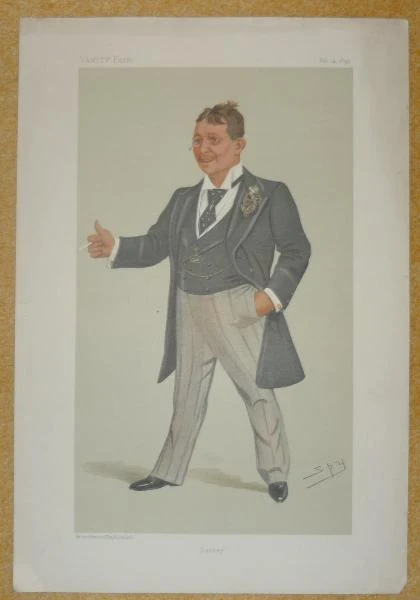
- 10. Leslie Ward / Wikimedia CommonsBarney Barnato, Vanity Fair, 14 February 1895: complete historical print scan
- 11. National Portrait Gallery, LondonD44738: Barnett Isaacs Barnato, Men of the Day No. 612, by Sir Leslie Ward
The museum corroborates the exact 1895 artwork. Its separately restricted modern digital image was not used.
- 12. Creative CommonsPublic Domain Mark 1.0