
The short answer
How could diamond prices be managed when mines kept producing but buyers wanted fewer stones? The Diamond Corporation connected buying obligations, financial reserves and controlled selling. It was a commercial institution, not a neutral public regulator.
Chronology
A timeline of the turning points
Leadership and a demand shock
Oppenheimer becomes De Beers chairman as the international economy deteriorates.
Diamond Corporation
Producer and dealer interests are brought into a new marketing arrangement.
Mine closures
De Beers’ historical timeline records the closure of its mines during depressed demand.
Further reorganisation
Buying and the new Diamond Trading Company’s selling functions develop into central selling.
Stocks bridge different market conditions
Buying commitments and later sales link periods of low demand with subsequent recovery.
Marketing control was different from owning every mine
A company could control a marketing channel without owning all the deposits whose diamonds passed through it. De Beers’ historical corporate account describes the Diamond Corporation’s creation in 1930 as a development of earlier syndicate arrangements. Its purpose concerned selling rough output from connected producers and purchases from beyond the group.
This was a different institutional problem from the 1888 consolidation of Kimberley mining companies. New sources and separate producers made the trade wider than one mining balance sheet. Coordinated marketing sought influence over the flow of stones reaching buyers, whether those stones had come from an owned mine or a contracted supplier.
Producer and dealer participation aligned commercial interests
The new organisation brought production interests together with members of the earlier dealing syndicate. Cochrane’s historical analysis describes an initially shared ownership arrangement. The structure gave participants a financial stake in the marketing institution rather than leaving producers and intermediaries to negotiate only as wholly separate sellers and buyers.
Common participation did not make the arrangement a public service or dissolve every disagreement. It connected the incentives of businesses seeking profitable, predictable sales. Oppenheimer’s chairmanship mattered, but contracts, corporate capital and relationships between firms supplied the mechanism. The institution should not be reduced to his personal ability to set a price.
Stockpiles carried the cost of buying more than could be sold
When demand weakened, purchasing commitments could require the network to buy diamonds that it could not immediately resell at its chosen prices. Holding those stones postponed supply to the market. That required financial resources: inventory absorbed capital and created exposure to a prolonged downturn rather than making surplus production disappear.
De Beers’ own timeline records the closure of all its mines in 1932 as demand stalled. Restricting extraction and carrying purchased stocks were related but different responses. The commercial system could protect sales arrangements while workers and mining communities faced the consequences of reduced production; stable quoted prices did not mean stable employment.
The 1934 reorganisation separated buying from selling functions
Janse distinguishes the 1930 corporation from a further restructuring in 1934. Buying was channelled through the Diamond Corporation, while sorting and selling passed through the new Diamond Trading Company. The associated central-selling system therefore developed in stages. Using 1930 and 1934 as interchangeable founding dates obscures which function a source is describing.
Sorting mattered because rough diamonds were not a uniform commodity. Bringing supply through a coordinated channel made it possible to organise categories and sales rather than simply auctioning each mine’s unsorted output independently. These historical arrangements should not be confused with a timeless description of how every diamond is marketed today.
Commercial stability and competitive markets were not synonyms
Supporters could describe managed supply as stabilisation; the same arrangements concentrated private power over access and prices. Historical research on the international cartel examines that tension rather than treating predictable revenue as proof of a competitive market. Producers, dealers, consumers and workers did not necessarily share the same interests or receive equal benefits.
The central lesson is a sequence of decisions: assemble supply, finance inventory, restrict its release and organise sales. None required a claim that diamonds were geologically scarce in exactly the quantities being sold. This guide explains that historical mechanism without assuming a present-day market share, attributing corporate legal findings to an individual, or revisiting the separate 2011 family share sale.
Continue the chronology
Related history guides
Biography context
Explore London, United Kingdom through connected lives
Connected biographies
Leadership within a corporate marketing system
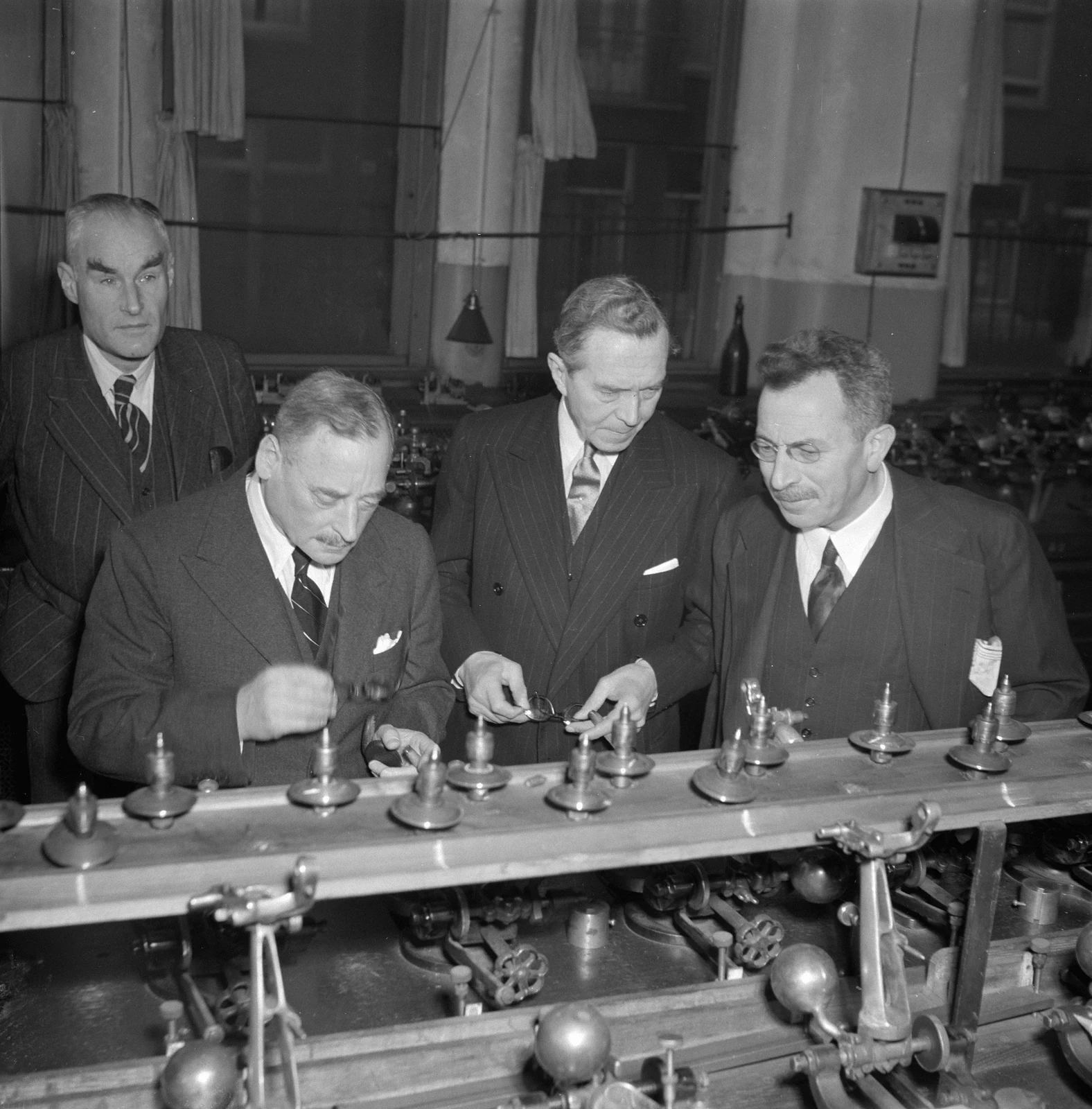
1880–1957
Ernest Oppenheimer
German-born British mining financier and Anglo American co-founderErnest Oppenheimer linked diamond dealing, international finance and South African mining management. Anglo American’s formation and his later De Beers chairmanship reshaped major enterprises, while central selling concentrated market power. His public service and selective reforms coexisted with racial paternalism and an industry built on unequal labour relations.Read biographyQuick answers
Common questions
- Was the Diamond Corporation a government regulator?
- No. It was a private commercial organisation connecting diamond producers, dealers and marketing arrangements.
- Why are both 1930 and 1934 important?
- The corporation was created in 1930; buying, sorting and selling were reorganised further in 1934, including the new Diamond Trading Company.
- Why hold diamonds instead of immediately selling them?
- Inventory could delay supply when demand was weak, but it tied up funds and depended on the ability to finance continued purchases.
- Did price management protect everyone equally?
- No. Commercial participants’ revenue interests differed from consumers’ interest in competition and workers’ interest in secure employment.
Primary and institutional sources
How this history was checked
The company’s historical profile and timeline are compared with gemological and economic research. Only the identified historical passages and indexed excerpts were consulted; no complete company, trade, litigation or antitrust archive review is claimed. The 1945 photograph is illustrative and does not depict the 1930 formation. This article was reviewed on 24 October 2026.
- De Beers / US Patent and Trademark Office case archiveCorporate Profile: selected historical account of the 1930 Diamond Corporation and central selling
- A. J. A. Janse / Gemological Institute of AmericaA History of Diamond Sources in Africa, Part II: selected syndicate, buying and selling passages
- David Troy Cochrane / York University2015 dissertation: selected cartel ownership, buying obligations and stockpile analysis
- Business HistoryAn antitrust case in the diamond industry: research discussion of international price control and the 1934 DTC
- De Beers GroupHistorical timeline: 1926 board membership and the 1932 mine closures
- South African History OnlineSir Ernest Oppenheimer: birth, Kimberley, Parliament and mining career
- Koos Raucamp / Anefo / Nationaal ArchiefSir Ernest Oppenheimer, 3 December 1945, archive photograph 901-1810; exact CC0 record
- Wikimedia CommonsArchive 901-1810: original binary, first and current CC0 descriptions
- Creative CommonsCC0 1.0 Universal public-domain dedication