
The short answer
How did a railway contractor’s partnership differ from the engineer’s design responsibility?
Compare the documents
Authority, evidence and limits
These records describe different responsibilities; one should not silently substitute for another.
| Record | What it establishes | What it does not establish |
|---|---|---|
| Railway association’s contract history | Names the 1852 contracting partnership and supply arrangements. | A partnership contract is not proof of sole engineering authorship. |
| Parks Canada bridge study | Separates named engineers, construction direction, completion and opening. | The inspected passage is not every drawing or site instruction. |
| Toronto Public Library 1860 plate record | Identifies a contemporary construction publication and its contributors. | A catalogue description alone cannot validate the depicted method’s performance. |
A contractor’s name is not a complete credit list
Brassey’s Canadian work is a useful case for separating a contract from a design. The Toronto Railway Historical Association identifies the 1852 Grand Trunk contracting group as Peto, Jackson, Brassey and Betts. That establishes a partnership involved in delivering a railway undertaking; it does not make each partner the designer of every bridge, locomotive or station. A large contract could bring several kinds of expertise into one commercial arrangement. The question to ask is therefore not which single person built the railway, but which decisions and obligations the surviving record connects with each named participant.
Sources for this section: [2]
Design and construction direction need different boxes
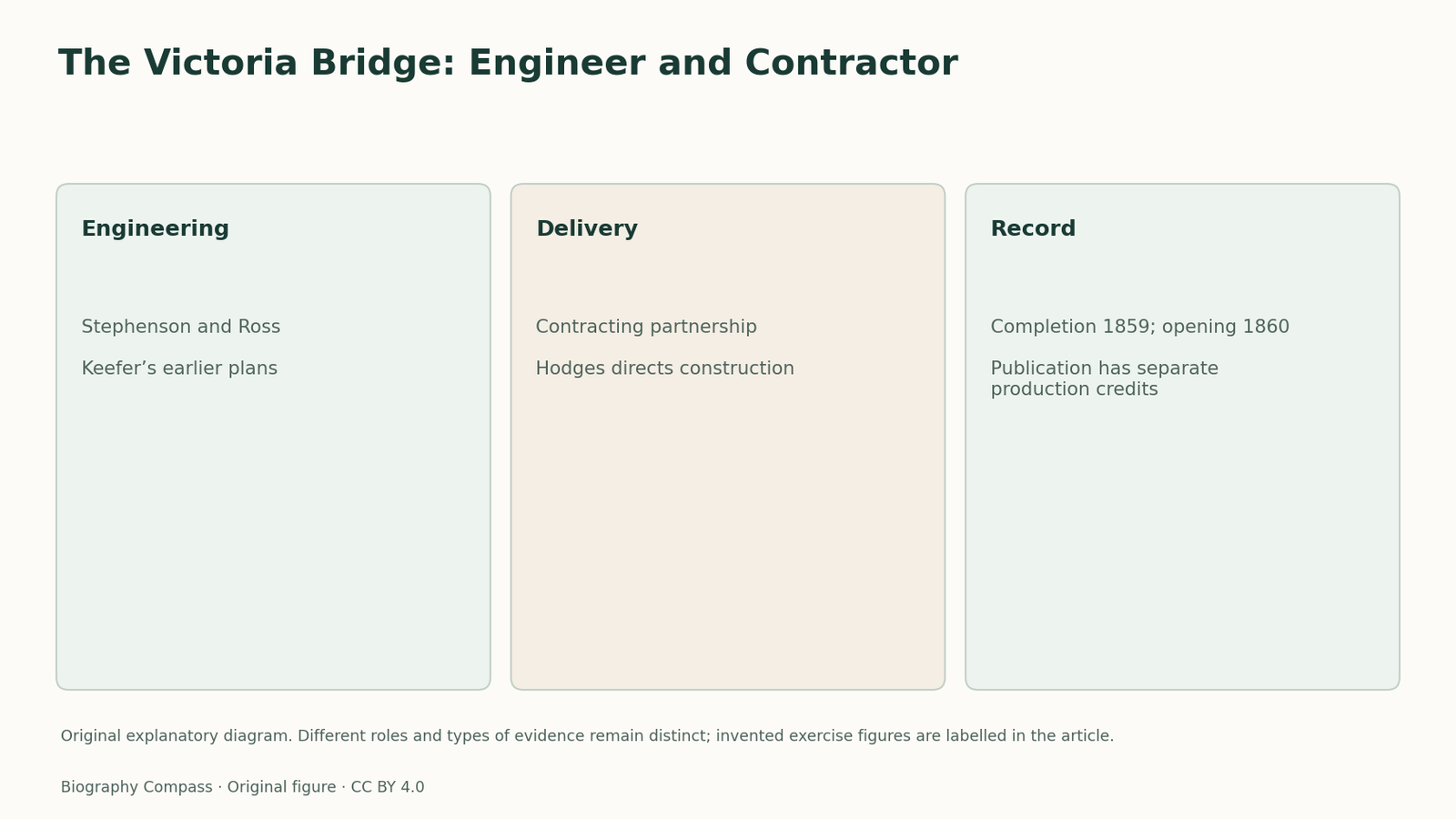
Parks Canada’s bridge history identifies Robert Stephenson and Alexander McKenzie Ross in the engineering account and connects the design’s development with Thomas Coltrin Keefer’s earlier plans. It separately names James Hodges in directing construction for the contracting firm. These credits belong together without being interchangeable. The engineer’s work concerns the structure and its requirements; construction direction concerns organising their execution at a difficult site. This distinction is an explanatory model derived from the named responsibilities, not a claim to have inspected every drawing or site instruction. It also prevents Brassey’s reputation from erasing collaborators who left their own documentary traces.
Sources for this section: [3]
A construction publication has its own makers
Toronto Public Library catalogues an 1860 plate titled Floating Dam, Victoria Bridge, Montreal. Its record identifies Hodges alongside the lithographic and publishing contributors. We inspected that catalogue description, not a full set of measured drawings, so the title is evidence of a published construction subject rather than proof of a particular dam’s performance. The record nevertheless adds a useful distinction: the making of a bridge and the making of an illustrated account of that bridge are separate collaborations. The 1859 completion and 1860 formal opening identified by Parks Canada likewise describe different events rather than an unavoidable contradiction about when the structure existed.
Responsibility-map exercise and answer
Draw three columns headed engineering, contracting and published record. Put Stephenson and Ross in the first, the named contracting partnership in the second, and Hodges’s 1860 publication with its image-production credits in the third. Add Hodges’s construction-direction role between the first two rather than forcing him into only one box. Now evaluate a hypothetical caption saying Brassey personally designed the bridge because his partnership held the contract. A supported answer replaces it with a statement identifying the contractor group and the separately recorded engineers. It also refuses to infer the maker of every structural detail from a catalogue title. The map is original teaching material; it summarises the inspected evidence without pretending that modern professional boundaries describe every clause of the original agreements.
Continue the chronology
Related history guides
Westland Row: Designer, Builder and Roof
Use Westland Row’s architectural record and Le Fanu’s recollection to separate railway design, building and roof work, with an original credit-allocation exercise.
Read the timelineApril–May 1912Titanic 1912: Davits, Boats and Rules
Compare Titanic’s 1912 davit capability, installed boats and regulatory requirements in official records, with a worked exercise that avoids assigning unsupported blame.
Read the timelineBiography context
Explore United Kingdom through connected lives
Connected biographies
People behind the collaboration
1805–1870
Thomas Brassey
Railway contractor and partnership organiserThomas Brassey organised railway construction through contracting partnerships, linking engineers’ plans with finance, materials, workshops and large construction workforces.Read biography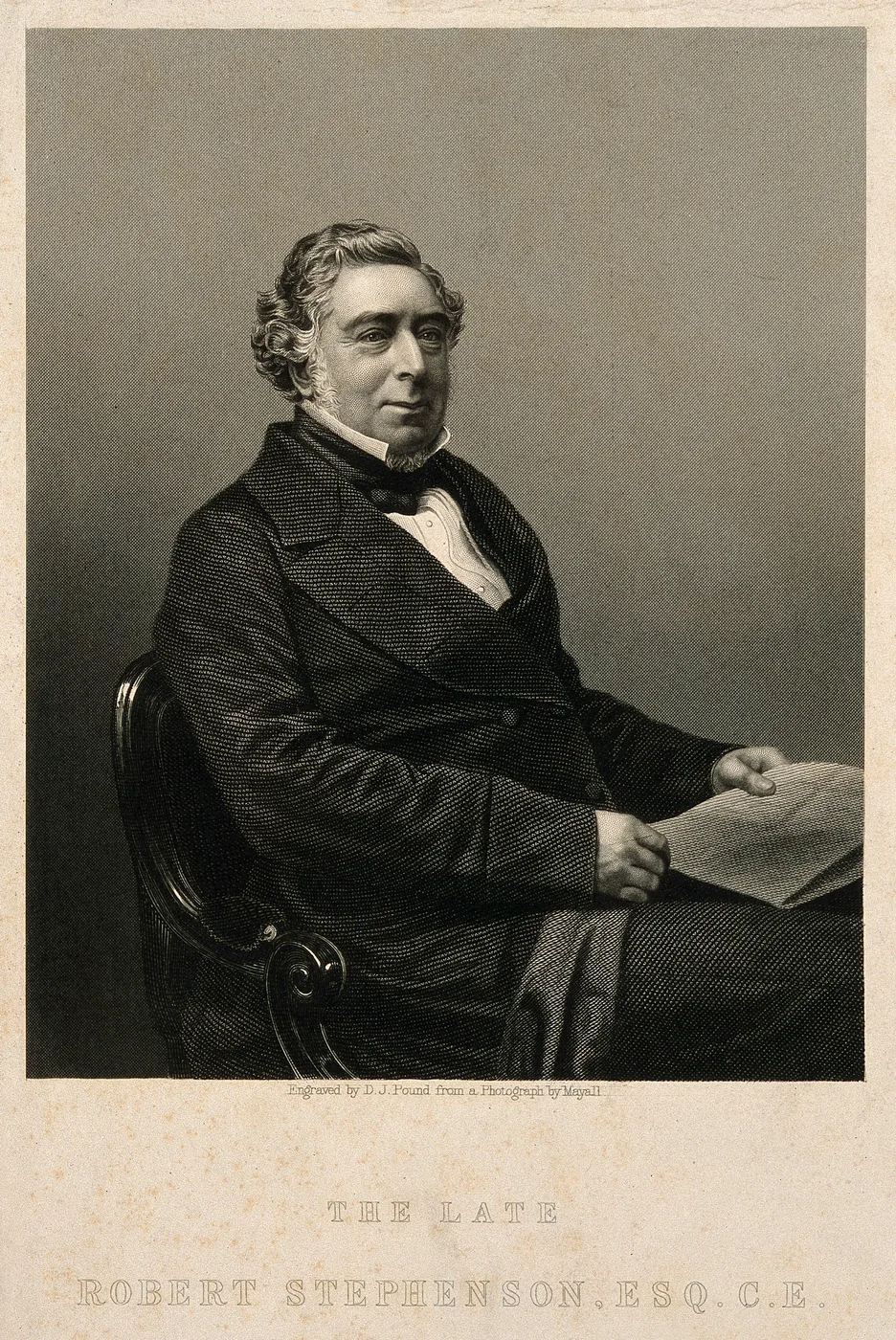
1803–1859
Robert Stephenson
Locomotive manufacturer and civil engineerRobert Stephenson helped turn railway engineering into a large manufacturing and construction enterprise. George Stephenson’s son, he directed locomotive production, led major railway works and designed ambitious bridges, while the fatal Dee bridge collapse exposed the consequences of structural failure.Read biography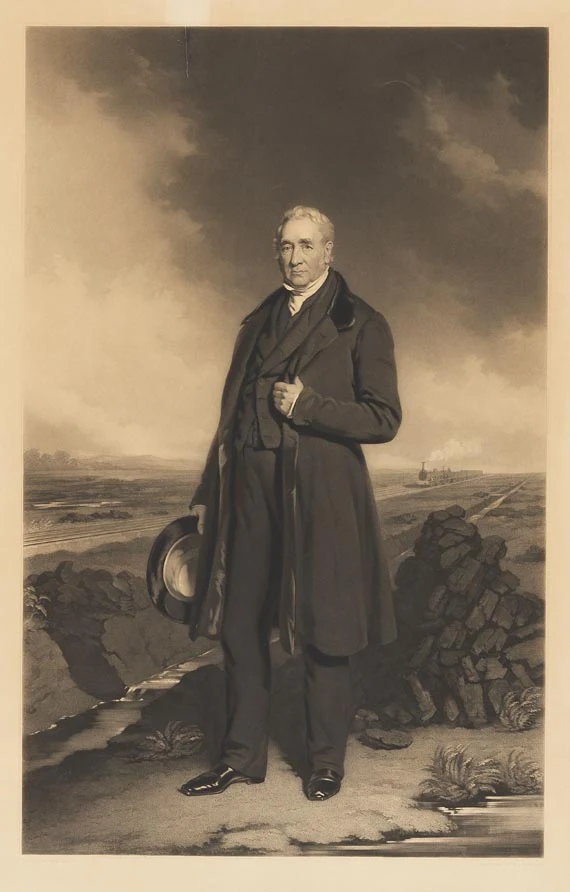
1781–1848
George Stephenson
Colliery engineer, railway engineer and locomotive manufacturerGeorge Stephenson moved from colliery work into engineering, locomotive manufacture and major railway construction. His work on the Stockton and Darlington and Liverpool and Manchester railways helped establish steam transport as a commercial system.Read biography1779–1844
Joseph Clement
Precision engineer and machine-tool makerJoseph Clement supplied the precision workshop, manufacturing drawings and specialised tools that turned part of Charles Babbage’s Difference Engine design into working machinery.Read biographyQuick answers
Common questions
- Was Brassey the sole designer of the Victoria Bridge?
- No. The inspected history distinguishes the contracting enterprise from the named engineers and from James Hodges’s direction of construction.
Primary and institutional sources
How this history was checked
The bibliography distinguishes contemporary records, retrospective participant accounts and later institutional research. Access limits and uncertain attributions are identified in the article; the exercise is an original teaching example. This article was reviewed on 7 November 2026.