
The short answer
Bevan’s April 1951 resignation was about the direction of economic policy as well as proposed NHS charges. Gaitskell defended a spending ceiling and new revenue; Bevan challenged rearmament priorities and the distribution of the burden. Their disagreement belongs to the history of governing an established welfare service, distinct from the story of its 1948 launch.
Different questions within one dispute
What did the principal arguments concern?
The speakers disagreed over priorities and practicability, not merely arithmetic.
| Participant | Central concern | Public evidence |
|---|---|---|
| Hugh Gaitskell | Contain health spending while meeting other public obligations | Budget passage, 10 April: ceiling, charges and estimated revenue |
| Aneurin Bevan | Protect social provision and challenge the allocation of burdens | Resignation statement, 23 April: rearmament, taxation and health charges |
| Harold Wilson | Match the armaments programme to available economic resources | Resignation statement, 24 April: raw materials and practical capacity |
Chronology
A timeline of the turning points
Bevan moved to the Ministry of Labour
He had ceased to be health minister before the April confrontation.
Gaitskell outlined the health-service settlement
The Budget defended a £400 million ceiling and proposed charges for dentures and spectacles.
Bevan made his resignation statement
He challenged the armaments programme, fiscal priorities and the burden placed on social services.
Wilson explained his own resignation
He argued that the planned rearmament programme exceeded practical resources.
Denture and spectacle charges followed
The charging dispute became part of a wider division within Labour.
Prescription charges began under the next government
This later development should not be conflated with the immediate 1951 proposals.
The dispute arose within an established service and a new office
By 1951 the NHS had operated for nearly three years. Rising expenditure, pressure on government finances and the demands of rearmament created a different question from whether to launch a comprehensive service. Ministers were deciding how much to spend, how to raise revenue and which commitments should receive protection when resources were limited.
Bevan had moved from Health to Labour in January. His resignation therefore did not remove the serving health minister on the day of a health-service opening. It brought a former architect of the service into public opposition to a Cabinet decision affecting it. His earlier work gave the dispute particular symbolic force, but the immediate circumstances were the Budget and economic strategy of 1951.
Gaitskell defended a ceiling and new charges
In his Budget statement on 10 April, Chancellor Hugh Gaitskell said that health-service estimates had to remain within a £400 million ceiling. He described the pressure from hospital costs and other social spending and argued that further revenue was necessary to avoid reducing essential standards. His justification presented the proposal as a balance between public commitments.
The proposed charges concerned dentures and spectacles, with exemptions and assistance for hardship. Gaitskell estimated their yield at about £25 million in a full year. Reading the Budget passage establishes what the government proposed and how it defended it. It does not establish that the ceiling was economically inevitable or that opponents misunderstood the sums; those were precisely the matters under political dispute.
Sources for this section: [5]
Bevan’s objections went beyond a particular charge
In his Commons statement on 23 April, Bevan argued that the arms programme was incompatible with available economic resources and the protection of living standards and social services. He challenged the premise that the government could first commit to that programme and then treat restrictions elsewhere as an unavoidable consequence. The dispute was about the order of priorities.
He also argued about the distribution of taxation and the treatment of the National Insurance Fund. Charges carried a principle as well as a revenue effect: patients would face a direct payment where he wanted collective provision protected. His statement is a primary source for his reasoning, including its broader economic claims. Those claims should be attributed to him rather than silently adopted as a settled verdict on the Budget.
Wilson’s resignation exposed a wider disagreement over resources
Harold Wilson explained his own resignation on 24 April. He emphasised shortages of raw materials and argued that the rearmament programme could not be carried out as planned. He distinguished opposition to the programme’s scale and practicability from opposition to effective defence. His statement supports reading the crisis as more than a narrow dispute over health charges.
The resignations turned Cabinet disagreement into public party conflict. Bevan became associated with a recognisable Labour left, while the question of how to preserve social commitments under financial and strategic pressure continued. An immediate ministerial rupture and the longer development of “Bevanism” are different historical scales: the latter cannot be reduced to one exchange in the Commons, but the former gave it an important focal point.
The charges need a precise chronology and a proportionate conclusion
Denture and spectacle charges belong to 1951. Actual prescription charging began in 1952 under the succeeding government, even though earlier legislation had already created powers to levy it. Combining these into a single “1951 prescription charge” misstates both the policy that prompted the immediate confrontation and the sequence of later implementation.
Bevan’s resignation did not dismantle the NHS or make all medical care chargeable. It marked a serious dispute about how its founding commitments should be financed within competing national priorities. The episode remains useful because the participants made distinct arguments: Gaitskell defended limits and revenue; Bevan challenged the settlement’s principles and distribution; Wilson questioned its practical economic assumptions. Their disagreement should be explained before assigning a simple winner.
Continue the chronology
Related history guides
Biography context
Explore United Kingdom through connected lives
Connected biographies
Read the lives behind the Cabinet division
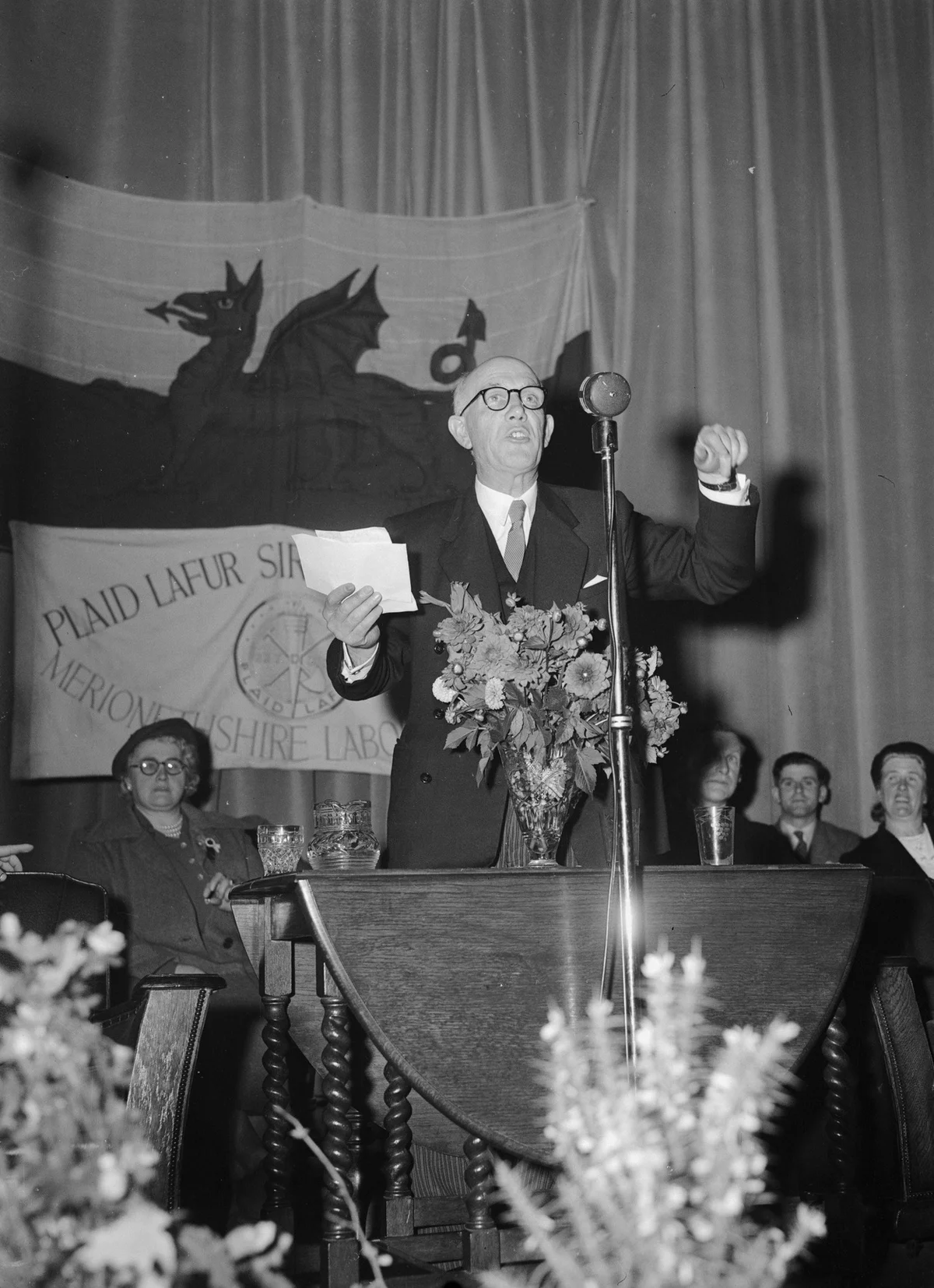
1897–1960
Aneurin Bevan
Welsh Labour politician, minister and socialist writerAneurin Bevan was a Welsh miner and Labour politician who represented Ebbw Vale from 1929 until 1960. As health minister in Attlee’s government he led the establishment of the NHS, while his housing responsibilities, resignation over spending priorities and later party role extended well beyond that achievement.Read biography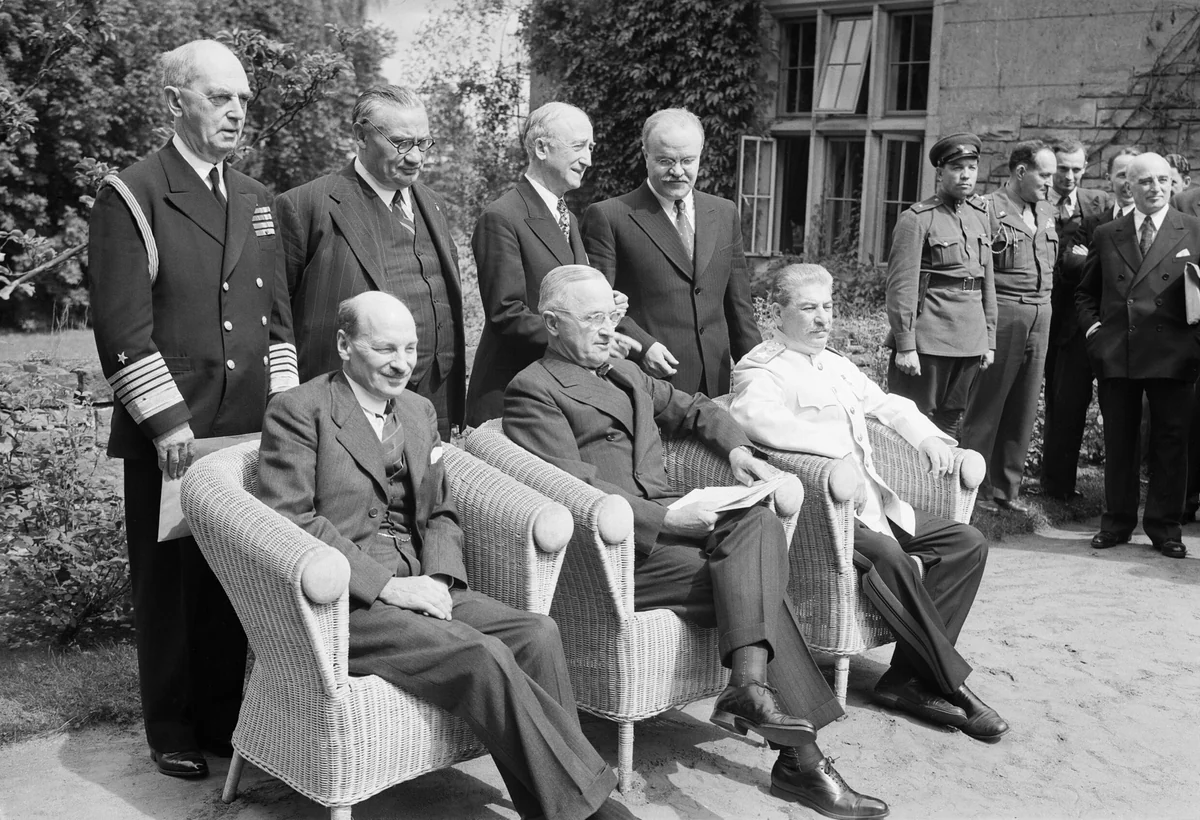
1883–1967
Clement Attlee
British prime minister and Labour leaderClement Attlee was British prime minister from 1945 to 1951 and Labour leader from 1935 to 1955. His governments established the NHS, expanded social insurance and nationalised major industries while confronting austerity, imperial withdrawal and the emerging Cold War.Read biography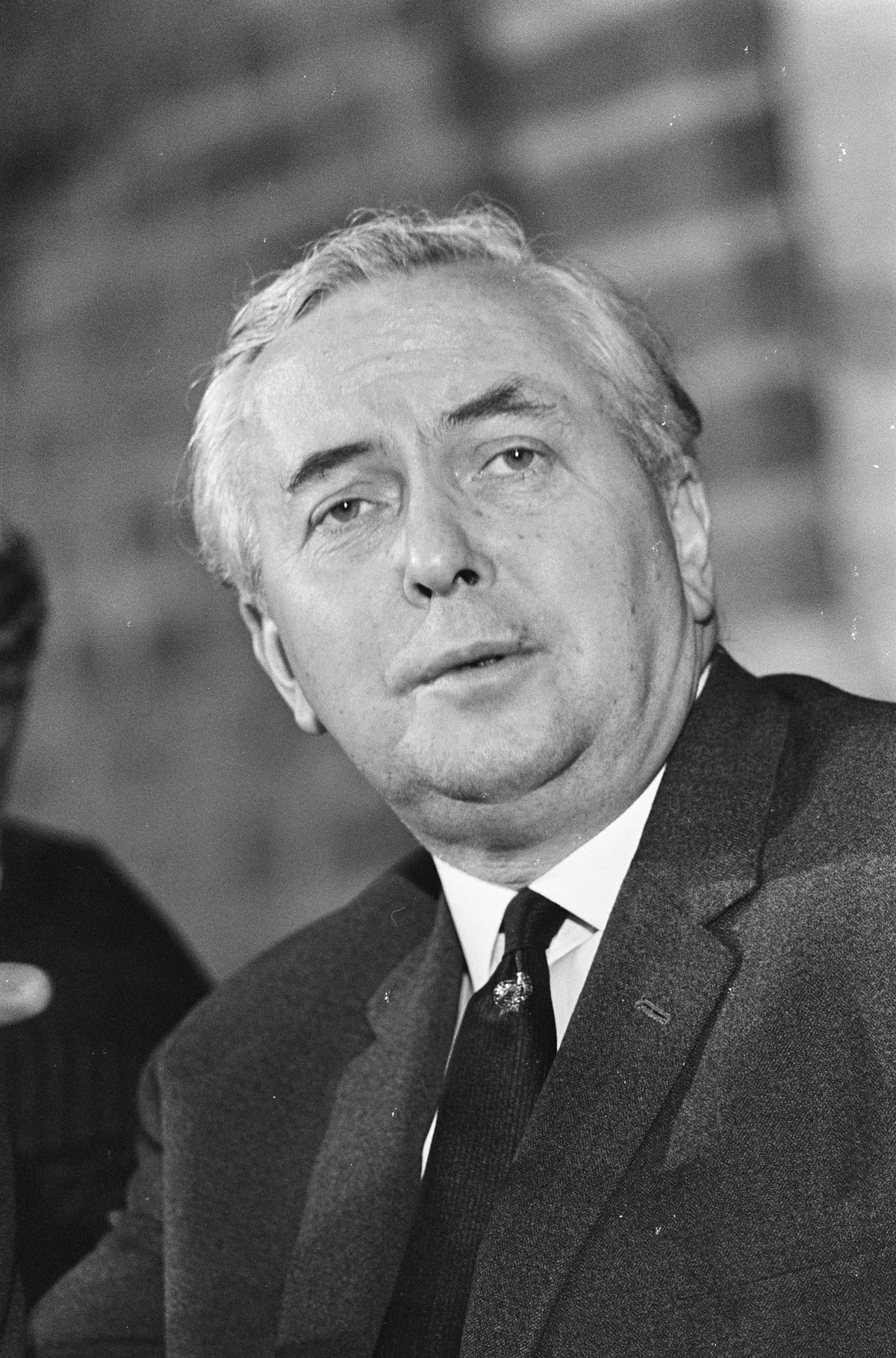
1916–1995
Harold Wilson
British Labour politician and prime ministerHarold Wilson was a Labour prime minister of the United Kingdom in 1964–1970 and 1974–1976. He linked a promise of technological modernisation with social reform, while managing sterling crises, a changing international role and deep disagreements over Europe.Read biographyQuick answers
Common questions
- Was Bevan still Minister of Health when he resigned?
- No. He had become Minister of Labour in January 1951 and resigned from that office in April.
- Was the dispute only about teeth and spectacles?
- No. They were the immediate charging proposals, but Bevan and Wilson also challenged rearmament priorities, resources and the distribution of financial burdens.
- Did prescription charging begin in 1951?
- No. Actual prescription charging began in 1952 under the succeeding government. Earlier powers to charge and their later use are different events.
- Did Bevan’s resignation end the NHS?
- No. The service continued. The resignation exposed a political division over its financing and the wider Budget.
Primary and institutional sources
How this history was checked
Read the focused Budget passage, Bevan’s resignation statement and Wilson’s separate statement, cross-checked against Rivett’s early-NHS chronology and the Welsh biographical entry. No complete Treasury, Cabinet or party archive review is claimed. This article was reviewed on 23 October 2026.
- Dictionary of Welsh Biography / John Graham JonesAneurin Bevan: life and political career
- Nuffield Trust / Geoffrey Rivett1948–1957: establishing the NHS, early finance and charges
- UK Parliament, HansardAneurin Bevan’s resignation statement, 23 April 1951
- UK Parliament, HansardHarold Wilson’s resignation statement, 24 April 1951
- UK Parliament, Historic HansardHugh Gaitskell’s Budget: NHS ceiling and charges, 10 April 1951
- National Library of Wales / Wikimedia CommonsBevan in Corwen, 3 October 1952: exact photograph and licence
- Creative CommonsAttribution-ShareAlike 4.0 International licence