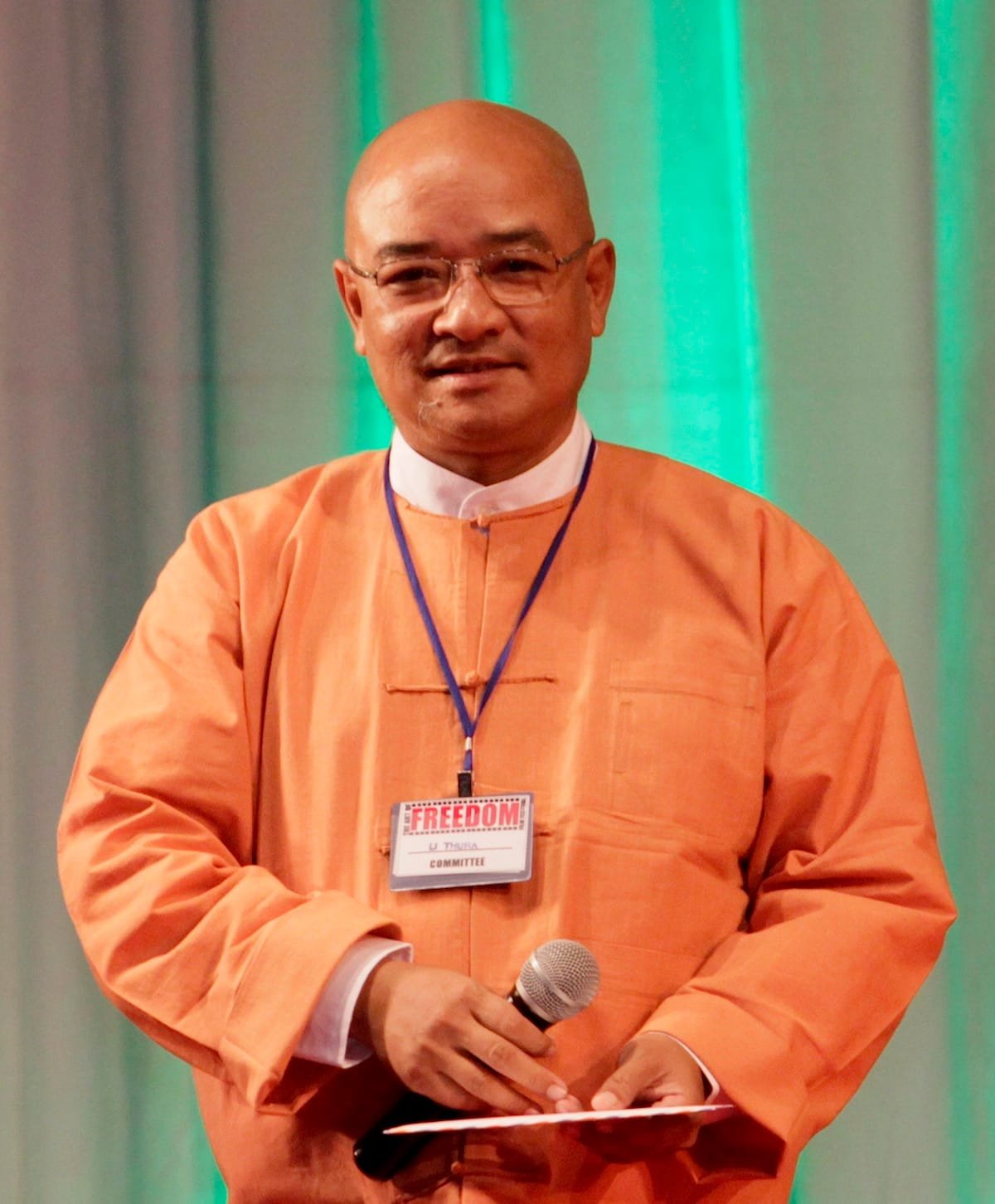
In this biography
Quick facts
- Born
- 27 January 1961
- Birthplace
- Rangoon, Burma
- Country
- Myanmar
- Nationality
- Burmese
- Known for
- Using satire to criticise military rule and organising independent relief after Cyclone Nargis
- Birth name
- Maung Thura
- Stage name
- Zarganar · “Tweezers”
- 2008 sentence
- 59 years, later reduced to 35
- Recognition
- PEN writer and One Humanity Award
Why this life matters
Zarganar demonstrates how popular comedy became a form of public criticism in a media system where direct political speech carried severe risk.
Timeline
Key moments
Born in Rangoon
Born Maung Thura into a family of writers and performers.
Became a national comedian
Built a television and stage audience through anyeint comedy, imitation and political double meanings.
Imprisoned for political satire
Was detained after the 1988 uprising and later served four years after a performance mocking military leadership.
Organised Cyclone Nargis relief
Mobilised private aid and criticised the official response before receiving a 59-year prison sentence.
Released under amnesty
Left Myitkyina Prison after his reduced 35-year sentence drew sustained international campaigning.
Detained after the military coup
Was arrested in April and conditionally released in October after more than six months.
Comedy built from language and public frustration
Zarganar was born Maung Thura in Rangoon in 1961 to a literary family. He trained as a dentist, and his stage name—usually translated as “tweezers”—preserved that connection. While studying, he organised student performers and developed a style based on imitation, puns and double meanings. In Burmese anyeint theatre, comedians interrupt music and dance with topical dialogue, giving him a popular form through which daily frustration could become shared laughter.
By the mid-1980s Zarganar was a national television and stage figure. His jokes addressed corruption, shortages, censorship and the failures of military government without always naming officials directly. Audiences understood the references, and censors did too. He was detained after participating in the 1988 democracy uprising, then imprisoned from 1990 to 1994 after impersonating military leader Saw Maung before a large crowd. Later bans kept him from performing publicly but did not end his writing and filmmaking.
Cyclone relief and a decades-long sentence
When Cyclone Nargis devastated the Irrawaddy Delta in May 2008, Zarganar organised artists and volunteers to deliver food, water and other supplies. He also told foreign media that survivors still lacked help and criticised the government’s response. Authorities arrested him in June. Courts imposed sentences totalling fifty-nine years under the Electronic Transactions Act and other provisions; an appeal later reduced the term to thirty-five years.
Human Rights Watch documented his relief network and treated the prosecution as part of a wider campaign against independent aid workers and critics. PEN organisations, performers’ unions and other rights groups campaigned for his freedom. He received international honours while imprisoned, including PEN Canada’s One Humanity Award. A general amnesty released him from Myitkyina Prison in October 2011, though he stressed that many other political prisoners remained behind bars.
A continuing struggle over cultural speech
After release, Zarganar travelled, spoke about censorship and returned to film and cultural work during Myanmar’s limited political opening. The space was never secure. Following the February 2021 military coup, authorities arrested artists, actors and writers who criticised the takeover. Zarganar was detained in April after posting critical comments and conditionally released in October after more than six months, according to PEN’s case record.
His importance lies in the connection between mass entertainment and civic speech. Satire allowed people to recognise a political reality together even when newspapers and broadcasters could not describe it plainly. Relief work then turned that public trust into practical action after a disaster. Repeated arrests across 1988, 1990, 2007, 2008 and 2021 show how successive military authorities treated comedy as politically consequential. His biography belongs to cultural history because performance itself became an institution of dissent.
Quick answers
Frequently asked questions about Zarganar
- Who is Zarganar?
- Zarganar is a comedian, poet, filmmaker and freedom-of-expression advocate. Zarganar demonstrates how popular comedy became a form of public criticism in a media system where direct political speech carried severe risk.
- What is Zarganar best known for?
- Zarganar is best known for using satire to criticise military rule and organising independent relief after Cyclone Nargis.
- When and where was Zarganar born?
- Zarganar was born on 27 January 1961 in Rangoon, Burma.
Sources and further reading
Explore the evidence
These references support the biography and offer further reading. Official records, first-person accounts and independent reporting provide different perspectives; image records document attribution and licensing.