In this biography
Quick facts
- Born
- 1966
- Birthplace
- Not independently established
- Country
- Myanmar
- Nationality
- Burmese
- Known for
- Prisoner of Conscience, A-Maze and advocacy for persecuted writers
- Birth year
- 1966
- Professional work
- Medicine, fiction and nonfiction
- Imprisonment
- 1993–1999; sentenced to 20 years
- PEN recognition
- PEN/Barbara Goldsmith Freedom to Write Award, 1996
- English memoir
- Prisoner of Conscience, 2016
- Later book
- A-Maze, English translation by Maung Zaw, 2024
Why this life matters
Her work connects literature and medicine with personal testimony about imprisonment and the defence of other writers facing persecution.
Timeline
Key moments
Birth year
Recorded by the University of Iowa.
Imprisonment
Sentenced to 20 years in October after her arrest.
Freedom to Write Award
Received PEN/Barbara Goldsmith recognition while imprisoned.
Release
Released before completing the full sentence.
Iowa writing programme
Participated in the International Writing Program.
Writing fellowships
Brown’s International Writers Project followed by a Radcliffe fellowship.
PEN Myanmar
Became its first president.
English prison memoir
Silkworm published Prisoner of Conscience; the Disturbing the Peace Award followed in the same year.
A-Maze
English translation published by Balestier Press.
Medicine and Burmese-language writing
Born in 1966, Ma Thida developed parallel careers as a physician and a Burmese-language writer. The University of Iowa’s 2005 profile describes her as a fiction writer, surgeon and activist, including work at Yangon’s Muslim Free Hospital, where poor patients could receive treatment without charge.
Her literary work includes short stories, nonfiction and the novel The Sunflower. Harvard’s fellowship biography also records editing and publishing a youth magazine and contributing commentary to a literary magazine. Medicine and literature therefore belong to the same professional history, rather than being incidental details attached to her later imprisonment.
The 1993 sentence and release in 1999
Authorities arrested Ma Thida in 1993 and sentenced her to 20 years in prison that October. Amnesty International’s contemporary account linked the prosecution to peaceful activities associated with the National League for Democracy and adopted her as a prisoner of conscience. The authorities’ allegations should not be treated as proof of violent activity.
She spent more than five years in Insein Prison before her release in 1999. Her later memoir describes illness, restrictions and the role she attributes to Vipassana meditation in enduring detention. Those reflections are personal testimony, not medical evidence that meditation cured an illness or a reason to minimise the conditions of imprisonment.
Fellowships and Prisoner of Conscience
Her international writing work included Iowa’s International Writing Program in 2005, Brown’s International Writers Project in 2008–2009 and a Radcliffe fellowship in 2009–2010. At Radcliffe, her projects included an account of meditation during imprisonment and work on editing a novel.
Silkworm published Prisoner of Conscience: My Steps through Insein in English in July 2016. It combines her experience of political campaigning and detention with reflections on personal freedom. Her PEN/Barbara Goldsmith Freedom to Write Award came earlier, in 1996 while she was imprisoned; the inaugural Disturbing the Peace Award followed in 2016.
PEN leadership and A-Maze
Ma Thida became PEN Myanmar’s first president in 2013 and later served on PEN International’s board. Its current Writers in Prison Committee page identifies her as chair, a role supporting other writers facing persecution. That international work extends beyond the publication of her own prison experience.
A-Maze: Myanmar’s Struggle for Democracy, 2011–2023, translated by Maung Zaw, appeared in English in 2024. It moves from individual memoir into political analysis of the quasi-civilian period, the 2021 military coup and an obstructed democratic transition. These arguments are her interpretation of Myanmar’s history, not a claim that political analysis can be detached from the author’s lived involvement.
Quick answers
Frequently asked questions about Ma Thida
- Is Ma Thida a doctor or a writer?
- Both. Institutional biographies document her medical work alongside fiction, nonfiction and editing.
- Why was she imprisoned?
- Amnesty linked her 1993 prosecution to peaceful opposition activities and designated her a prisoner of conscience.
- Did she serve the full 20-year sentence?
- No. She was released in 1999 after more than five years in prison.
- Which Ma Thida book should readers start with?
- Prisoner of Conscience recounts her imprisonment. A-Maze offers her later analysis of Myanmar’s political transition.
Keep exploring
Lives connected to this story
- Ma Thanegi
Read Ma Thanegi’s distinct path through painting, cultural writing, translation and her own prison memoir.
- Journal Kyaw Ma Ma Lay
Compare another Burmese woman writer’s different literary career and historical setting.
- Aung San Suu Kyi
Read about the political leader whose movement forms part of the memoir’s historical context.
Sources and further reading
Explore the evidence
These references support the biography and offer further reading. Official records, first-person accounts and independent reporting provide different perspectives; image records document attribution and licensing.
- 1. University of Iowa · 2005 writer profile1966 birth year, medical work and writing
- 2. Amnesty International · 24 November 1993Contemporary prosecution and prisoner-of-conscience record
Contemporary Amnesty and the author’s testimony support 1993, despite an older PEN case page’s conflicting opening year. Sources disagree on the precise October sentencing day and release month, so neither is asserted.
- 3. Harvard Radcliffe · fellowship biographyLiterary work and international fellowships
- 4. Silkworm Books · publisherEnglish prison memoir, July 2016, and award record
Meditation’s role is the author’s personal testimony, not a clinical claim. English publication in 2016 is distinguished from the events described.
- 5. PEN America · author profile1993–1999 imprisonment, PEN recognition and Myanmar leadership
- 6. PEN International · current committeeWriters in Prison Committee chair
- 7. Balestier Press · publisher2024 A-Maze edition and translator Maung Zaw
The translator is Maung Zaw. The 2024 book is identified as the author’s political analysis, not neutral consensus.
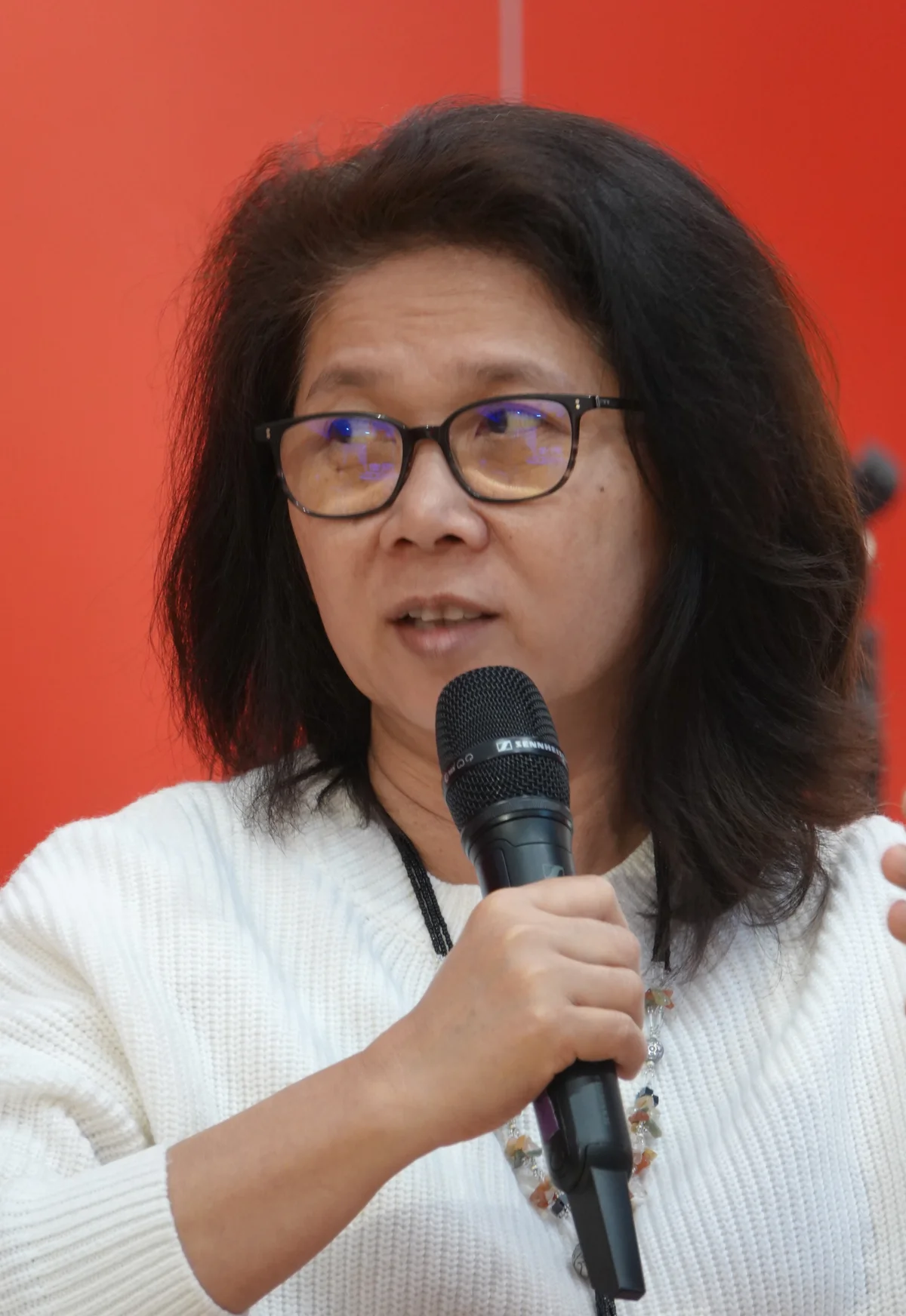
- 8. Wikimedia Commons · Amrei-MarieOwn-work Leipzig Book Fair photograph and CC BY-SA 4.0
Amrei-Marie identifies the author at the 27 April 2023 Leipzig Book Fair event in an own-work CC BY-SA 4.0 upload.