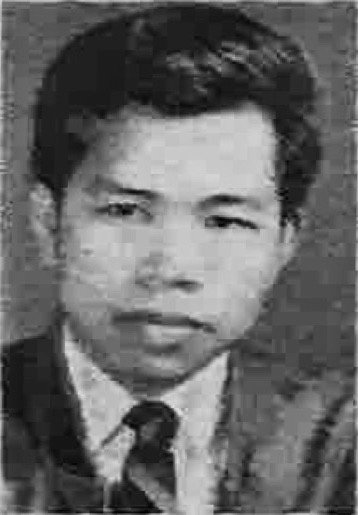
In this biography
Quick facts
- Born
- 2 May 1923
- Died
- 11 April 2016
- Birthplace
- Tutong District, Brunei
- Country
- Brunei
- Nationality
- Bruneian
- Known for
- Writing the lyrics of “Allah Peliharakan Sultan,” Brunei’s national anthem
- Full name
- Pengiran Muhammad Yusuf bin Pengiran Abdul Rahim
- Pen name
- Yura Halim
- National work
- Lyrics of “Allah Peliharakan Sultan”
- Government office
- Chief minister · 1967–1972
- Literary honour
- S.E.A. Write Award · 1993
Why this life matters
Yura Halim shows how literary nationalism and state-building overlapped in twentieth-century Brunei, where a poet could also become chief minister and diplomat.
Timeline
Key moments
Born in Tutong
Born on 2 May and later entered education and public service.
Wrote national anthem lyrics
Created the words paired with Haji Awang Besar Sagap’s melody.
Anthem officially adopted
“Allah Peliharakan Sultan” became Brunei’s official national anthem.
Served as chief minister
Became acting chief minister in 1967, received the substantive appointment in 1969 and served until July 1972.
Received the S.E.A. Write Award
Recognised in Bangkok for his contribution to poetry.
Education, war and a return to Brunei
Pengiran Muhammad Yusuf bin Pengiran Abdul Rahim was born on 2 May 1923 in Kampong Kandang, Tutong District. He later became widely known by the pen name Yura Halim, although official records also attach honorifics and use variant spellings of Muhammad or Mohd. Yusof. His education crossed Malay, English and Japanese systems at a time when Brunei’s administrative and political future was still shaped by a British protectorate relationship.
During the Second World War he studied in Japan and was in Hiroshima when the atomic bomb was dropped in August 1945. A 2010 Pelita Brunei account described him as one of the survivors. He returned to Brunei in 1946. The experience belongs to the same life as his later work in government and literature, but it should not reduce him to a wartime footnote: his long public career was built in the decades after his return.
How Brunei’s national anthem began
In 1947 Yura Halim wrote the words for a patriotic song composed by Awang Haji Besar bin Sagap. Brunei’s Information Department says the song first circulated among Malay teachers, was taught to pupils in Brunei Town and spread through schools before it gained official status. The Information Department’s national-symbol booklet dates its official recognition to 1951.
“Allah Peliharakan Sultan” remained the anthem when Brunei became fully independent in 1984. Its six lines invoke divine protection, just rule, public happiness and the peace of Brunei Darussalam. That makes Yura Halim’s most familiar text both a song of the monarchy and a compact statement of civic ideals. It is heard at state ceremonies and is taught as part of national-symbol programmes, so the work continues to shape public ritual long after its author’s death.
Sources for this section: [9]
Constitutional administration and the chief ministry
Yura Halim rose through Brunei’s civil service and served as state secretary. He was close enough to the constitutional process to later lecture on the drafting of the 1959 Constitution, a six-year negotiation that created written institutions for internal self-government. His career therefore connected cultural nationalism to the practical work of administration: language, education, legal arrangements and public offices all formed part of the state being built around him.
He became acting chief minister on 1 June 1967. Pelita Brunei recorded his substantive appointment in July 1969 and noted that he had previously been state secretary. As chief minister he headed the administration during the early reign of Sultan Hassanal Bolkiah, when Brunei remained a British-protected state and debates about revenue, development and the path to independence continued. He left the chief ministry in July 1972, when Pengiran Abdul Momin took over in an acting capacity.
Poetry, fiction and historical memory
The anthem was only one part of Yura Halim’s writing. Pelita Brunei records his poetry, short stories and fiction, including “Tangisan Terjajah,” a 1945 poem about dispossession and national awakening, and later works such as Mahkota Yang Berdarah, Adat Mengulum Bahasa and Loyang Tua Balan Berkias II. The Smithsonian catalogue also records Sejarah Berunai, a historical work written with Jamil Umar and published in 1958.
He received the S.E.A. Write Award in 1993, placing his contribution within a regional literary programme. When he died on 11 April 2016, the official Pelita Brunei obituary treated him as a national figure rather than only a retired administrator. His significance lies in the overlap: he wrote a national symbol, helped explain Brunei’s constitutional formation, held its highest administrative office of the period and contributed to the modern Malay literature through which the country narrated itself.
Quick answers
Frequently asked questions about Yura Halim
- What was Yura Halim’s real name?
- Yura Halim was the pen name of Pengiran Muhammad Yusuf bin Pengiran Abdul Rahim. Official records also use variants including Mohd. Yusof.
- Did Yura Halim write Brunei’s national anthem?
- He wrote the lyrics; Awang Haji Besar bin Sagap composed the music. The song originated in 1947, and the Information Department’s national-symbol booklet places official recognition in 1951.
- When was Yura Halim chief minister?
- He became acting chief minister on 1 June 1967, received the substantive appointment in July 1969 and served until July 1972.
- Which literary award did Yura Halim receive?
- He received the S.E.A. Write Award for poetry in 1993.
Keep exploring
Lives connected to this story
- Badaruddin Othman
Continue with Badaruddin H.O., another Bruneian poet whose literary career developed alongside public service and gained regional recognition.
- Abdul Aziz Juned
Read another Bruneian poet’s distinct combination of religious institutions and Malay literary expression.
- Omar Ali Saifuddien III
Read the constitutional and state-building context of his administrative career.
- Marsal Maun
Compare another teacher-administrator who became Brunei’s chief minister.
- Muslim Burmat
Explore another major contributor to modern Bruneian literature.
Sources and further reading
Explore the evidence
These references support the biography and offer further reading. Official records, first-person accounts and independent reporting provide different perspectives; image records document attribution and licensing.
- 1. Information Department of Brunei DarussalamNational Anthem of Brunei Darussalam — official history
- 2. Pelita BruneiThe 1959 Constitution and Yura Halim’s literary work
- 3. Pelita BruneiAppointment as chief minister in 1969
The appointment report distinguishes acting service since 1 June 1967 from the substantive appointment in July 1969.
- 4. Pelita BruneiNegara kehilangan tokoh berwibawa — official obituary
The official obituary supplies 2 May 1923–11 April 2016. Several Pelita files were available through indexed text; a fresh full download of every issue is not claimed.
- 5. Pelita BruneiBrunei literature, national writing and “Tangisan Terjajah”
- 6. Pelita BruneiBrunei literary history and S.E.A. Write recipients
- 7. Smithsonian InstitutionSejarah Berunai catalogue record
- 8. Wikimedia Commons1968 portrait and public-domain record
- 9. Information Department of Brunei DarussalamNational-symbol booklet, p. 8: anthem lyrics, music and recognition
Indexed government text separates the 1947 song from 1951 official recognition, and lyrics from music. Direct retrieval failed; no full PDF or visual-page inspection is claimed. Other government summaries have used 1952, so the former claim that only secondary summaries differed is removed.