
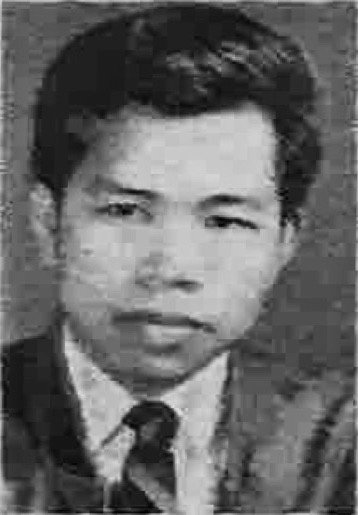
In this biography
Quick facts
- Born
- 15 April 1943
- Died
- 15 June 2021
- Birthplace
- Kiarong, Brunei Town
- Country
- Brunei
- Nationality
- Bruneian
- Known for
- Developing modern Bruneian fiction and receiving the 1986 S.E.A. Write Award
- Full name
- Muslim bin Haji Burut
- Pen name
- Muslim Burmat
- Regional honour
- S.E.A. Write Award · 1986
- First novel
- Lari Bersama Musim · 1982
Why this life matters
Muslim Burmat placed ordinary communities, social change and the memory of colonial rule at the centre of Brunei’s modern prose tradition.
Timeline
Key moments
Born in Kiarong
Born on 15 April in what was then Brunei Town.
Entered public and literary service
Worked at the Land Department before joining the Language and Literature Bureau as an assistant writer.
Published Lari Bersama Musim
Released his first major novel after two decades of short-story writing.
Received the S.E.A. Write Award
Became Brunei’s first listed recipient in the regional award sequence.
Writer and university fellow
Retired from DBP and continued his literary work through an association with Universiti Brunei Darussalam.
Published Permainan Laut
Examined gender, custom and belonging in a post-independence fishing community.
English translation published
DBP launched Running with the Seasons, the first English edition of Lari Bersama Musim, after his death.
From public service to a writing life
Muslim bin Haji Burut was born in Kiarong on 15 April 1943 and wrote under the name Muslim Burmat. He began publishing while still young, but his professional route also ran through Brunei’s public institutions. Pelita Brunei records that he joined the Land Department in 1964 and moved to the Language and Literature Bureau, or DBP, two years later.
At DBP he progressed from assistant writer into language-officer roles and remained until retiring in 1996. He then continued his literary association with Universiti Brunei Darussalam as a fellow. The career placed creative work beside editing, language development and the institutions that helped form a national readership.
Muslim spent about two decades working in short fiction before his first major novel, Lari Bersama Musim, appeared in 1982. The book follows the pressures experienced by fishing and farming communities during Brunei’s rapid economic change from the 1960s into the 1980s.
Awards, scholarship and translation
Muslim received the S.E.A. Write Award in 1986, becoming the first Bruneian writer associated with the regional honour. Further recognition included the Hadiah Sastera MASTERA literary prize in 2001 and a Brunei literary award in 2002. The awards reflected both his output and the place his fiction had acquired in Brunei’s literary canon.
Academic work continued to test the novels from different angles: researchers have studied his early short stories, economic history, war memory, language and representations of women. That range is evidence of a body of work able to support arguments beyond a single biographical label such as “social realist.”
Muslim died on 15 June 2021. In July 2022 DBP launched Running with the Seasons, an English translation of Lari Bersama Musim prepared through Universiti Brunei Darussalam’s Language Centre. The posthumous edition created a route for readers outside Malay-language study to encounter the work that established his regional reputation.
Quick answers
Frequently asked questions about Muslim Burmat
- What was Muslim Burmat’s real name?
- His name was Muslim bin Haji Burut. Muslim Burmat was his literary name, and he also used the pen name Kalam Musba.
- What was Muslim Burmat’s first novel?
- Lari Bersama Musim was published in 1982, following his earlier work in short fiction.
- When did Muslim Burmat receive the S.E.A. Write Award?
- He received the award in 1986 and was Brunei Darussalam’s first recipient.
- Is Lari Bersama Musim available in English?
- Yes. The English translation, Running with the Seasons, was launched in July 2022 after Muslim Burmat’s death.
Keep exploring
Lives connected to this story
- Yura Halim
Follow another foundational Bruneian literary figure whose writing connected language and public life.
- Journal Kyaw Ma Ma Lay
Compare another Southeast Asian novelist’s treatment of social change and community relationships.
- Luís Cardoso
Explore fiction, memory and identity through a Timorese writer’s career.
Sources and further reading
Explore the evidence
These references support the biography and offer further reading. Official records, first-person accounts and independent reporting provide different perspectives; image records document attribution and licensing.
- 1. Pelita BruneiBrunei literary history and S.E.A. Write recipients
- 2. Pelita BruneiMuslim Burmat and themes of migration
The old archive URL returned a direct-access error, although relevant official indexed text remained available. Working Language Agency records and the original literary study supply additional support.
- 3. Pelita BruneiMuslim Burmat career and literary honours
- 4. Universiti Brunei Darussalam RepositoryWomen Doing Malayness in Brunei Darussalam
- 5. Dewan Bahasa dan PustakaMastera Literary Award recipients
- 6. Universiti Brunei Darussalam Language CentreRunning with the Seasons English publication
Issue 4 is dated 2022 and records the July launch of the translation. The 2025 upload directory is not the publication year.
- 7. Wikimedia CommonsPortrait and public-domain record
- 8. Badan Pengembangan dan Pembinaan BahasaPUSAT 22/2022, p. 74: Muslim Burmat biography and bibliography
The author biography verifies his birth, public and literary career and book years. Its award chronology is cross-checked against the later institutional author note.
- 9. Badan Pengembangan dan Pembinaan BahasaPUSAT 30/2025, p. 167: author note and distinct MASTERA awards
Page 167 distinguishes the Hadiah Sastera MASTERA literary prizes from the Anugerah Sastera MASTERA author award, and confirms the 1986 regional honour and death date.
- 10. SARE · University of MalayaWomen Doing Malayness in Brunei Darussalam: original research article
Original literary research on Permainan Laut is used for interpretation of identity and gender, not as a biography of every event represented in fiction.
- 11. Dewan Sastera · Dewan Bahasa dan PustakaDiscussion of regional literature, social life and Muslim Burmat’s work


Social change viewed from ordinary lives
Rather than treating Brunei only through royal or petroleum history, Muslim’s fiction often begins with households, labour and community relationships. Lari Bersama Musim uses economic strain to make national development visible at ground level, while other works move through migration, responsibility, memory and the moral consequences of modernisation.
His settings also extended beyond Brunei. A Pelita Brunei study identified migration of mind and outlook in works set around European travel, including Pohon-pohon di Alps and Burung Salji. This wider geography complicates the idea that a small-country literature must remain confined to local scenery.
Permainan Laut, published in 2008, returns to a fishing community in Brunei Bay just after independence. Later scholarship has examined how the novel stages language, gender, custom and Malay identity through an outsider who becomes involved with the community. Such studies show why his novels remain useful material for criticism rather than only historical artefacts.
Sources for this section: [11] · [2] · [10]