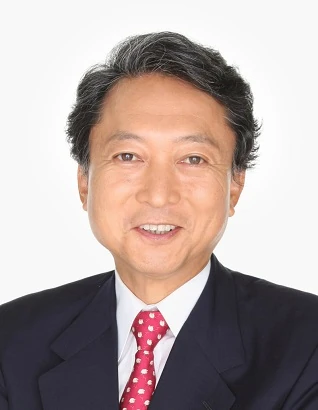
In this biography
Quick facts
- Born
- 1947
- Birthplace
- Tokyo, Japan
- Country
- Japan
- Nationality
- Not independently established
- Known for
- Coalition government and regional diplomacy
- Engineering doctorate
- 1976
Why this life matters
His career makes the distance between a political promise, coalition agreement and an international commitment unusually visible.
Timeline
Key moments
Regional dialogue after office
A programme biography dates his institute leadership from this year.
Engineering and an academic beginning
Hatoyama studied engineering at the University of Tokyo, graduating in 1969, and received a Stanford doctorate in 1976.
He worked at Tokyo Institute of Technology and Senshu University before entering the House of Representatives from Hokkaido in 1986.
The academic and parliamentary stages should both remain in view. They show a change of occupation and institutional setting, rather than an uninterrupted career in elected office from early adulthood.
Building a party beyond the LDP
Leaving the LDP in 1993, he joined Sakigake and served as deputy chief Cabinet secretary under Morihiro Hosokawa. In 1996 he helped establish the Democratic Party with figures including Naoto Kan and his brother Kunio; a further party reorganisation followed in 1998.
He led the DPJ in 1999–2002 and returned to its leadership in 2009.
Party-building involved colleagues, mergers and changing alliances. His place in that history is more precise when it is not described as the solitary invention of a new opposition.
A coalition and a difficult promise
He became prime minister in September 2009.
His own retrospective emphasises regional autonomy, a New Public approach and an East Asian Community.
At his May 2010 press conference, he acknowledged failing to keep his word over moving the Futenma replacement outside Okinawa. He defended returning to the Henoko option while conceding that Okinawan understanding had not been secured.
This was a participant’s explanation of a political reversal. Its acknowledgment of failure can be recorded without treating every reason he offered as an independently established military necessity.
After the premiership
His formal term ended on 8 June 2010.
He left electoral politics in 2012.
A Tsinghua programme biography records his leadership of the East Asian Community Institute from 2013.
Seoul National University reported a lecture he gave there in November 2015 and his earlier visit to Seodaemun Prison.
These later activities continued his interest in regional dialogue outside the authority of government. The trajectory joins academic training, party-building, executive responsibility and public advocacy, with the difficult coalition episode remaining a central turning point.
Quick answers
Frequently asked questions about Yukio Hatoyama
- Does public advocacy after office imply government authority?
- No. A former officeholder may continue public debate without exercising the authority of that office.
Keep exploring
Lives connected to this story
- Naoto Kan
Continue with another career and compare the institutions through which political choices were made.
- Morihiro Hosokawa
Continue with another career and compare the institutions through which political choices were made.
Sources and further reading
Explore the evidence
These references support the biography and offer further reading. Official records, first-person accounts and independent reporting provide different perspectives; image records document attribution and licensing.
- 1. Yukio Hatoyama official websiteYukio Hatoyama: profile
Participant retrospective. Its Cabinet-resignation date is not substituted for the formal prime-ministerial boundary.
- 2. The Columbia Encyclopedia, sixth edition, via Encyclopedia.comHatoyama, Yukio
Compact secondary reference, not doctoral research, a full legislative record or current-office evidence.
- 3. Seoul National UniversityFormer prime minister Yukio Hatoyama gives lecture at SNU
Institutional event report, not a lecture recording or complete transcript.
- 4. Tsinghua University, Institute of International RelationsHatoyama Yukio: World Peace Forum speaker biography
Selected programme biography only; no whole forum programme read or present appointment inferred.
- 5. Prime Minister’s Office of JapanPrevious prime ministers: selected terms
Direct legacy URLs returned 404. Actual indexed rows support the dates; inclusive day counts are not recalculated or used.
- 6. Prime Minister’s Office record preserved by The World and Japan Database, GRIPS / University of TokyoPrime Minister Hatoyama press conference, 28 May 2010
Author’s English paraphrase of the Japanese text, not a read of the complete Q&A or an independent endorsement of the prime minister’s military assessment.