In this biography
Quick facts
- Born
- 16 October 1841
- Died
- 26 October 1909
- Birthplace
- Yamaguchi, Japan
- Country
- Japan
- Nationality
- Not independently established
- Known for
- The cabinet system, Meiji Constitution and Japanese imperial administration
- First premiership
- Began in 1885
- Constitution
- Promulgated 1889; effective 1890
- Drafting colleagues
- Inoue Kowashi, Itō Miyoji and Kaneko Kentarō
- Later office
- First resident-general of Korea
Why this life matters
His career shows how a constitutional state could create representative institutions while reserving sovereignty and extensive powers to the emperor.
Timeline
Key moments
Birth
Born in what is now Yamaguchi Prefecture.
Britain and return
Travelled with the Chōshū Five; returned to warn against war with Western powers.
Iwakura Mission
Served as a vice-envoy in the mission studying overseas institutions.
Constitutions and cabinet
Studied European systems and became Japan’s first prime minister.
Drafting and enactment
Collaborative drafting preceded promulgation and the constitution’s later entry into force.
Party and imperial offices
Held party leadership and became the first resident-general in Korea.
Assassination
Killed by Korean independence activist An Chung-gun at Harbin Station.
Chōshū education preceded a change in outlook
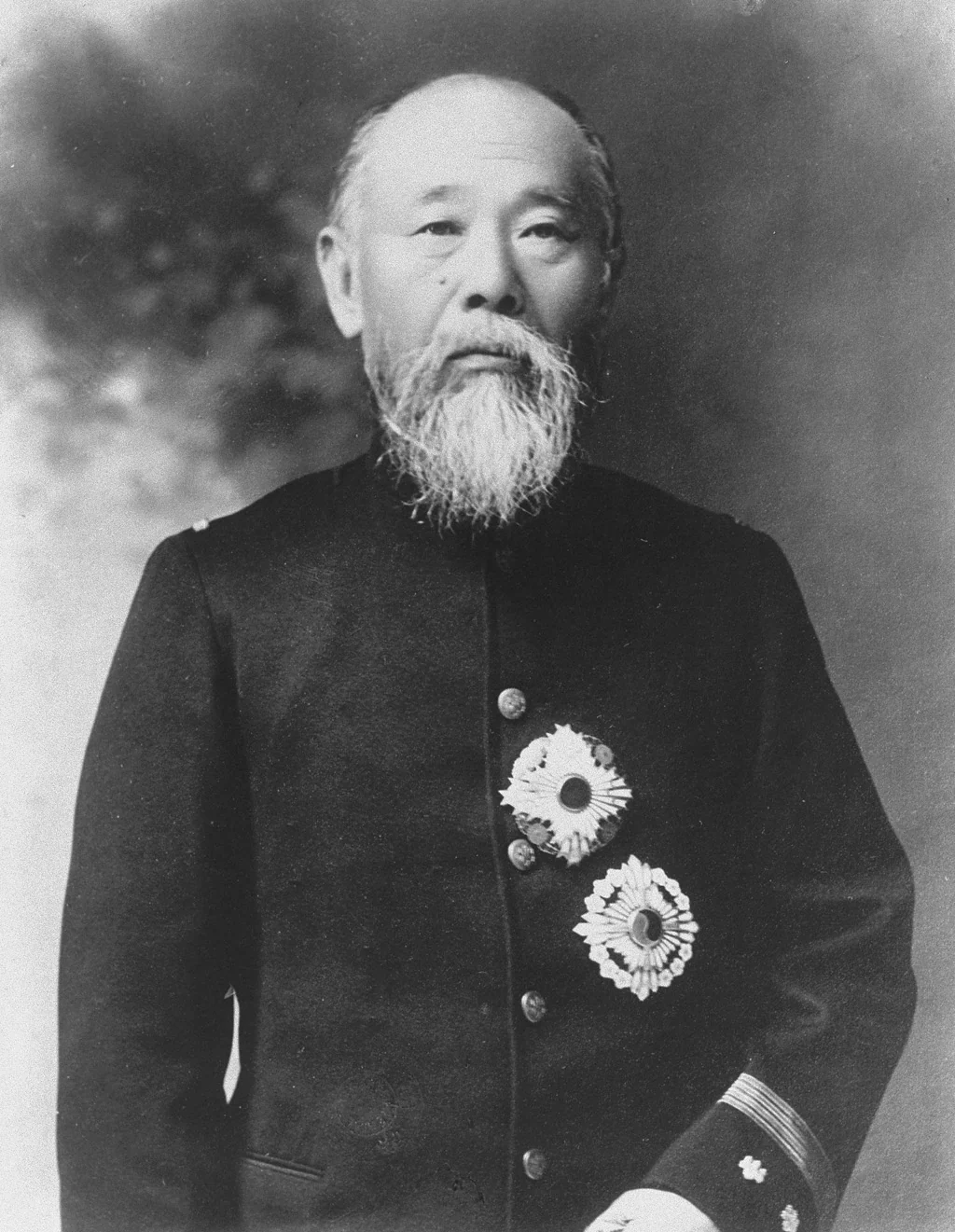
Itō Hirobumi was born in 1841 in the area now called Yamaguchi Prefecture. The National Diet Library converts his pre-1872 birth date to 16 October in the Western calendar. He studied under Yoshida Shōin and joined activists associated with the movement to revere the emperor and expel foreigners. That early position was not the endpoint of his political thought. In 1863 he travelled secretly to Britain with the Chōshū Five. His short period of study and observation convinced him of the need to understand Western power and institutions rather than assume they could simply be driven away.
Overseas study became work inside the new state
Itō and Inoue Kaoru returned in 1864 as conflict threatened their domain. After the Meiji Restoration, Itō entered government service and joined the Iwakura Mission in 1871 as a vice-envoy. The mission placed observation of foreign institutions within the practical work of building a new administration. He later became home minister after Ōkubo Toshimichi’s death. Another European journey in 1882 concentrated on constitutional arrangements. These were separate episodes of learning and official responsibility. The embassy’s commemorative account highlights Western influence, while the library’s chronology shows a career formed through political alliances and offices at home as well.
A cabinet was established before the constitution took effect
In 1885 Itō helped establish the cabinet system and became Japan’s first prime minister. The later constitution was promulgated on 11 February 1889 and took effect on 29 November 1890. Those are different institutional milestones. Itō resigned from his first premiership in 1888 but remained central to constitutional work through the Privy Council. A statement that he became prime minister under an already functioning 1890 constitution would reverse the order. The reform programme developed through successive changes in executive organisation, constitutional drafting and the opening of a national legislature, rather than one founding ceremony.
Constitutional drafting was collaborative
The library identifies preliminary work by Inoue Kowashi and Hermann Roesler, followed by revision involving Itō, Itō Miyoji, Kaneko Kentarō and Inoue. The 1887 Natsushima draft and the March 1888 clean-copy catalogue entry preserve stages of that process. The resulting text required Diet consent to legislation and budgets while locating sovereign authority in the emperor. Itō’s contribution was consequential, but he was neither the only drafter nor the creator of parliamentary government in its later democratic form. The emperor’s military, executive and treaty powers and the legal qualifications attached to subjects’ rights belong alongside the new representative institutions.
Officeholding also extended beyond a single premiership
Itō served as prime minister four times and occupied other influential positions, including Privy Council chairman and president of the House of Peers. He also led the Rikken Seiyūkai. These roles show the changing means through which he tried to organise political authority: executive leadership, advisory institutions, an upper chamber and a party. A four-cabinet career is not evidence that he won four direct popular elections for prime minister. His influence depended on the political institutions and elite relationships of Meiji Japan, which differed from the constitutional system created after the Second World War.
Korea makes imperial power part of the biography
Itō became Japan’s first resident-general in Korea. That office belonged to Japan’s extension of control over another country, not simply the export of neutral administrative expertise. In 1909 Korean independence activist An Chung-gun assassinated him at Harbin Station. The library’s record therefore joins his constitutional achievements to the resistance generated by imperial expansion. He died on 26 October 1909. The career leaves two connected histories to examine: institutions that organised government within Japan and authority exercised over people beyond it. Neither is adequately represented by a celebratory founding-father label alone.
Quick answers
Frequently asked questions about Itō Hirobumi
- Did Itō Hirobumi write the Meiji Constitution alone?
- No. The library identifies several Japanese collaborators and the contribution of Hermann Roesler; Itō led important stages of revision and institutional approval.
- Did the constitution begin operating when he first became prime minister?
- No. His first premiership began in 1885; the constitution was promulgated in 1889 and entered into force in 1890.
Keep exploring
Lives connected to this story
- Shigeru Yoshida
Compare a later cabinet leader whose diplomatic work operated within the post-1945 constitutional order.
- Fukuzawa Yukichi
Compare overseas learning and arguments about national transformation in a distinct educational and literary career.
- Nobusuke Kishi
Compare another prime minister whose career crossed institutional development and Japanese imperial history.
Sources and further reading
Explore the evidence
These references support the biography and offer further reading. Official records, first-person accounts and independent reporting provide different perspectives; image records document attribution and licensing.
- 1. National Diet LibraryItō Hirobumi: biographical note and portrait
- 2. National Diet LibraryPortraits of Modern Japanese Historical Figures: reproduction and reuse
The library explains that Western-calendar life dates before 1872 are converted from the Japanese lunar calendar. Its biography and exact portrait exhibition are the records used here.
- 3. Embassy of Japan in the United KingdomHirobumi Itō and the Chōshū Five: 2013 historical commemoration
- 4. National Diet LibraryToward the Enactment of the Constitution: draft catalogue and historical account
The prose mistakenly says March 1889 while calling it Meiji 21; the attached catalogue identifies the clean copy as March 1888. The catalogue date is retained. Draft facsimiles were not independently transcribed.
- 5. Hanover Historical Texts Project; translated by Miyoji ItōConstitution of the Empire of Japan, 1889: translated text from Itō’s Commentaries
- 6. National Diet LibraryAutograph manuscripts: past prime ministers, Itō Hirobumi entry
The library’s institutional introduction supports the four premierships, party leadership and Korea office. No full personal manuscript collection was inspected.