In this biography
Quick facts
- Born
- 14 January 1938
- Birthplace
- Japan
- Country
- Japan
- Nationality
- Not independently established
- Known for
- The 1993 coalition government and political-reform legislation.
- Premiership
- 9 August 1993–28 April 1994
- Coalition
- Eight groups in his August 1993 speech
- Reform instruments
- Four bills named on 17 September 1993
- Later exhibition
- Paramita Museum, 2024
Why this life matters
His career links regional and national politics with the negotiation required to turn an ambitious reform programme into several different legal instruments.
Timeline
Key moments
Birth
Born on 14 January.
Regional and national office
Served as Kumamoto governor and in both parliamentary chambers.
Coalition premiership
Entered office on 9 August.
Four-bill statement
Named the political-reform package on 17 September.
Legislation and amendment
Reform laws were followed by March amendments.
Left the premiership
His cabinet ended on 28 April.
Art exhibition
A museum exhibition surveyed ceramics, painting and other work.
A regional political background preceded the coalition
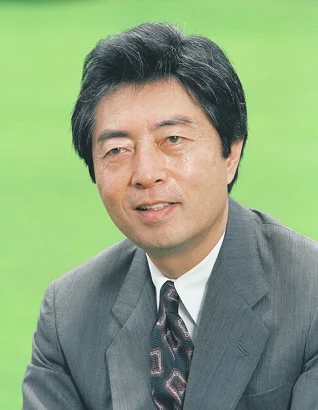
Morihiro Hosokawa was born on 14 January 1938 and belonged to the family that had formerly governed the Kumamoto domain. The later museum account identifies him as its eighteenth family head. He served as Kumamoto governor and in both chambers of the national parliament before becoming prime minister.
That background combined inherited standing with experience of elected government outside Tokyo’s central ministries. By 1993 he was identified with the Japan New Party, one of the forces seeking an alternative to LDP rule. The alliance that brought him to office included parties with different histories and policy commitments, making coordination a central task from the beginning.
The government promised reform without abandoning every policy
Hosokawa became prime minister on 9 August 1993. In his first policy speech later that month he described the government as a coalition of eight groups. He made the restoration of trust and political reform its highest priority, linking the delays in reform with the public’s distrust of government.
The same speech said the coalition would continue basic foreign, defence, economic and energy policies in principle. Change of governing parties therefore did not mean a promise to reverse every existing commitment. His programme paired institutional reform with economic and administrative objectives, while asking parties that had opposed one another to work within one cabinet.
Four instruments carried different parts of the programme
On 17 September 1993 Hosokawa announced Cabinet approval of four bills. They addressed the Public Offices Election Law, the body responsible for drawing lower-house constituencies, political-funds regulation and public assistance to political parties. Naming all four reveals a programme broader than simply choosing a new number of parliamentary seats.
The electoral measure encountered disagreement within the coalition and opposition from the LDP. Waseda’s contemporaneous account describes Speaker Takako Doi’s mediation and the eventual agreement between Hosokawa and LDP president Yohei Kono. The enacted February text and its March amendment preserve different seat formulas, evidence that the political settlement unfolded through successive documents.
A short premiership could achieve reform without ending distrust
On 8 April 1994 Hosokawa announced his intention to resign. UPI’s contemporary report connected the decision with controversy over a 100-million-yen loan from the Sagawa Kyubin trucking company. Opposition parties had held up budget debate while demanding further information about his finances. The report described allegations and political pressure, rather than a judicial determination of his guilt.
The announcement did not end the cabinet that same day: the official record dates the end of his premiership to 28 April 1994. Its brevity did not erase the significance of the reform instruments, but their passage did not prove that political corruption had been eliminated. His departure exposed the gap between achieving a legislative compromise and sustaining confidence in the government that delivered it.
Later artistic work created another public life
Exhibition records document Hosokawa’s work in tea ceramics, calligraphy, ink painting, oil painting and lacquer. The Paramita Museum had shown his ceramics in 2008, and its 2024 exhibition surveyed a wider range of media, including studies for murals and screens given to temples.
The exhibition linked these works with his practice at Yugawara in Kanagawa Prefecture. This later activity should not be treated as a decorative footnote to the premiership: it involved sustained work, commissions and public exhibitions. At the same time, a museum’s account of artistic achievement answers different questions from the parliamentary records of his political programme.
Sources for this section: [2]
Quick answers
Frequently asked questions about Morihiro Hosokawa
- Was the political reform a single election-law document?
- No. Hosokawa’s September statement named four instruments covering elections, constituency boundaries, political funds and party assistance.
- Is the 2024 exhibition evidence of a current political office?
- No. It documents an artistic exhibition and a former public career. No current office is asserted here.
Keep exploring
Lives connected to this story
- Kiichi Miyazawa
Hosokawa succeeded the administration whose loss of confidence triggered the 1993 election.
- Takako Doi
Doi’s parliamentary mediation helped overcome a reform deadlock.
- Tomiichi Murayama
Compare another coalition premiership in the changing politics of the 1990s.
Sources and further reading
Explore the evidence
These references support the biography and offer further reading. Official records, first-person accounts and independent reporting provide different perspectives; image records document attribution and licensing.
- 1. Prime Minister’s Office of JapanHOSOKAWA Morihiro: historical cabinet profile
Japanese profile fields for birth date, prefectural association, cabinet dates and selected named ministers read. Prefectural “from” field is not automatically a certified birthplace. Not every reshuffle or ministry list analysed.
- 2. National Art Center Tokyo, Art Commons / Paramita MuseumHosokawa Morihiro: The World of Beauty exhibition, 2024
Complete short Japanese exhibition outline read for former governorship/parliament/premiership, later tea ceramics/painting, earlier 2008 show and 2024 exhibition. No current office inferred, exhibition visited, artworks copied or catalogue read.
- 3. Morihiro Hosokawa; World and Japan Database, GRIPS/University of TokyoPolicy speech to the 127th National Diet, 23 August 1993
Selected primary speech text on reform priority, eight-group coalition, continuity of basic policies, economy and restoration of public trust read. University database identifies original source as Prime Minister’s Office. Not proof that proposed policies were enacted or goals achieved.
- 4. Morihiro Hosokawa; World and Japan DatabaseStatement on political-reform bills, 17 September 1993
Complete short Japanese statement read: Cabinet decided four named bills and called reform its top priority. Proposal/Cabinet approval is not parliamentary enactment. Underlying collected speeches beyond this item not read.
- 5. Waseda Bulletin of Comparative Law 15, pp 69–72Constitutional and Administrative Law:1994 major legislation
All four actual PDF pages/printed 69–72 read: legislative stages, four instruments, Doi mediation, Hosokawa–Kono agreement, March amendments and critical commentary. This is contemporaneous scholarly legal analysis, not the enacted law itself or a neutral account of every motive.
- 6. House of Representatives: original enacted lawsPublic Offices Election Law amendment, Law 2 of 4 February 1994
Original law heading; Article 4(1) amendment to 500 total, 274 single-seat/226 PR; selected Article 13 amendment and supplementary commencement clause read. Not the whole long amendment or a consolidated current law. Original numerals retained, not silently replaced by March version.
- 7. House of Representatives: original enacted lawsAmendment to the 1994 election-law amendment, Law 10 of 11 March 1994
Original heading, Article 4 substitution 274→300/226→200, Article 13/eleven-region table and short final commencement clause read. Other detailed campaign-regulation amendments not fully analysed; not present legal advice.
- 8. Liberal Democratic Party: participant institutional historyPeriod of President Kono’s leadership
Selected 1993 coalition and 1994 reform passages read. Party-blame language not adopted; its compact 300/200 outcome and August 5 resignation are not substituted for exact original-law/in-office dates. Not independent proof of every disputed motive.
- 9. United Press International, contemporary Tokyo reportHosokawa resigns over scandal allegations, 8 April 1994
Actual indexed original article body read, especially resignation announcement, 100-million-yen Sagawa loan controversy and opposition budget impasse. Direct origin 403; no origin body claimed read. Its Cubin spelling is the Sagawa Kyubin company; coalition/August dates, dollar conversion, political characterisations and unadjudicated guilt not adopted. Announcement is distinguished from official cabinet end 28 April.