In this biography
Quick facts
- Born
- 7 January 1958
- Died
- 25 July 2009
- Birthplace
- Johor, Malaysia
- Country
- Malaysia
- Nationality
- Malaysian
- Known for
- Sepet, Gubra, Mukhsin, Muallaf, Talentime and her Petronas commercials
- Advertising role
- Executive creative director, Leo Burnett Malaysia
- Tokyo recognition
- Sepet: Best Asian Film Award, 2005
- Berlin recognition
- Mukhsin: Generation Kplus international-jury Grand Prix, 2007
- Frequent collaborator
- Sharifah Amani
- Related performer
- Adibah Noor, credited as Kak Yam in Mukhsin
Why this life matters
Her work connects Malaysian advertising and cinema through stories about families, first love, prejudice and the relationships that cross communal boundaries.
Timeline
Key moments
Born in Johor
The Berlinale director biography records 7 January 1958.
Sepet recognised in Créteil
The festival jury awarded it the Jury Grand Prize.
Sepet won in Tokyo
It received the Best Asian Film Award, distinct from its production date.
Mukhsin reached Berlin
The 2006 production won the Generation Kplus international-jury Grand Prix in 2007.
Final films and death
Talentime belonged to her final directing work. She died on 25 July.
Osaka retrospective
A tribute screened her films and Ho Yuhang’s At the End of Daybreak, in which she acted.
From advertising to a recognisable storytelling voice
Yasmin Ahmad was born in Johor on 7 January 1958. She built a career in advertising before becoming internationally recognised as a film director and screenwriter. By the end of her life she was executive creative director at Leo Burnett Malaysia, working in a medium that reached audiences far beyond the cinema.
Her Petronas commercials made short encounters carry larger questions about belonging. Tan Hong Ming in Love, centred on a schoolboy’s affection for a girl of another race, is a particularly clear example. In an interview recalled by The Edge in July 2009, she discussed how adults teach children racial divisions. The advertisement’s emotional appeal and that stated concern belong together: its charm was not detached from its social argument.
Sepet and the importance of her performers
Sepet brought Yasmin’s filmmaking to international festival audiences through the relationship between Orked and Jason. Sharifah Amani and Choo Seong played the central pair. In a Japan Foundation interview, Amani recalled a casting process that allowed the performers to choose one another, making their initial chemistry part of the film’s construction.
The same interview includes a firsthand account from Tokyo festival programmer and juror Kenji Ishizaka: the 2005 Best Asian Film jury selected Sepet, while Eric Khoo’s Be with Me received a Special Mention. That distinction matters when comparing neighbouring film industries. Yasmin’s success was an award for a particular film, not a general prize for every title subsequently associated with her.
Sources for this section: [3]
Créteil, Mukhsin and different kinds of festival recognition
Sepet also won the Jury Grand Prize at the Créteil International Women’s Film Festival in March 2005, according to the Asia-Europe Foundation’s report on its participating filmmakers. These overseas screenings helped place Malaysian stories in conversation with work from elsewhere in Asia and Europe.
Mukhsin turns to childhood friendship and the uneasy arrival of romantic feelings. The Berlinale programme identifies it as a Malaysian production from 2006 and credits Yasmin as director and writer. Its cast includes Sharifah Aryana as Orked, Syafie Naswip as Mukhsin and Adibah Noor as Kak Yam. In 2007 it won the Generation Kplus international-jury Grand Prix and received a children’s-jury Special Mention; these should not be collapsed into a claim that it won the main competition’s Golden Bear.
Later work, death and an international afterlife
Gubra, also known as Anxiety, and Muallaf, also known as The Convert, broaden the body of work beyond Sepet. Talentime was among her final films as a director. Yasmin died on 25 July 2009, leaving a career that had linked the compressed form of advertising with longer stories of affection and difference.
The Osaka Asian Film Festival’s 2010 tribute brought together Talentime, The Convert and Mukhsin. It also screened At the End of Daybreak, directed by Ho Yuhang: Yasmin appeared in that film as an actress, not its director. Keeping those credits separate gives a more accurate picture of her collaborations and explains why a retrospective can include a film she did not make herself.
One unfinished project was Wasurenagusa, planned with a Japanese production. In a 2017 Japan Foundation interview, Sharifah Amani recalled location scouting and auditions, but described it as an incomplete project. Her account documents development work and Yasmin’s influence; it does not establish a finished Yasmin-directed film that belongs alongside Sepet or Talentime.
Quick answers
Frequently asked questions about Yasmin Ahmad
- What is Yasmin Ahmad known for?
- Her films include Sepet, Gubra, Mukhsin, Muallaf and Talentime. She also created widely remembered Petronas commercials while working in advertising.
- Which award did Sepet win in Tokyo?
- The Best Asian Film Award at the 2005 Tokyo International Film Festival. It also won the Jury Grand Prize at Créteil that March.
- Did Mukhsin win Berlin’s Golden Bear?
- No. Its 2007 honours were the Generation Kplus international-jury Grand Prix and a children’s-jury Special Mention, not the main-competition Golden Bear.
- Did Yasmin Ahmad direct At the End of Daybreak?
- No. Ho Yuhang directed it; Yasmin appeared as an actress. It was included in Osaka’s 2010 tribute to her.
- Did Yasmin Ahmad complete Wasurenagusa?
- In her 2017 Japan Foundation interview, Sharifah Amani described an incomplete project for which she had scouted locations and auditioned. Those preparations do not establish a completed Yasmin-directed film.
Keep exploring
Lives connected to this story
- Aizat Amdan
Follow Aizat Amdan’s performance of Pergi, its separate writing credits and its connection to Talentime.
- Tan Chui Mui
Read another Malaysian woman filmmaker’s distinct independent features and work supporting new directors.
- Sharifah Amani
Follow Orked’s performer from Sepet and Gubra to regional collaborations and La Luna.
- Adibah Noor
Read about the singer and actress credited as Kak Yam in Yasmin’s films.
- P. Ramlee
Explore an earlier Malaysian career connecting screen performance, music and film direction.
- Anthony Chen
Compare a later Southeast Asian filmmaker’s route to international festival recognition.
Sources and further reading
Explore the evidence
These references support the biography and offer further reading. Official records, first-person accounts and independent reporting provide different perspectives; image records document attribution and licensing.
- 1. Japan Foundation · original interview, part 327 October 2017: Amani on the incomplete Wasurenagusa project
The 2017 interview describes scouting and auditions for an incomplete Japanese project. Development work is not a completed film credit or a new release announcement.
- 2. Berlinale · original 2007 programmeMukhsin: production year, director biography and full cast credits
The director biography gives 7 January 1958 in Johor. Osaka’s retrospective prints 1959, inconsistent with that contemporary biography; the Berlinale date is used. The programme’s 2006 production date is separate from the 2007 festival honours.
- 3. Japan Foundation · participant interviewSharifah Amani and Kenji Ishizaka on casting and Sepet’s Tokyo award
- 4. Asia-Europe Foundation2005 Créteil meeting and Sepet’s Jury Grand Prize
- 5. FINAS · national film recordMukhsin’s 2007 international festival honours
The Grand Prix and children’s-jury Special Mention are distinct Generation Kplus honours. They are not a Golden Bear or an unrestricted claim of best film across the festival.
- 6. Osaka Asian Film Festival2010 tribute: film aliases, retrospective and acting/directing distinction
The tribute includes Ho Yuhang’s film because Yasmin acted in it. Festival inclusion does not establish a directing credit.
- 7. The Edge · original interview reporting28 July 2009: Yasmin’s account of advertising, children and racial divisions
The article identifies its original print date as 28 July 2009. A current website header is not treated as its publication date; remarks are paraphrased, not turned into an invented quotation.
- 8. The Edge · memorialRemembering Yasmin: death on 25 July and recollections of her work
- 9. Wikimedia Commons · photographer declarationVictor Pogadaev: 20 November 2006 photograph and CC BY-SA 4.0 grant
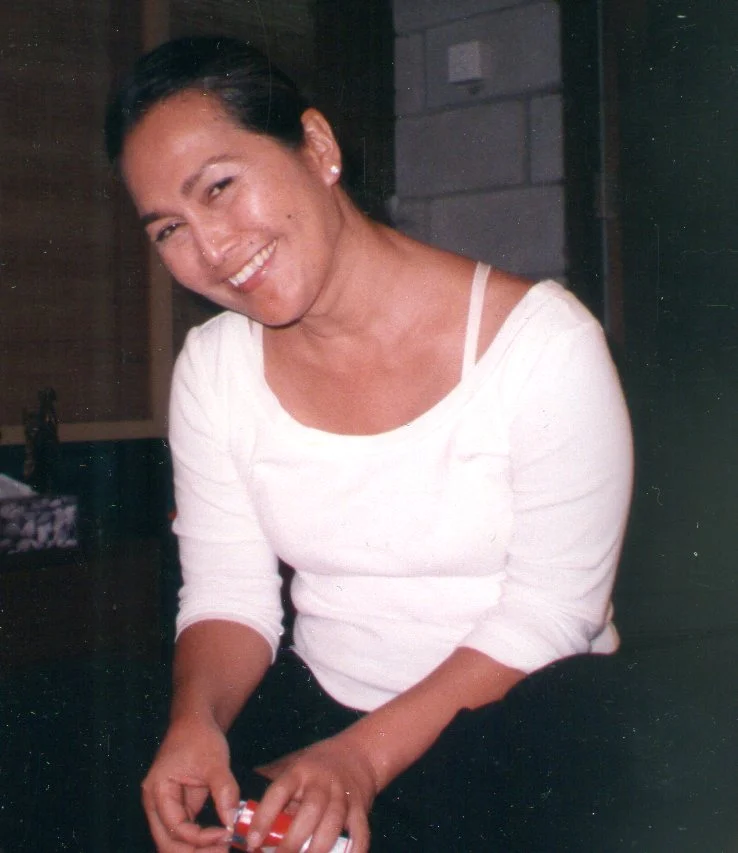
The original file page names photographer Victor Pogadaev, states own work and grants CC BY-SA 4.0. Checked 18 October 2026; the complete 738 × 853 frame is retained, with conversion disclosed and the source and licence linked. The photograph’s licence does not apply to film stills on the cited festival sites.