In this biography
Quick facts
- Born
- 5 December 1972
- Birthplace
- Kuala Lumpur, Malaysia
- Country
- Malaysia
- Nationality
- Malaysian
- Known for
- The Big Durian, The Last Communist, Buku Fixi and Kuman Pictures
- Breakthrough documentary
- The Big Durian, 2003
- Earlier feature
- Lips to Lips, 2000
- Documentary road film
- The Last Communist, 2006
- Publishing venture
- Buku Fixi, publicly launched April 2011
- Production company
- Kuman Pictures, founded June 2018
- Two Sisters (2019)
- Executive producer; James Lee directed and wrote the film
Why this life matters
Across filmmaking and publishing, his career shows different ways of producing and circulating Malaysian stories outside conventional prestige and studio formats.
Timeline
Key moments
Born in Kuala Lumpur
Yamagata supplies the exact date; Torino verifies the city and year.
Lips to Lips
Made an early Malaysian digital feature before the shorts and documentaries that brought further festival attention.
Shorts and The Big Durian
The 6horts project preceded a documentary mixing recollections and staged contributions about Malaysian society.
The Last Communist
Made a documentary road film connected to Chin Peng’s life; a Malaysian ban was reported that year.
Buku Fixi launch
His contemporary launch account describes the publisher’s focus on urban, contemporary Malay-language stories.
Kuman Pictures founded
Established a company focused on low-budget horror and thrillers, followed by its public launch in September.
Two Sisters cinema release
Kuman’s announcement credits Muhammad as executive producer and James Lee as director and screenwriter.
Writing, law studies and early digital films
Amir Muhammad was born in Kuala Lumpur on 5 December 1972. His biography in Yamagata’s 2003 documentary festival catalogue describes a writer who had contributed to Malaysian print publications since the age of fourteen. He studied law in England but did not practise, moving instead across writing, television, theatre and film.
Lips to Lips appeared in 2000. Yamagata described it as Malaysia’s first digital-video feature, placing his early work within a period when less expensive equipment opened opportunities outside conventional production structures. He followed it with 6horts in 2002, a collection of short films. Torino’s programme records Friday, one of those shorts, as a reflection on a mosque gathering and the meanings of identity.
The Big Durian and a different kind of documentary
The Big Durian (2003) starts from an incident involving an armed soldier in Kuala Lumpur in 1987. Rather than simply reconstructing the event, the film uses recollections, performance and social observation to explore the atmosphere around it. The international festival records explicitly describe a mixture of real contributions and staged or fictionalised testimony, so it should not be read as an unmediated eyewitness record.
James Lee produced the film for Doghouse73 Pictures, according to IDFA. The collaboration belongs to a Malaysian independent-film network in which filmmakers supported one another in different capacities. Muhammad’s direction and Lee’s producing credit are separate roles, not evidence that one person made every creative contribution.
The Last Communist and the creation of Buku Fixi
The Last Communist (2006) took another indirect approach to political history. IDFA describes a documentary road film following places associated with the early life of communist leader Chin Peng, with local interviews and specially composed songs. It is not a conventional dramatic biopic with an actor playing the leader. Contemporary reporting in May 2006 documented a Malaysian ban and opposition to that decision.
Publishing became another way to reach readers with local stories. In his April 2011 account of Buku Fixi’s launch, Muhammad described an interest in contemporary, urban Malay-language fiction and a wider range of popular genres. The account dates the press conference to 14 April, following an idea developed the previous year. The publisher’s beginnings were therefore a separate project from his earlier films and his later production company.
Kuman Pictures and the distinction between directing and producing
Kuman Pictures dates its founding to June 2018, followed by a public launch that September. Its stated focus was low-budget horror and thrillers, with a name acknowledging American filmmaker Roger Corman. In a launch interview, Muhammad discussed stepping back from running Fixi and returning to film production. The company’s manifesto says it was not established simply to adapt Fixi novels: scripts were to be developed for the practical limits of their budgets.
Two Sisters illustrates the resulting division of work. Kuman’s original announcement scheduled the film for Malaysian cinemas on 18 April 2019 and named Muhammad as executive producer. James Lee was its director and screenwriter, while Elise Shick and Kenny Gan were its producers. The credit list makes clear how Muhammad’s later career could shape a film through production without making him its director.
Quick answers
Frequently asked questions about Amir Muhammad
- Who is Amir Muhammad?
- Amir Muhammad is a Malaysian filmmaker, writer and publisher born in Kuala Lumpur on 5 December 1972. His work includes The Big Durian, Buku Fixi and Kuman Pictures.
- Is The Big Durian entirely an eyewitness documentary?
- No. Festival descriptions identify a deliberate mixture of real recollections, staged contributions and performance. James Lee produced the 2003 film, which Muhammad directed.
- When did Amir Muhammad start Buku Fixi and Kuman Pictures?
- His contemporary account dates Fixi’s public launch to April 2011. Kuman’s official history gives June 2018 for its founding and reporting documents its September public launch.
- Did Amir Muhammad direct Two Sisters?
- No. Kuman’s 2019 credits identify James Lee as director and screenwriter, Muhammad as executive producer, and Elise Shick and Kenny Gan as producers.
Keep exploring
Lives connected to this story
- James Lee
Follow the filmmaker who produced The Big Durian and later wrote and directed Kuman’s Two Sisters.
- Tan Chui Mui
Explore another Malaysian independent filmmaker’s directing and collaborative production work.
- Liew Seng Tat
Read a fellow member of the Malaysian independent-film network and Da Huang collaboration.
Sources and further reading
Explore the evidence
These references support the biography and offer further reading. Official records, first-person accounts and independent reporting provide different perspectives; image records document attribution and licensing.
- 1. Yamagata International Documentary Film Festival · 2003 catalogueThe Big Durian: director biography, exact birthday, law studies and early films
The 2003 director biography supplies the exact birth date and law studies in England. Torino’s conflicting English-degree wording is not adopted; no university is inferred. “First digital-video feature” is attributed to the festival catalogue, not extended into a claim to have made Malaysia’s first film of any kind.
- 2. Torino Film Festival · original 2003 catalogueFriday: Kuala Lumpur birthplace, 1972 birth year and the 2002 short
Used for Kuala Lumpur, 1972 and the Friday short, not the conflicting degree wording or a film described as a future project in 2003.
- 3. IDFA · original film recordThe Big Durian (2003): mixed documentary form and James Lee’s producing credit
The festival distinguishes real and performed contributions and credits James Lee for Doghouse73 Pictures. The film is not presented as unedited eyewitness evidence or a solo production.
- 4. IDFA · original film recordThe Last Communist (2006): documentary road-film approach and production credits
IDFA records the 2006 film separately from its 2005 fund support. It credits Lee Mee Fung for Red Films; the earlier Doghouse73 production credit is not transferred to this film.
- 5. South China Morning Post · 11 May 2006 reportingContemporary report of The Last Communist ban and responses
The ban is reported as a historical event in May 2006, not a claim about present streaming access or current legal availability.
- 6. Amir Muhammad · contemporary April 2011 launch accountFIXI: Bila & Bagaimana & Siapa & Apa-apa, published 15 April 2011
The first-person post dated 15 April 2011 describes the press conference held the previous day and an idea developed in August 2010. Those milestones are not one legal incorporation date. The archive is cited by its named post; commercial success is not inferred from the founder’s launch aspirations.
- 7. Kuman Pictures · official history and manifestoJune 2018 founding, genre focus and distinction from Fixi adaptations
June founding and September public launch are distinct. The manifesto acknowledges Corman’s influence, not an employment or mentoring relationship. Its inaccurate description of Lips to Lips as a documentary is not repeated over the festival record. Work by other directors is not recast as Muhammad’s directing credits.
- 8. Malay Mail · original 20 September 2018 interviewKuman’s public launch, Corman influence and the move from publishing to film production
- 9. Kuman Pictures · original 19 February 2019 announcementTwo Sisters: release date and distinct director, producer and executive-producer credits
The original credits distinguish executive producer Amir Muhammad, director/scriptwriter James Lee and producers Elise Shick and Kenny Gan. The dated announcement is used for its stated 18 April 2019 cinema release, not the unrelated later news items shown below it.
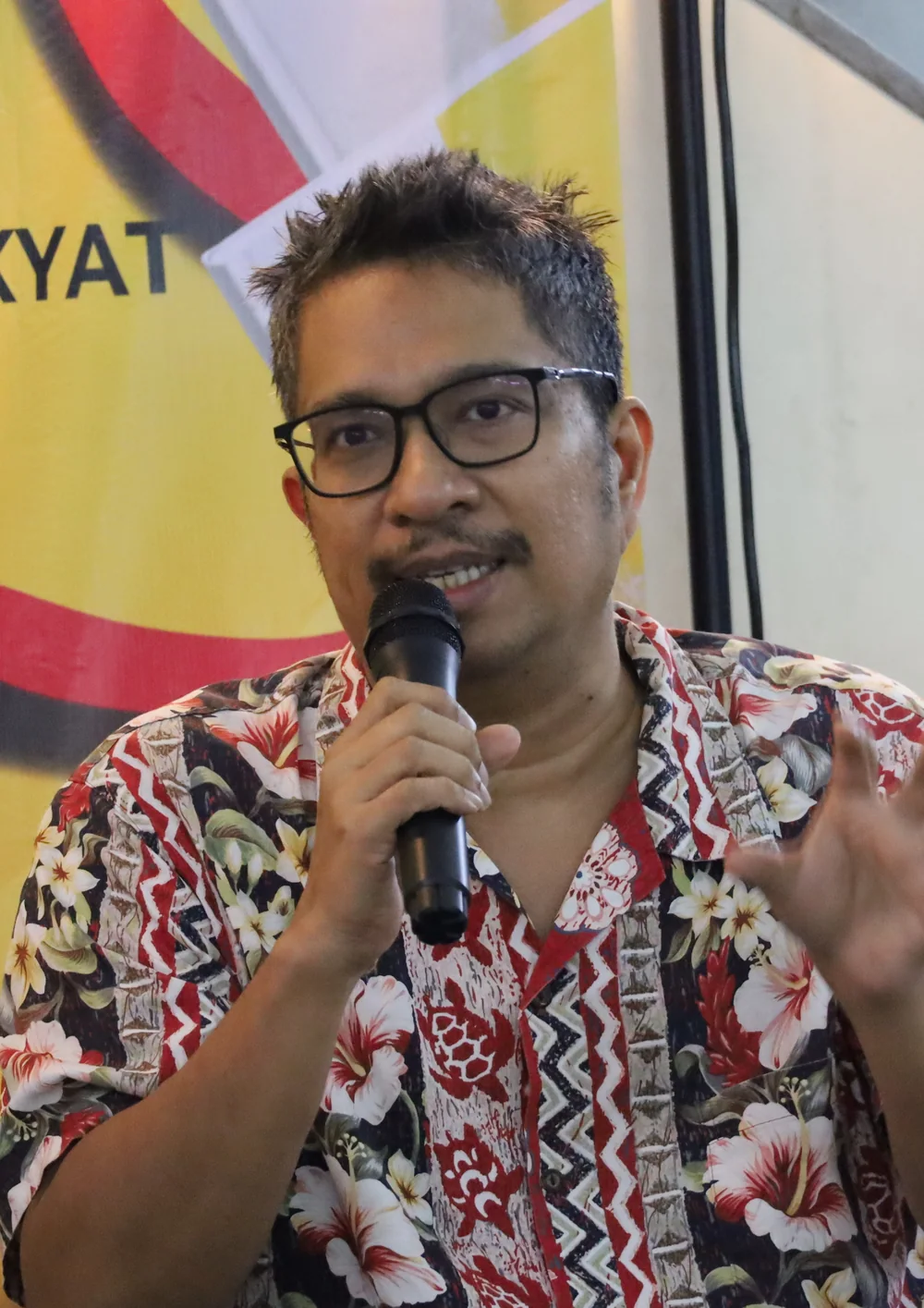
- 10. Wikimedia Commons · photographer’s own-work uploadZahirulnukman: Hentian Buku Selangor portrait, 21 December 2024, CC BY 4.0
Checked 19 October 2026: the crop and parent file identify Zahirulnukman’s own work, captured 21 December 2024 and licensed CC BY 4.0. The named Amir Muhammad category and the Malaysian filmmaker’s article identify the subject. The entire supplied 2480×3508 portrait crop was proportionally resized to 1000×1415 and converted to WebP, with no additional cropping. The unrelated file named Amir Muhammad.jpg, depicting Amir Muhammad Harbo, was not used.