In this biography
Quick facts
- Born
- 9 March 1944
- Birthplace
- Camias, San Miguel, Bulacan, Philippines
- Country
- Philippines
- Nationality
- Filipino
- Known for
- Poetry as Rio Alma, literary criticism and National Artist recognition
- Born
- 9 March 1944, Camias, San Miguel, Bulacan
- Pen name
- Rio Alma
- Education
- UP political science bachelor’s, 1963; MA in Filipino
- National Artist
- Literature, 2003
- KWF chair
- 2013–2020
- NCCA chair
- 2017–2020
Why this life matters
His career joins experiments in poetic form to the practical work of creating books, teaching writers and widening Filipino’s uses in literary and public life.
Timeline
Key moments
Bulacan birth
Born in Camias, San Miguel, on 9 March.
University graduation
Completed his UP bachelor’s degree in Political Science.
Literary criticism
Published Ang Makata sa Panahon ng Makina.
Children’s publishing
Began leading the NCP publishing project in May.
Doktrinang Anakpawis
Published a collection combining social commitment and varied poetic forms.
Tradition and modernism
Published Balagtasismo versus Modernismo.
National Artist
Recognised in the category of Literature.
Language commission
Chaired KWF; separately chaired NCCA from 2017 to 2020.
A Bulacan teacher enters modern Filipino poetry
Virgilio Almario was born in Camias, San Miguel, Bulacan, on 9 March 1944. After completing a Political Science bachelor’s degree at the University of the Philippines in 1963, he taught at San Miguel High School. He also earned a UP master’s degree in Filipino, although university sources disagree on its completion year.
Writing as Rio Alma, he became associated with a modernist movement alongside Rogelio Mangahas and Lamberto Antonio. Collections including Makinasyon and Peregrinasyon established a poet interested in how language and technique could carry contemporary experience. His trajectory was not a simple rejection of older poetry: the relationship between inherited forms and new writing would become central to his criticism.
Poetic craft, ordinary lives and social commitment
Doktrinang Anakpawis, published in 1979, offers a concrete example of Almario’s range. In a contemporary Philippine Studies review, Soledad Reyes examined its movement between intimate reflection, protest, irony and caricature. The collection’s social concerns were expressed through changes in voice and form, rather than through a single uniform style.
Reyes discussed love poems using sonnet, villanelle and kundiman, alongside work drawing on oyayi, ambahan, folk song and tanaga. These combinations placed native and imported resources in conversation. Reading the poetry only as political declaration misses that formal variety; treating it only as technical experimentation misses its attention to ordinary experience and unequal social relations.
Sources for this section: [5]
Criticism and translation as part of the same project
Almario’s criticism explored how Filipino literature developed and how its techniques could be understood. Ang Makata sa Panahon ng Makina appeared in 1972, followed by Balagtasismo versus Modernismo in 1984. Taludtod at Talinghaga examined Tagalog prosody. Together these works connect literary history with practical questions about rhythm, imagery and poetic change.
He also translated works including José Rizal’s Noli Me Tangere and El Filibusterismo and undertook translation for theater. Translation, criticism and poetry were different activities, but each tested what Filipino could express. His substantial role in the language’s literary development should not be turned into a claim that he invented Filipino grammar or created a national language alone.
Building publishers, workshops and cultural institutions
Almario worked beyond his own books through workshops, lexicography and publishing for younger readers. Adarna’s institutional history dates his appointment to head the NCP publishing project to May 1977. It describes a team producing affordable, original books for Filipino children: collaborative work involving writers, artists and publishing decisions, not a one-person enterprise.
He received National Artist recognition for Literature in 2003. His later administrative work included chairing the Komisyon sa Wikang Filipino from 2013 to 2020 and the National Commission for Culture and the Arts from 2017 to 2020. Those were historical appointments, not current offices. Across these activities, his influence involved both making literature and creating settings in which others could read and write it.
Quick answers
Frequently asked questions about Virgilio Almario
- Who is Rio Alma?
- Rio Alma is the literary pen name of Virgilio S. Almario.
- What is Virgilio Almario’s National Artist category?
- He was named National Artist for Literature in 2003.
- What language is central to Almario’s work?
- Filipino is central to his poetry, criticism and translation, including his engagement with Tagalog poetic traditions.
- Did Almario create Filipino grammar by himself?
- No. His writing, editorial work, lexicography and institutional leadership contributed to a collective and evolving literary and language tradition.
Keep exploring
Lives connected to this story
- Bienvenido Lumbera
Compare another National Artist’s distinct approach to Philippine literary history and criticism.
- José Rizal
Read about the author of Noli Me Tangere and El Filibusterismo, novels Almario translated.
- Ricky Lee
Explore a contemporary writer working across fiction, film and literary teaching.
Sources and further reading
Explore the evidence
These references support the biography and offer further reading. Official records, first-person accounts and independent reporting provide different perspectives; image records document attribution and licensing.
- 1. UP Likhaan / PanitikanPHBiography, education and historical institutional terms
Likhaan gives MA Filipino 1974, while UP Carillon gives 1975. State the qualification without a completion year; 1986 is unsupported. Honorary doctorates are not earned degrees.
- 2. CulturEdBirthplace, poetry and National Artist recognition
- 3. UP Carillon · 2022, printed page 50Education record with differing MA year
- 4. Anvil · CCP-derived critical biographyLiterary criticism, translation and bibliography
First-edition years for Makinasyon and Taludtod at Talinghaga differ between sources. Avoid assigning disputed first-publication years.
- 5. Philippine Studies · Soledad Reyes, 1979Contemporary critical reading of Doktrinang Anakpawis
Use the contemporary review for its analysis of the 1979 collection, not its reversed dates for two earlier collections.
- 6. Adarna HouseFirsthand history of the children’s publishing project
- 7. Senate of the Philippines · January 2017Report of NCCA chairmanship election
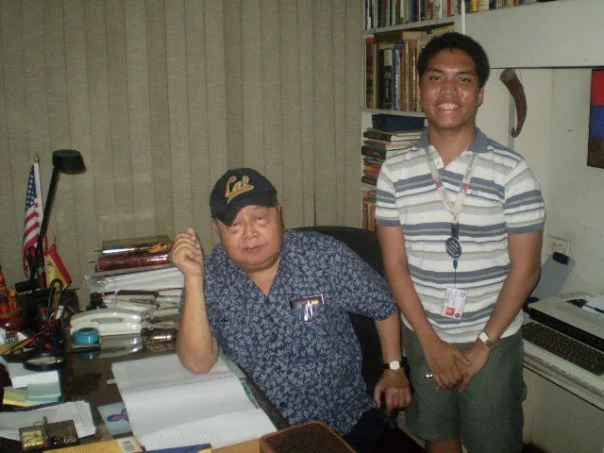
- 8. Wikimedia Commons · Jaramo81Frankfurt 2025 photograph and CC BY 4.0
Jaramo81 declares own work and CC BY 4.0. Retain the complete frame; editorial use does not imply the subject’s endorsement.