In this biography
Quick facts
- Born
- 11 April 1932
- Died
- 28 September 2021
- Birthplace
- Lipa, Batangas, Philippines
- Country
- Philippines
- Nationality
- Filipino
- Known for
- Philippine-language literary criticism, teaching and musical-theatre writing
- Born
- 11 April 1932, Lipa, Batangas
- Undergraduate degree
- Literature in Journalism, UST, 1954
- Graduate education
- Comparative Literature, Indiana: master’s 1960; doctorate 1967
- Martial-law detention
- January–December 1974
- Ramon Magsaysay Award
- 1993, Journalism, Literature, and Creative Communication Arts
- National Artist
- Literature, 2006
Why this life matters
His scholarship and creative work connect questions of language and national identity with teaching, performance and the formation of a literary canon.
Timeline
Key moments
Birth
Born in Lipa on 11 April.
UST graduation
Completed a bachelor of literature in journalism, cum laude.
Indiana degrees
Master’s in 1960 and comparative-literature doctorate in 1967.
Philippine Studies
Chaired Ateneo’s new department and published criticism in Filipino.
Detention
Arrested in January and held until December under martial law.
UP teaching
Joined the Department of Filipino and Philippine Literature.
Recognition
Magsaysay Award in 1993; National Artist for Literature in 2006.
Death
Died in Quezon City on 28 September.
Lipa childhood and literary education
Bienvenido Lumbera was born on 11 April 1932 in Lipa, Batangas. Orphaned young, he was raised by relatives and godparents. He began developing his literary interests at school and later at the University of Santo Tomas, where he worked on the Varsitarian and completed a bachelor of literature in journalism, cum laude, in 1954.
A Fulbright fellowship supported graduate study at Indiana University. He completed his master’s degree in comparative literature in 1960 and doctorate in 1967. These dates distinguish two stages of advanced study rather than assigning both qualifications to one year. His dissertation subsequently developed into the study Tagalog Poetry, 1570–1898: Tradition and Influences in Its Development, published in 1986.
Criticism, language and the literary canon
Lumbera questioned an academic hierarchy that treated writing in English or Spanish as the main literary tradition while marginalising work in Philippine languages. Teaching at Ateneo de Manila, he increasingly included vernacular texts and delivered lectures in Filipino. In 1970 he chaired its new Philippine Studies department and began publishing his own criticism in Filipino.
His critical books included Revaluation and Writing the Nation/Pag-akda ng Bansa. With Cynthia Nograles-Lumbera, he co-edited Philippine Literature: A History and Anthology. These projects joined historical research to an argument about which texts deserved serious attention. They were contributions to an ongoing debate, not evidence that one scholar alone defined Philippine identity.
Martial law and a teaching career
After the declaration of martial law in 1972, Lumbera went underground. The Cultural Center of the Philippines records his arrest in January 1974 and detention until December that year. That experience formed part of a career in which political conditions, language and cultural work were closely connected.
He joined the University of the Philippines Department of Filipino and Philippine Literature in 1976 and later became professor emeritus. His teaching also included UST, Ateneo and De La Salle. UP’s memorial emphasises his mentorship of writers, critics, filmmakers and scholars, placing classroom work and intellectual exchange alongside his published books.
Poetry, performance and recognition
Lumbera also wrote poetry and librettos. NCCA identifies his contribution to Bagay poetry and lists collections including Likhang Dila, Likhang Diwa and Balaybay. His theatre writing included Tales of the Manuvu, Rama, Hari, Bayani and Noli Me Tangere: The Musical. The stage offered another way to bring language and historical imagination to audiences.
He received the 1993 Ramon Magsaysay Award in Journalism, Literature, and Creative Communication Arts and became National Artist for Literature in 2006. These were distinct recognitions, not interchangeable dates or award categories. He died in Quezon City on 28 September 2021, leaving a body of criticism, poetry, performance writing and teaching that continues to inform Philippine literary discussion.
Quick answers
Frequently asked questions about Bienvenido Lumbera
- What was Bienvenido Lumbera known for?
- Literary criticism, poetry, teaching and librettos, particularly work affirming the importance of Philippine-language literature.
- Where did he earn his doctorate?
- Indiana University, in comparative literature, in 1967; his master’s degree was completed in 1960.
- When was he detained under martial law?
- CCP records arrest in January 1974 and detention until December that year.
- What was his National Artist field?
- Literature. The designation came in 2006, separate from his 1993 Ramon Magsaysay Award.
Keep exploring
Lives connected to this story
- Virgilio Almario
Explore Rio Alma’s distinct poetry, criticism, translation and children’s publishing work.
- F. Sionil José
Compare another Filipino writer’s distinct literary career, institutions and arguments about national life.
- Ryan Cayabyab
Explore a musician’s separate creative role in Philippine musical theatre and performance.
Sources and further reading
Explore the evidence
These references support the biography and offer further reading. Official records, first-person accounts and independent reporting provide different perspectives; image records document attribution and licensing.
- 1. Cultural Center of the Philippines · obituaryBirth, death, education and martial-law detention dates
CCP and UST establish the degree chronology, taking precedence over UP’s inconsistent years. Detention ran from January to December 1974.
- 2. UST Varsitarian · institutional account1954 journalism degree and Indiana study chronology
- 3. Ramon Magsaysay Award Foundation1993 award, exact category and literary-language work
The awarding foundation establishes 1993 and the category Journalism, Literature, and Creative Communication Arts; UST’s apparent 1996 award-year error is not repeated.
- 4. NCCA · National Artist profile2006 designation, criticism, poetry and librettos
Writing dates and stage-premiere dates are not conflated. The 2006 National Artist designation is for Literature, not the separate 1991 cultural-research recognition.
- 5. University of the Philippines · memorialTeaching and mentorship
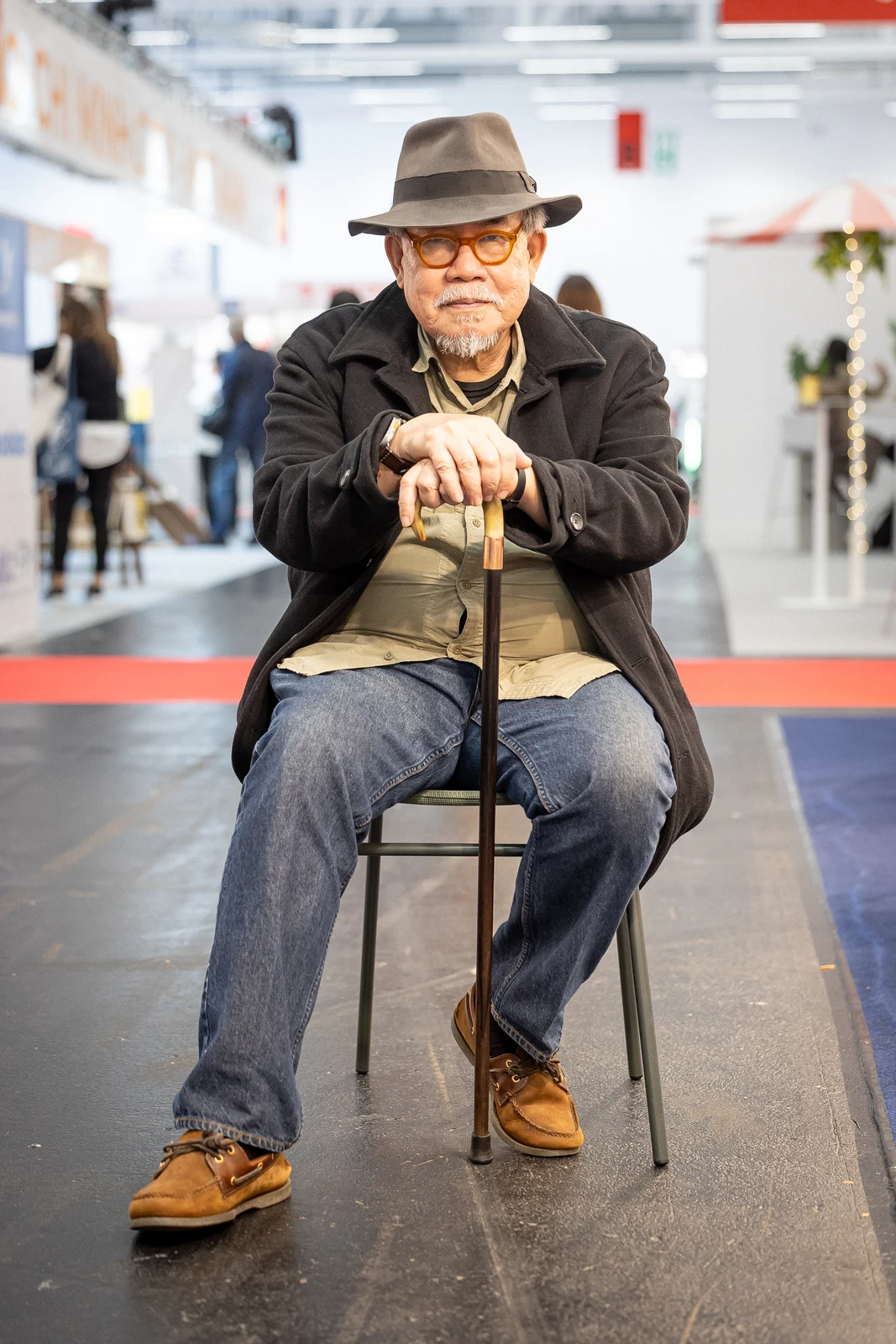
- 6. Wikimedia Commons · AmadoMacSelf-published July 2012 portrait, CC BY 4.0
The licence is the uploader’s explicit self-publication under CC BY 4.0. The account name AmadoMac is credited because the page supplies no separate machine-readable author. July 2012 is the stated capture month, not the 2021 upload date.