In this biography
Quick facts
- Born
- 12 August 1919
- Died
- 30 December 1971
- Birthplace
- Ahmedabad, India
- Country
- India
- Nationality
- Not independently established
- Known for
- PRL and the foundations of India’s space programme
- Born
- 12 August 1919, Ahmedabad
- PRL foundation
- 11 November 1947
- INCOSPAR
- Chairman from 1962
- Death
- 30 December 1971
Why this life matters
His career links scientific research with the institutions and applications through which that research could serve a developing society.
Timeline
Key moments
Birth
Born in Ahmedabad on 12 August.
Doctorate and PRL
Received his Cambridge doctorate and founded PRL that year.
Space research coordination
Became chairman of INCOSPAR.
Thumba launch
The first sounding-rocket flight took place on 21 November.
ISRO
The space organisation was established on 15 August.
Death
Died on 30 December.
SITE after his death
The satellite education experiment developed from earlier planning and collaboration.
A research career began before the space programme
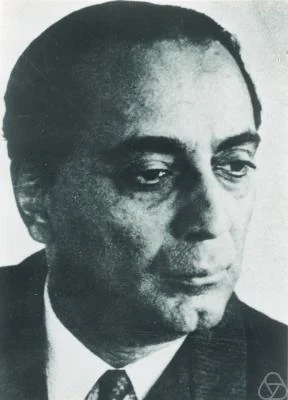
Sarabhai was born in Ahmedabad on 12 August 1919. He studied natural sciences at Cambridge and worked on cosmic rays at the Indian Institute of Science with C. V. Raman during the wartime period. The institutional accounts agree on his Cambridge doctorate in 1947, although their earlier Tripos dates differ. His later programmes did not begin with an ambition to launch hardware alone. They grew from a physicist’s research career and a concern with creating places where scientific enquiry could continue in India.
PRL required supporters as well as a scientific founder
ISRO dates the foundation of the Physical Research Laboratory in Ahmedabad to 11 November 1947. Its account describes Sarabhai persuading charitable trusts associated with family and friends to support the institution. PRL’s own biography places cosmic-ray research alongside his later national responsibilities. Funding, facilities, colleagues and training were therefore parts of the project from the beginning. Calling him an institution builder is meaningful when connected to these mechanisms, rather than treated as a substitute for explaining what an institution needed to function.
The early space programme was assembled through collaboration
In 1962 he became chairman of the Indian National Committee for Space Research. ISRO credits Homi Bhabha’s support for establishing the Thumba rocket station and records its first flight on 21 November 1963. The Space Applications Centre dates the creation of ISRO to 15 August 1969. These stages should remain separate: a coordinating committee, a launching station and a national organisation served different purposes. The work depended on the teams that developed infrastructure, instruments, communications and launch operations.
Satellite education involved a future system, not one device
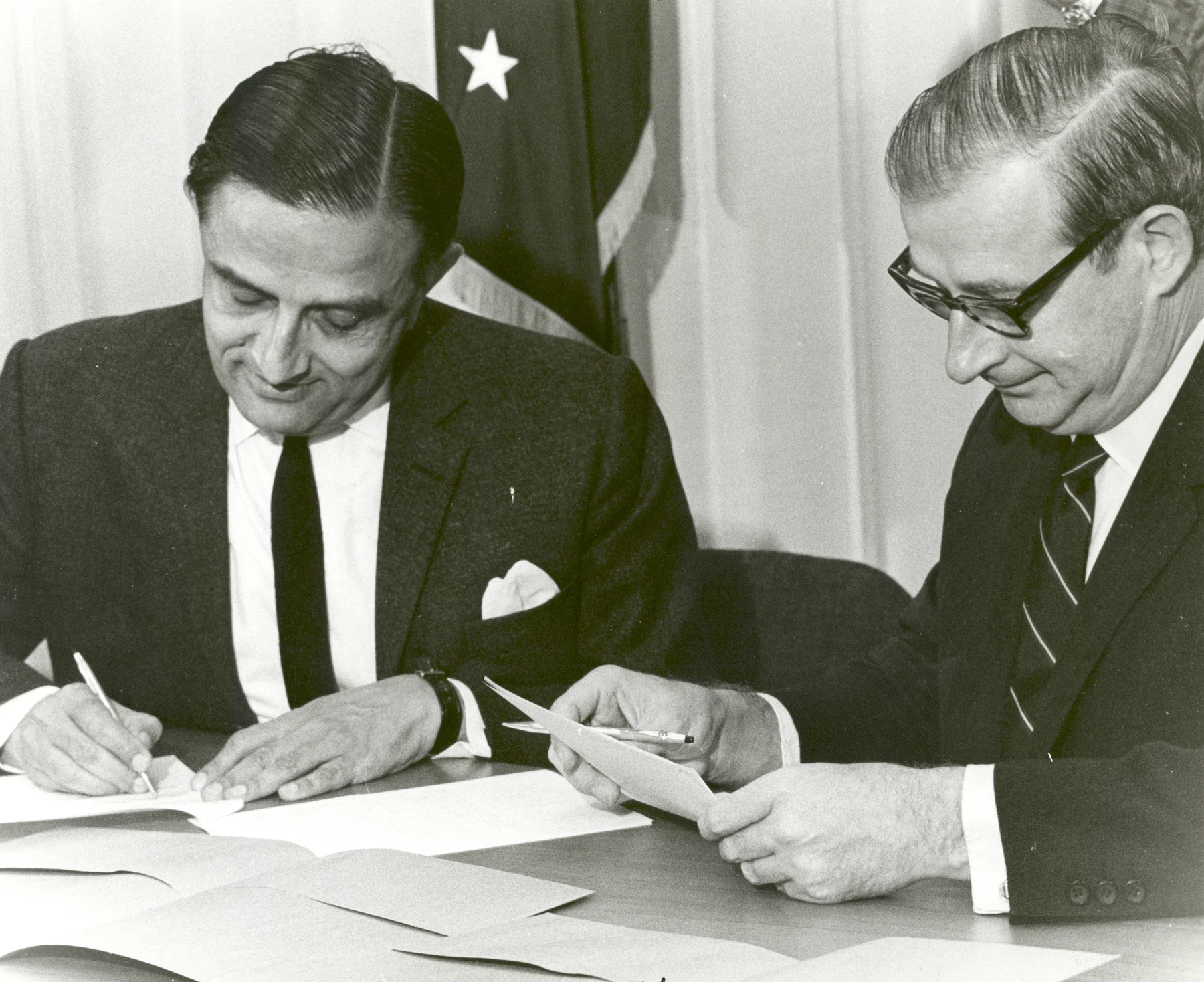
Sarabhai supported using satellite communication to reach communities with limited access to educational media. ISRO describes his discussions with NASA before SITE, the Satellite Instructional Television Experiment. The experiment eventually operated in 1975–1976, after his death. Its technical record identifies Indian production facilities, receiving systems and NASA’s ATS-6 satellite as different parts of the system. Sarabhai’s initiating role is important, but it does not mean that he personally carried out the later broadcasts, maintained village equipment or evaluated learning.
Institution building extended beyond a single discipline
The institutional accounts also connect him with management education, industrial research and community science education in Ahmedabad. The Space Applications Centre describes a programme focused on communications and observations useful for national development. Such accounts explain the breadth of his ambitions, but they should not turn all later organisations into institutions he personally operated. His work was often to create support, bring people together and formulate a programme whose implementation continued through other scientists, teachers, administrators and partner institutions.
Plans and later achievements have different dates
PRL’s centenary-era tribute records his death on 30 December 1971. Later milestones, including the 1975 launch of Aryabhata and the SITE broadcasts, belong to programmes that continued after him. This chronology prevents a common biographical shortcut: describing the result of an initiative as though its originator was present for every stage. Sarabhai’s importance lies in the research, institutions and practical direction he helped establish. The later technical record shows how much additional collective work was required to carry that direction forward.
Quick answers
Frequently asked questions about Vikram Sarabhai
- Did Sarabhai live to see the SITE broadcasts?
- No. He died on 30 December 1971. SITE operated in 1975–1976, building on planning and international collaboration begun earlier.
- How are PRL, INCOSPAR and ISRO different?
- PRL is a research laboratory founded in 1947; INCOSPAR was a coordinating committee formed in 1962; ISRO was established in 1969. They are related institutions, not alternative names for one founding event.
Keep exploring
Lives connected to this story
- C. V. Raman
Read about the scientist associated with Sarabhai’s wartime research at IISc.
- Homi J. Bhabha
Explore support and collaboration behind early Indian scientific institutions.
- Satish Dhawan
Follow the space programme into its later organisational and experimental phase.
Sources and further reading
Explore the evidence
These references support the biography and offer further reading. Official records, first-person accounts and independent reporting provide different perspectives; image records document attribution and licensing.
- 1. ISROISRO: Vikram Ambalal Sarabhai
This page’s July 1975 shorthand differs from the precise 1 August 1975 start in the evaluation record. PRL directorship start 1966 also differs from PRL’s 1965; the disputed start is not claimed.
- 2. Physical Research LaboratoryPhysical Research Laboratory: Vikram Sarabhai
- 3. Space Applications CentreSpace Applications Centre: Founder
SAC gives Tripos 1939, whereas PRL/ISRO give 1940; precise Tripos year withheld.
- 4. Physical Research LaboratoryPRL Spectrum, January 2019: Sarabhai Tribute, PDF page 3
Actual selected tribute on PDF page 3 gives 30 December 1971. A separate government magazine search result gave 31 December; that claim is not adopted.
- 5. NASA Technical Reports ServerJ. E. Miller: ATS-6—Satellite Instructional Television Experiment, NTRS original abstract
- 6. NASA Goddard Space Flight CenterHoward L. Galloway Jr: SITE Reports from the NASA Resident Representative in India, May 1976