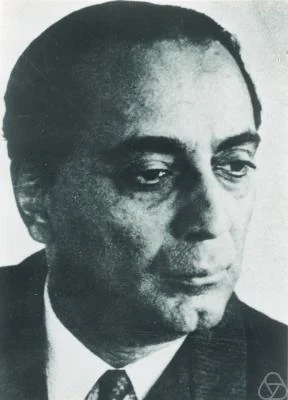
In this biography
Quick facts
- Born
- 16 September 1931
- Died
- 2018
- Birthplace
- Kottayam, present-day Kerala, India
- Country
- India
- Nationality
- Not independently established
- Known for
- Weak interactions and the diagonal representation in quantum optics
- Research field
- Theoretical physicist
- Contribution
- Weak interactions and the diagonal representation in quantum optics
Why this life matters
His work shows why a mathematical representation needs its assumptions stated. A correspondence between quantum and classical-looking quantities does not automatically make every underlying weight an ordinary probability.
Timeline
Key moments
Rochester doctorate
Completed doctoral work with Marshak.
Optical equivalence
Published the diagonal-representation paper.
Texas appointment
Joined the University of Texas at Austin.
Chennai directorship
Led the Institute of Mathematical Sciences.
Dirac Medal
Received the honour recorded by Texas.
Death
The university published its memorial inMay.
Training and a transnational career
Sudarshan was born in Kottayam in 1931 and completed a doctorate at the University of Rochester in 1958. His adviser was Robert Marshak. He then worked with Julian Schwinger at Harvard before appointments at Rochester and Syracuse.
He joined the University of Texas at Austin in 1969, where the university records his professorial service through 2016. During that career he also held research and leadership roles in India, including at the Indian Institute of Science and the Institute of Mathematical Sciences in Chennai. The geographical archive association does not imply that all of his research was conducted in India.
Sources for this section: [1]
Weak interactions and the importance of credit
Working with Marshak, Sudarshan developed the V–A account of weak interactions. The Texas memorial places this work within the history that later led towards electroweak unification. A contribution to that development is distinct from receiving the later Nobel Prize for unification.
His work ranged beyond a single theory. The university describes both quantum optics and hypothetical faster-than-light particles. The latter were proposals, not observed particles. A biographical account should preserve that difference instead of presenting every theoretical possibility as an experimental discovery.
The 1963 optical-equivalence paper
In April 1963 Sudarshan published a short paper relating statistical light descriptions through a diagonal representation. The inspected author-hosted scan contains the article on journal pages 277–279. It uses normally ordered operators and warns that the generalized weight need not be positive.
The result therefore requires more care than the claim that quantum light is simply classical light. A representation that resembles a classical average can involve weights that do not satisfy ordinary probability requirements. The paper also thanks Emil Wolf, C. L. Mehta and N. Mukunda, placing the work within a scientific exchange.
Institutions, recognition and limits
Texas records his directorship of Chennai’s Institute of Mathematical Sciences from 1984 to 1991 and other continuing Indian appointments. It also records honours including the 2010 Dirac Medal. His contribution to quantum optics stands independently of a list of awards or of retrospective arguments about Nobel recognition.
He died in 2018. The university’s account refers to the week of his death; this biography does not derive an exact day from that wording. His legacy includes both scientific ideas and the institutions through which he taught and worked. The original optical paper is explained through a bounded reading, not a claim to have independently validated every mathematical step.
Quick answers
Frequently asked questions about E. C. G. Sudarshan
- Does optical equivalence mean every state is classical?
- No. The representation and normal-ordering conditions matter, and the generalized weight need not be an ordinary non-negative probability.
- Did Sudarshan receive the 2005 Physics Nobel?
- No. His contribution should be explained directly rather than inferred from the later award to other researchers.
Keep exploring
Lives connected to this story
- Satyendra Nath Bose
Compare different historical problems in the quantum description of radiation.
- Harish-Chandra
Compare two paths from physics into mathematical methods; no collaboration implied.
Sources and further reading
Explore the evidence
These references support the biography and offer further reading. Official records, first-person accounts and independent reporting provide different perspectives; image records document attribution and licensing.
- 1. University of Texas at Austin, 2018UT Austin mourns George Sudarshan
Institutional memorial is a retrospective account. Hypothetical particles are not described as experimentally detected; no exact death day inferred.
- 2. E. C. G. Sudarshan; Physical Review Letters, 1963Equivalence of semiclassical and quantum mechanical descriptions: author-hosted original
All three supplied scan pages viewed; only Sudarshan article portions on printed 277–279 used, not neighbouring articles. Equations/not-necessarily-positive clause inspected; no new proof certification.
- 3. American Physical SocietyOriginal publication metadata
- 4. E. C. G. Sudarshan; University of Texas faculty websiteCollected publications