In this biography
Quick facts
- Born
- 25 September 1920
- Died
- 3 January 2002
- Birthplace
- Srinagar, Kashmir
- Country
- India
- Nationality
- Not independently established
- Known for
- Experimental fluid mechanics, IISc leadership and India’s space programme
- Doctorate
- Caltech, 1951
- IISc directorship
- 1962–1981 in ISRO’s record
- ISRO chairmanship
- 1972–1984
- Death
- 3 January 2002
Why this life matters
His contribution includes both experimental fluid dynamics and the institutions and review processes that supported Indian aerospace research.
Timeline
Key moments
Birth
Born in Srinagar on 25 September.
Minnesota degree
Received his master’s degree in aeronautical engineering.
Doctorate and return
Completed his Caltech doctorate and joined IISc.
Department leadership
Became professor and head of aeronautical engineering.
IISc director
The institutional range recorded by ISRO.
ISRO chairman
Led the space organisation during a period of programme expansion.
Death
Died on 3 January.
An education across science, engineering and literature
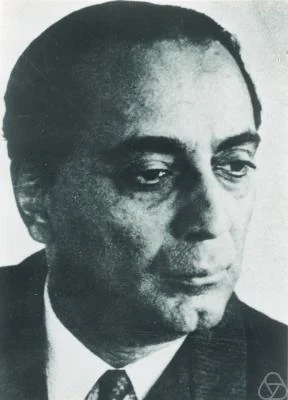
Dhawan was born in Srinagar on 25 September 1920. His education at Punjab combined physics and mathematics, English literature and mechanical engineering. He later studied at Minnesota and Caltech, completing his doctorate in 1951 with Hans W. Liepmann. That range is worth preserving because the familiar label of rocket scientist can hide the character of his actual training. His research career developed from experimental fluid mechanics, including the difficult problem of measuring what happens close to a surface in a flowing fluid.
Experiments made near-surface flow measurable
The National Academy of Engineering memoir describes his doctoral work on directly measuring skin friction with a floating element, whose motion was measured electronically. It also credits a shock-wave and boundary-layer study coauthored with Liepmann and Anatol Roshko. This is a more specific description of contribution than calling him a pioneer without identifying the work. The measurements and apparatus belong to a collaborative research programme. Neither the memoir nor a later tribute should be mistaken for a fresh reproduction of the original experimental data.
Laboratory development continued after his return to India
Dhawan joined the Indian Institute of Science in 1951 and became professor and department head in 1955. ISRO’s account and the NAE memoir describe laboratories for high-speed aerodynamics and boundary-layer research. The memoir emphasises the adaptation of available equipment and the training of people who later helped develop other facilities. The significance lies in creating the conditions for continuing experiments, not merely opening a building. His interests included transition between flow regimes and other problems that could support both basic understanding and aeronautical engineering.
IISc leadership broadened the research setting
ISRO records his directorship of IISc as 1962–1981. The NAE memoir’s opening agrees, although a later sentence gives a 1963 start; the institutional range is retained here. The memoir describes the development of programmes across materials, computing, biology and other fields, together with changes in teaching. Those developments involved recruited faculty, students and existing departments. Dhawan’s leadership is part of their history without making him the individual author of work carried out throughout the institute.
The space programme required organisation as well as launches
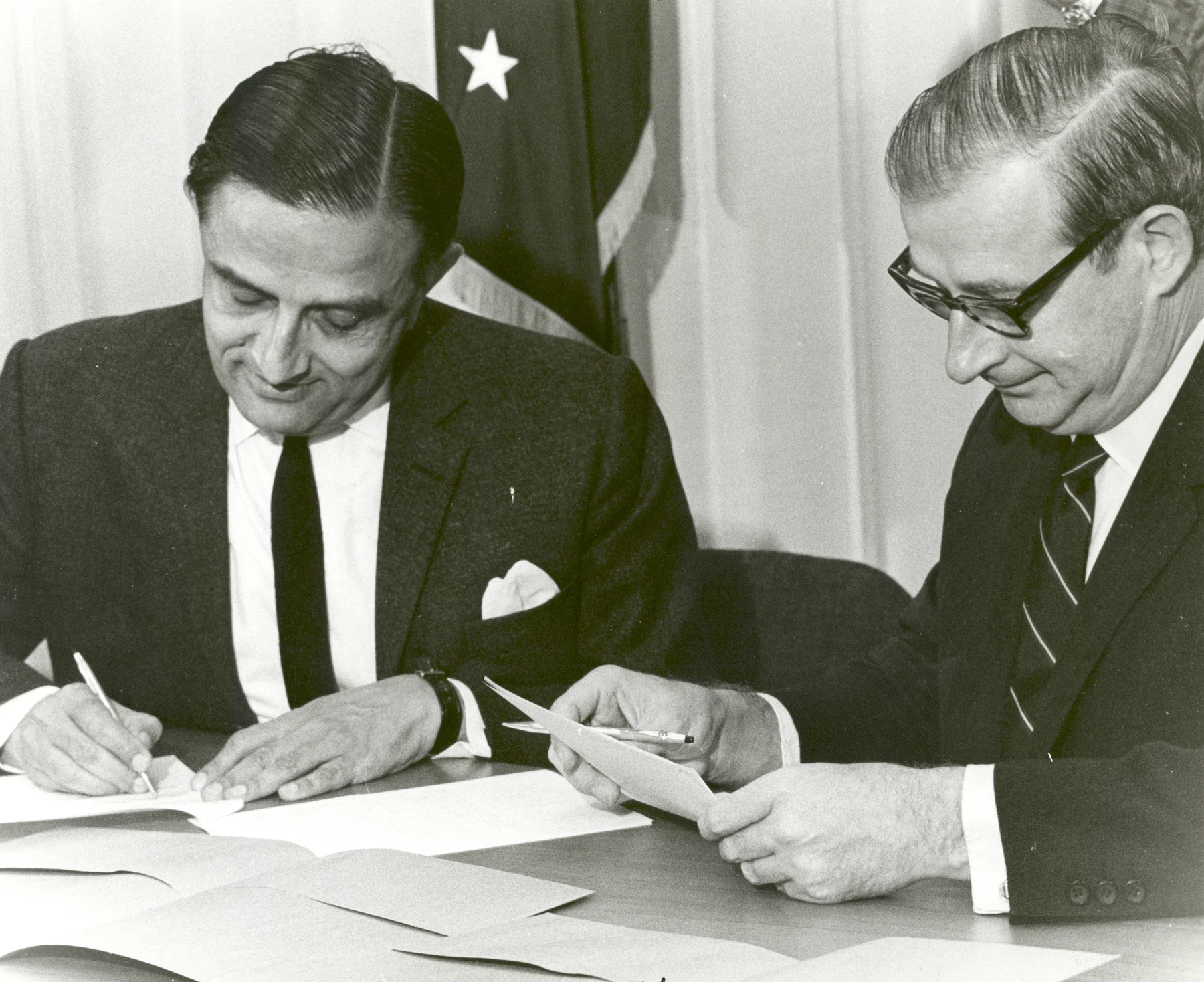
He chaired ISRO from 1972 to 1984, after Sarabhai’s death and an intervening transition in leadership. The NAE account describes the relationship between the Space Commission, the Department of Space and ISRO, as well as technical reviews drawing on expertise outside the organisation. The period included the first successful launch of a satellite by an Indian launch vehicle in 1980, associated with A. P. J. Abdul Kalam’s project leadership. A programme chairman, a project director and the engineering teams have distinct responsibilities; their contributions should remain visible together.
Applications and public purposes shaped the programme
Rural education, communications and remote sensing formed important parts of the space programme he led. SITE’s operational reports give one concrete example of the technical and social work required beyond getting a satellite into orbit. Dhawan died on 3 January 2002, and the Sriharikota launch centre subsequently took his name. His legacy joins a body of fluid-mechanics research to a style of institution building. Explaining both is more informative than attributing later generations of satellites and launch vehicles to him personally.
Quick answers
Frequently asked questions about Satish Dhawan
- Was Dhawan’s research mainly rocket design?
- His own research centred on fluid mechanics, including skin friction, shock waves and boundary layers. He also led major scientific and space institutions.
- How long did he chair ISRO?
- ISRO’s institutional biography records his chairmanship as 1972–1984.
Keep exploring
Lives connected to this story
- Vikram Sarabhai
Trace the earlier space programme and the institutional transition after Sarabhai’s death.
- A. P. J. Abdul Kalam
Distinguish programme leadership from the work of a launch-project director.
- C. N. R. Rao
Read another IISc director’s career in a different research discipline.
Sources and further reading
Explore the evidence
These references support the biography and offer further reading. Official records, first-person accounts and independent reporting provide different perspectives; image records document attribution and licensing.
- 1. ISROISRO: Satish Dhawan
Institutional career chronology used; later operational launch systems are not represented as Dhawan’s personal designs.
- 2. National Academy of EngineeringNarasimha and Siddhartha: Satish Dhawan, NAE Memorial Tributes 19
The memoir internally differs on the IISc start year. Its APPLE paragraph is not used to identify SITE, which has its own original operational records.
- 3. President of India archiveDevelopments in Fluid Mechanics and Space Technology: Dhawan Tribute
- 4. NASA Goddard Space Flight CenterHoward L. Galloway Jr: SITE Reports from the NASA Resident Representative in India, May 1976