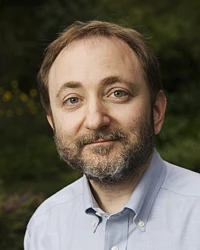
In this biography
Quick facts
- Born
- 1922
- Died
- 2020
- Birthplace
- Brooklyn, NY, USA
- Country
- United States
- Nationality
- Not independently established
- Known for
- Isolation and study of epidermal growth factor and its cellular effects
Why this life matters
The visible change was valuable because it could be followed through purification and tested in new preparations; it did not by itself reveal every receptor interaction or establish that all growth is controlled by one substance.
Timeline
Key moments
Birth
Born in Brooklyn, NY, USA.
Nobel recognition
Received the Nobel Prize in Physiology or Medicine.
Chemistry as a way into development
Stanley Cohen was born in Brooklyn in 1922. He studied biology and chemistry at Brooklyn College, whose tuition-free education made university study financially possible for his family. His Nobel autobiography describes an early interest in embryonic development and the conviction that chemical methods could illuminate it. After working briefly in a milk-processing plant, he pursued graduate research. His later growth-factor work developed through collaboration with Rita Levi-Montalcini and a move to Vanderbilt in 1959.
An unexpected effect becomes a new question
Preparations studied in connection with nerve growth produced other effects in newborn animals, including changes in eyelid opening and tooth eruption. Cohen pursued the active material and isolated the small protein called epidermal growth factor. His Nobel lecture then distinguishes whole-animal observations from experiments in tissue and organ culture. Those later preparations helped ask whether growth stimulation required an indirect systemic influence or could occur through a more local action on responsive tissue.
Sources for this section: [3]
A group effort beyond one visible endpoint
Cohen shared the 1986 medicine prize with Levi-Montalcini for growth factors. He continued investigating the chemistry and biology of EGF at Vanderbilt, and his autobiography explicitly describes the recognised work as a group achievement. He died in 2020. His contribution connects a conspicuous developmental response with progressively more specific biochemical questions. The visible change was valuable because it could be followed through purification and tested in new preparations; it did not by itself reveal every receptor interaction or establish that all growth is controlled by one substance.
Quick answers
Frequently asked questions about Stanley Cohen
- What is Stanley Cohen known for?
- Isolation and study of epidermal growth factor and its cellular effects.
Keep exploring
Lives connected to this story
- Edmond H. Fischer
Compare the related experimental question and research career.
- Martin Rodbell
Compare the related experimental question and research career.
Sources and further reading
Explore the evidence
These references support the biography and offer further reading. Official records, first-person accounts and independent reporting provide different perspectives; image records document attribution and licensing.
- 1. Nobel Prize OutreachStanley Cohen — Facts
Source scope: Birth/death and award metadata; short official work summary.
- 2. Nobel FoundationStanley Cohen — Biographical
Source scope: Selected historical passages, as recorded in the research evidence ledger; not a full-document reading claim.
- 3. Nobel FoundationStanley Cohen — Nobel lecture
Source scope: Selected historical passages, as recorded in the research evidence ledger; not a full-document reading claim.