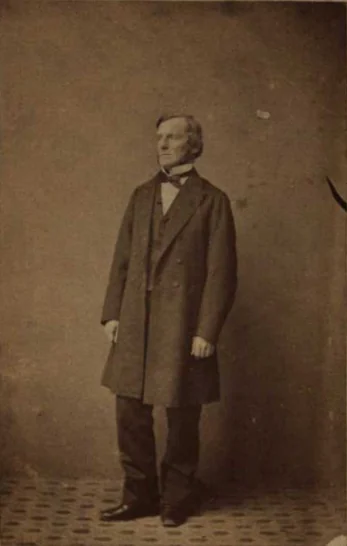
In this biography
Quick facts
- Born
- 1892
- Died
- 27 September 1972
- Birthplace
- Shiyali, Tamil Nadu, India
- Country
- India
- Nationality
- Not independently established
- Known for
- Five Laws of Library Science, Colon Classification and library education
- First library appointment
- Madras University, January 1924
- Five Laws
- Published in 1931
- Colon Classification
- Published in 1933
- DRTC
- Founded in 1962
Why this life matters
He helped make librarianship a field of research and professional education in India while insisting that a library’s value depends on its use.
Timeline
Key moments
Birth
Born in Shiyali in the then Madras Presidency.
Mathematics
Completed his master’s degree before teaching.
University librarian
Moved from Presidency College to the Madras University Library.
Five Laws
Published The Five Laws of Library Science.
Classification
Published Colon Classification.
DRTC
Helped establish the Documentation Research and Training Centre in Bangalore.
Death
Died on 27 September.
A mathematics teacher became a librarian
Ranganathan was born in 1892 in Shiyali, in the then Madras Presidency. He trained in mathematics and teaching, working in colleges before joining Presidency College in Madras. The detailed biography reproduced by the Indian Statistical Institute describes classes built around discussion and examples. His January 1924 move to the university library therefore involved a change of profession rather than an uninterrupted career in library administration. It helps explain why teaching, enquiry and the needs of learners remained central to his later work.
Library visits changed his understanding of the job
The detailed biography dates his English study tour to 1924–1925 and identifies W. C. Berwick Sayers as an important guide. Ranganathan encountered libraries serving children, workers and other readers, and returned to Madras with a stronger conception of public service. DRTC’s shorter profile differs on the departure year; the tour’s precise departure date is not used in the timeline. What matters to the documented change in his work is the connection between studying library practice and reorganising service for actual readers.
The Five Laws connected an ideal with daily operations
The Five Laws of Library Science was published in 1931. The principles move from making books usable to connecting readers with material, saving their time and allowing a library to develop. Ranganathan’s First Law essay gives the argument practical force: safeguarding books can defeat their purpose if readers never gain access. He discusses restrictions, location and opening hours rather than presenting an abstract slogan alone. His own examples are historical arguments, not a reliable description of the present opening hours of the libraries he names.
Classification was one part of a larger service programme
Colon Classification appeared in 1933. DRTC describes his faceted, analytico-synthetic approach to representing subjects, while the longer biography places classification beside catalogue rules, reference service and open shelves. These are distinct tools within a broader organisation of access. The classification scheme should not be confused with the Five Laws themselves: one concerns how subjects can be represented and arranged, while the other offers principles against which the institution’s work can be judged. Both require people, practice and continued revision to become useful.
Teaching and research moved through several institutions
He worked at Banaras Hindu University in 1945–1947 and then moved to Delhi, where teaching and research circles became central to his activity. The biography describes students and colleagues developing ideas through regular meetings, alongside international classification contacts. In Bangalore, the Documentation Research and Training Centre was founded under the Indian Statistical Institute in 1962. Its research and teaching role continued the connection between a professional practice and a body of knowledge that could be examined, taught and improved.
A continuing influence should remain open to examination
Ranganathan died on 27 September 1972. His writing and institutional work gave Indian librarianship an enduring research and educational foundation. That importance does not require treating every historical statement in a tribute as settled fact, or assuming that a principle provides an automatic answer to every modern service problem. His First Law is most useful when it prompts concrete questions: who can reach the material, what prevents use and which change would remove the obstacle? A service can be assessed against that purpose rather than against the size of its collection alone.
Quick answers
Frequently asked questions about S. R. Ranganathan
- Are the Five Laws the same thing as Colon Classification?
- No. The Five Laws are service principles, published in 1931; Colon Classification is a system for organising subjects, first published in 1933.
- Where did Ranganathan teach library science?
- His career included Madras, Banaras Hindu University, Delhi and the Documentation Research and Training Centre in Bangalore.
Keep exploring
Lives connected to this story
- Andrew Carnegie
Compare a library-service programme with the separate history of library-building grants.
- Amartya Sen
Explore a different account of education and people’s opportunities.
- Rabindranath Tagore
Place professional library education beside another Indian educational institution-building career.
Sources and further reading
Explore the evidence
These references support the biography and offer further reading. Official records, first-person accounts and independent reporting provide different perspectives; image records document attribution and licensing.
- 1. Indian Statistical Institute / Encyclopedia of Library and Information ScienceS. R. Ranganathan: Short Biography, 1978 Encyclopedia Extract
Selected 1978 biography extract on PDF pages 1, 3–7, not a newly acquired personal archive. Birth shown at year precision; the detailed account gives 9 August.
- 2. Indian Statistical InstituteDocumentation Research and Training Centre: Our Founder
Actual indexed institutional profile; origin 403. Its 1925 departure and 1957 Public Library Act dates are not silently substituted for the detailed chronology. The Act date is not claimed here.
- 3. Magazin bibliologic / Institutul de Dezvoltare a Societății InformaționaleS. R. Ranganathan: The First Law, reprinted in Magazin bibliologic 1–2, 2011, pages 83–90
Actual 2011 reprint of the First Law essay, selected pages 83–84 and 88–90; not a claim to have read the complete 1931 book.
- 4. University of North Texas LibrariesUniversity of North Texas Libraries: The Five Laws of Library Science, 1931 catalogue record