In this biography
Quick facts
- Born
- 1943; precise birthday differs between sources
- Birthplace
- Gungululu, Eastern Cape, South Africa
- Country
- South Africa
- Nationality
- Not independently established
- Known for
- To My Children’s Children, Mother to Mother, women’s stories and English–isiXhosa writing
- Birth year
- 1943; exact August day differs in published sources
- Education
- Unisa BA; Columbia master’s in organisational social work
- Autobiographies
- To My Children’s Children, 1990; Forced to Grow, 1992
- Novel
- Mother to Mother, 1998
- UN retirement
- 2003
- National honour
- Order of Ikhamanga in Bronze, 2011
Why this life matters
Her work makes Black women authors of their own histories and gives everyday labour, family relationships and cultural memory literary weight.
Timeline
Key moments
Early life and work
Rural Eastern Cape origins precede Cape Town life, teaching and domestic work.
Study alongside responsibilities
Correspondence schooling, a Unisa degree and Columbia postgraduate study expand her opportunities.
United Nations work
Anti-apartheid radio and later UN employment precede retirement.
Memoir and fiction
Two autobiographies are followed by Mother to Mother.
Different forms and recognition
Beauty’s Gift and the 2009 stage adaptation precede the 2011 national honour.
Writing across audiences
A festival profile documents English and isiXhosa work, including children’s stories.
Education developed alongside work and family responsibility
Magona was born in Gungululu in the Eastern Cape in 1943. Published sources disagree on the precise August birthday, so no exact day is asserted here. Her later Cape Town experiences included teaching, domestic employment and raising three children under apartheid’s restrictions.
Her official biography describes completing matric by correspondence before earning a Unisa BA and a Columbia master’s in organisational social work. Those qualifications should not be confused with later honorary doctorates. Study occurred alongside the practical demands of earning a living and caring for a family.
Autobiography made personal memory a public record of experience
To My Children’s Children appeared in 1990, followed by Forced to Grow in 1992. Puleng Segalo’s discussion reads these autobiographies through home, belonging and the power to narrate one’s own life. A domestic worker’s history becomes something more substantial than an anonymous example in somebody else’s account.
That does not make autobiography a complete national history or a transparent record without perspective. Its value includes the particular relationships and remembered spaces through which large structures were experienced. Magona’s life story and an individual fictional character’s story also need to remain distinct.
United Nations employment connected language and public communication
Magona worked on United Nations anti-apartheid radio programmes until June 1994 and continued in UN employment until retiring in 2003. The 2021 festival account also identifies film-archive work. These were different phases, not one unchanged broadcasting role continuing until retirement.
She spent an extended period in New York before returning to South Africa. Residence abroad and years in a particular post should not be treated as identical totals. Her later public identity drew on teaching, language work and storytelling as well as her international employment.
Mother to Mother addresses a real killing through invented narration
The 1998 novel was inspired by Amy Biehl’s 1993 murder. Its central voice, Mandisa, addresses the victim’s mother. Magona’s 2009 interview explains her concern for the mother of a perpetrator, whom she knew, without making the book a transcript of that woman’s words.
Dianne Shober’s literary analysis examines the interplay of Christian and isiXhosa traditions in the writing. Explaining the pressures shaping violence is not the same as excusing a killing. A novel can ask readers to confront more than one person’s suffering without supplying a judicial finding or eliminating responsibility.
A varied bibliography reached beyond one famous novel
Beauty’s Gift, published in 2008, considers women’s relationships and the impact of HIV/AIDS. Poetry, short stories, biography and children’s books extend the range further. The 2021 festival profile documents writing in English and isiXhosa, and translations into other South African languages, rather than one audience or one genre.
The Presidency’s 2011 citation records the Order of Ikhamanga in Bronze. This national distinction is separate from honorary academic degrees. Older profiles also list a writer-in-residence role; those dated descriptions do not establish an unchanged appointment in 2026. The literary work can be described without inventing a current institutional office.
Quick answers
Frequently asked questions about Sindiwe Magona
- What are her two autobiographies?
- To My Children’s Children (1990) and Forced to Grow (1992).
- Is Mother to Mother autobiography?
- No. It is fiction inspired by a real killing, not Magona’s own confession or a literal transcript.
- Did her UN broadcasting work last until retirement?
- The cited accounts distinguish anti-apartheid radio through June 1994 from later employment ending in 2003.
- What is her exact birthday?
- The year 1943 is secure; published accounts disagree on the August day, which is withheld here.
Keep exploring
Lives connected to this story
- Njabulo Ndebele
Compare another writer’s attention to everyday experience under and after apartheid.
- Nadine Gordimer
Explore another literary career engaging South African political and social life.
- Desmond Tutu
Distinguish literary reflection on reconciliation from the institutional history of the TRC.
Sources and further reading
Explore the evidence
These references support the biography and offer further reading. Official records, first-person accounts and independent reporting provide different perspectives; image records document attribution and licensing.
- 1. Sindiwe MagonaOfficial biography — qualifications, writing and dated United Nations career
- 2. Puleng Segalo / The Conversation, republished by Unisa8 March 2021 — Learning from the story of pioneering South African writer Sindiwe Magona
Actual selected article body read. The Conversation original and Unisa republication are one underlying work, not separate word allowances. The erroneous colonial-power shorthand is not adopted.
- 3. University of KwaZulu-Natal / Time of the Writer2021 participant profile — selected bibliography and historical work, not current appointments
This is a 2021 record, not proof of present appointments, completed doctoral study or current book totals.
- 4. The Presidency, South Africa2011 National Orders — selected indexed Sindiwe Magona citation, not the complete booklet
Selected indexed 2011 citation only. Its 23 August date differs from the 2023 birthday feature’s 27 August; no exact day enters date schema.
- 5. Sunday Times Books28 August 2023 — birthday feature; indexed date and early-career passage only
- 6. Beacon PressMother to Mother — supplied synopsis and 23 August 2022 paperback edition record
- 7. Dianne Shober / Literator, 2019An African’s faith — selected sections on Magona’s autobiographies, spirituality and Mother to Mother
- 8. Duncan Alfreds / News2421 September 2009 — actual interview about the Mother to Mother stage adaptation
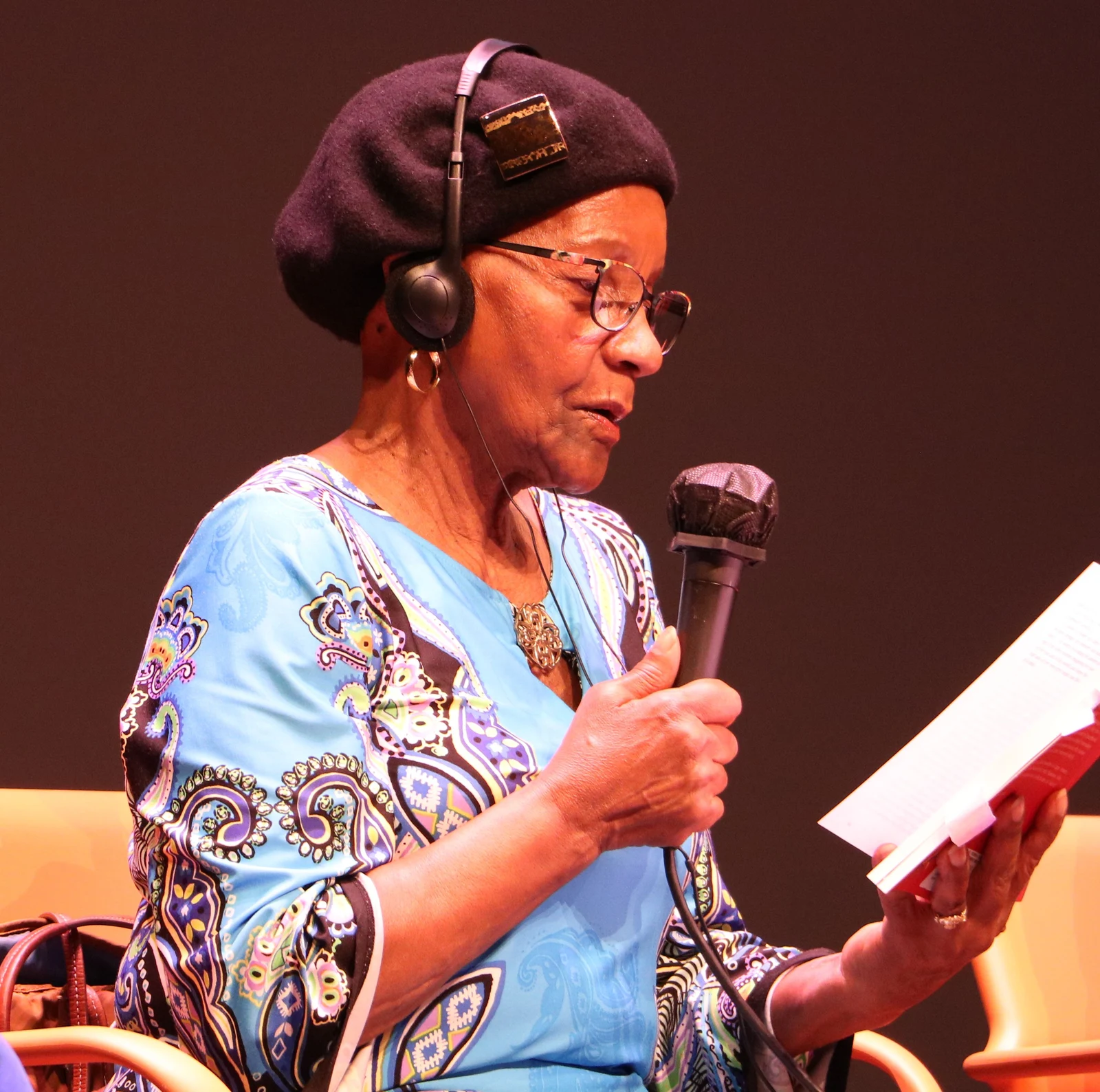
- 9. DeuxPlusQuatre / Wikimedia CommonsSindiwe Magona at Festival Atlantide, Nantes, 19 June 2021 — own photograph and first/current licence history
Own-work creator grant verified in first/current descriptions. Full supplied reading photograph retained, including the incidental page edge; no book cover or readable text reproduced as a separate work.