
The short answer
Mother to Mother uses an imagined mother’s address to another mother to approach the aftermath of a real killing. Understanding what it invents, what historical event it responds to and what kind of explanation it offers is essential to reading it without confusing fiction with testimony.
Chronology
A timeline of the turning points
The historical killing
Amy Biehl is killed in Gugulethu.
Fiction responds
Mother to Mother appears; contemporary review and bibliography confirm the year.
Baxter adaptation
A stage version brings the maternal address into performance.
A later paperback
Beacon’s current edition record belongs to a later issue, not the original publication.
A fictional voice is not a recovered transcript
Beacon’s synopsis describes a novel structured as a letter from Mandisa, the mother of a killer, to the victim’s mother. That formal choice brings a particular voice into the foreground. It does not establish that a real mother wrote these words or that every incident in the narrative occurred as described.
The historical starting point is Amy Biehl’s murder in Gugulethu on 25 August 1993. The distinction between that event and the novel’s narration is not a minor disclaimer: it determines what kind of evidence a reader is encountering. Fiction can respond to a crime without becoming its official record.
Magona’s connection explains a question, not every answer
In her actual 2009 interview, Magona recalled discovering that one perpetrator’s mother was someone she knew. She described trying to understand the position of a parent whose child had committed violence. The interview documents her reason for writing; it is not independent confirmation of every detail assigned to Mandisa.
Keeping the writer separate from the narrator matters too. Mother to Mother is not a confession by Magona or evidence that her own child killed Biehl. The imaginative address permits an encounter between two mothers while leaving their loss and their relationship to responsibility different.
Cultural memory gives the narration more than one timescale
Shober’s 2019 analysis examines Christian practice and isiXhosa ancestral traditions across Magona’s writing. In Mother to Mother, she discusses the use of the Nongqawuse story to connect a character’s account of present anger with a longer history. This is a critic’s interpretation of a literary construction.
It should not be converted into proof that one nineteenth-century prophecy caused a particular twentieth-century murder. Historical memory, a character’s explanation and an independently verified causal account are different things. Their relationship can be explored without adopting the narrator’s perspective as the sole explanation of the real event.
Sources for this section: [3]
Later editions and performance create different encounters
A September 1998 contemporary review and Shober’s bibliography place the original novel in 1998. Beacon’s supplied paperback record instead dates one edition to 23 August 2022. An edition date should not overwrite the first-publication history or make a later cover part of the original issue.
The 2009 News24 interview describes a stage adaptation by Magona and Janice Honeyman, performed by Thembi Mtshali-Jones at the Baxter. A performed address can create another encounter with the material, but it is not the original prose text. This guide claims neither full-novel reading nor a complete performance viewing.
Biography context
Explore Gugulethu, Cape Town, South Africa through connected lives
Sindiwe Magona
Explore the memoirs, teaching, UN career and wider writing.
Explore the biographiesAnother approach to fictionFools and Other Stories
Compare the literary treatment of everyday lives and political pressure.
Explore the biographiesInstitutional contextThe TRC’s legislative foundation
Read about the historical institution separately from a novel’s ethical questions.
Explore the biographiesConnected biographies
The writer behind the novel
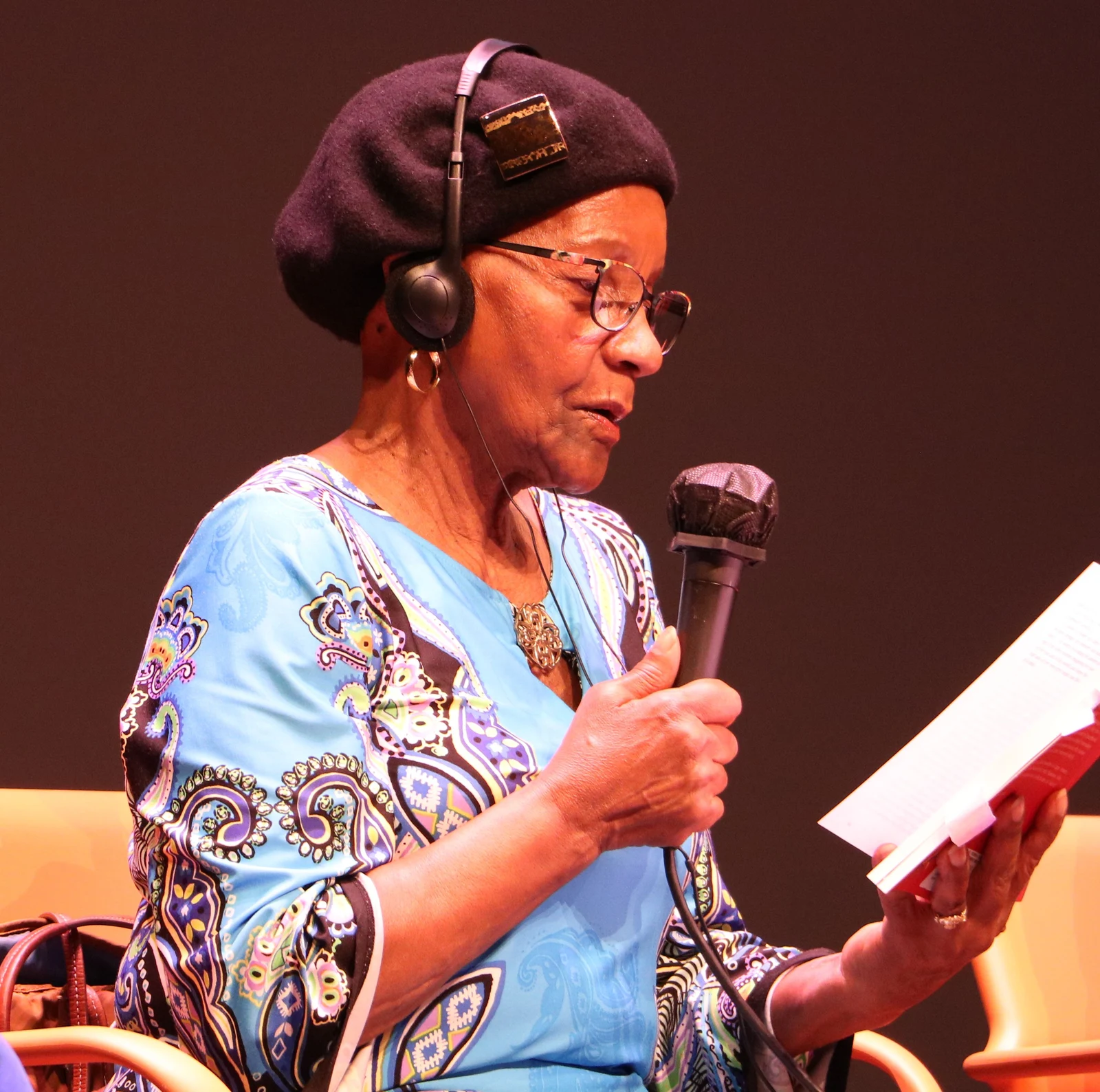
1943–
Sindiwe Magona
Writer, storyteller and former United Nations employeeSindiwe Magona turned experiences of poverty, domestic work, education and migration into a varied literary career. Autobiography, fiction, children’s writing and theatre provide different ways to address memory and social responsibility. Mother to Mother links an imagined maternal voice with a real episode of South African violence without becoming a literal confession.Read biographyQuick answers
Common questions
- Is Mother to Mother a true confession?
- No. It is fiction responding to a real historical killing.
- Who is Mandisa?
- The novel’s central maternal voice, not Sindiwe Magona speaking as herself.
- Was the book first published in 2022?
- No. The original novel appeared in 1998; 2022 is the cited Beacon paperback edition.
- Does the guide claim to have watched the play?
- No. It uses the actual 2009 interview and report about the adaptation.
Primary and institutional sources
How this history was checked
A publisher synopsis/edition record, an actual 2009 artist interview, selected scholarly analysis and the indexed opening/date of a 1998 review. No full-novel reading, complete theatre viewing, official case-file review or new legal finding claimed. The 2021 reading photograph is contextual, not a scene from the story. This article was reviewed on 24 October 2026.
- Beacon PressMother to Mother — supplied synopsis and 23 August 2022 paperback edition record
- Duncan Alfreds / News2421 September 2009 — actual interview about the Mother to Mother stage adaptation
- Dianne Shober / Literator, 2019An African’s faith — selected sections on Magona’s autobiographies, spirituality and Mother to Mother
- Jane Rosenthal / Mail & Guardian25 September 1998 — indexed Mother to Mother review opening; full article unavailable
- DeuxPlusQuatre / Wikimedia CommonsSindiwe Magona at Festival Atlantide, Nantes, 19 June 2021 — own photograph and first/current licence history
Social explanation should not be mistaken for acquittal
The publisher presents the book as an attempt to understand the legacy of colonialism and apartheid, not an apology for murder. Asking what conditions formed a violent situation is different from saying no individual acted, no wrong occurred or no victim deserves attention.
That distinction also guards against treating compassion as a scarce resource that can belong to only one mother. Recognising another person’s suffering need not make the losses identical or cancel the violence. These are ethical reading questions, not a substituted court ruling or a claim about an amnesty decision.
Sources for this section: [1] · [3]