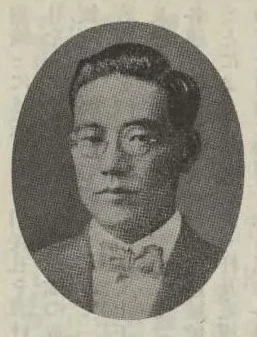
In this biography
Quick facts
- Born
- 10 August 1837
- Died
- 2 December 1912
- Birthplace
- Kagoshima, Japan
- Country
- Japan
- Nationality
- Not independently established
- Known for
- The Tsukiji shipyard and formation of Kawasaki Dockyard
- Born
- 10 August 1837, Gregorian date in NDL
- Tsukiji shipyard
- Established in 1878
- Corporation
- Kawasaki Dockyard Co., Ltd., 15 October 1896
- Initial leadership
- Kojiro Matsukata president; Shozo Kawasaki shareholder and adviser
Why this life matters
His career separates entrepreneurship, asset acquisition and executive succession in the formation of a major Japanese industrial business.
Timeline
Key moments
Birth
Born on 10 August in Kagoshima.
Tsukiji shipyard
Establishes the Tokyo yard on government land.
Government yard acquired
Company account records purchase of the government-managed Hyogo shipyard.
Public role
NDL records appointment to the House of Peers.
Incorporation and succession
Corporation formed on 15 October; Matsukata becomes first president.
Dry dock completed
Matsukata continues the dock project begun during the founder’s leadership.
Death
Dies on 2 December.
Trade and transport came before shipbuilding
Shozo Kawasaki was born in Kagoshima on 10 August 1837 in the Gregorian calendar. NDL also gives the traditional date, avoiding confusion between calendars. His father was a kimono merchant, and Kawasaki entered trade in Nagasaki before developing shipping activities in Osaka. The company recounts a shipwreck that damaged an early venture and influenced his interest in more capable vessels. That episode belongs to its founder narrative; it should not be treated as an engineering trial proving that every Western ship was safe or every traditional vessel inadequate.
Government relationships helped open a new field
During the early 1870s Kawasaki worked in businesses connected with Ryukyu sugar and mail shipping. NDL and company histories differ over the precise chronology of some early appointments, so these are not assigned an artificial single date here. The clearer industrial milestone is 1878, when he established Kawasaki Tsukiji Shipyard in Tokyo. Kawasaki’s history describes the use of government land and support from Masayoshi Matsukata. Access to land and official networks mattered alongside practical experience. The enterprise was part of a changing commercial and administrative environment, rather than a shipyard constructed without public connections.
Hyogo created a larger operating base
Kawasaki expanded into the Kobe area and acquired the government-managed Hyogo shipyard in 1887, according to the company’s detailed founder account. The national-library biography similarly describes consolidation around the former government facility. These records differ on the date of an earlier Hyogo initiative, so the firm purchase and consolidation are kept separate from that uncertain beginning. Combining workshops, berths and equipment increased the business’s industrial scope. The retrospective provides an asset history, while the conditions of the original sale and the experience of its workforce would require additional records.
Incorporation did not make him the first president
On 15 October 1896 Kawasaki Dockyard Co., Ltd. was formed. Kojiro Matsukata became its first president; Shozo Kawasaki remained the largest shareholder and became adviser. The company links incorporation with the need for facilities and finance after increased repair orders during the Sino-Japanese War. The institutional distinction is important: founding an enterprise, owning shares and serving as chief executive are different relationships. Assigning the first presidency to Shozo because the company bears his surname would overwrite the explicitly named officer and misrepresent how the business continued after his withdrawal from day-to-day leadership.
Later construction depended on continued management
The company’s history describes plans for a Kobe dry dock beginning under Kawasaki, with surveys in 1892 and boring tests in 1895. Construction continued under Matsukata and was completed in 1902 after difficult foundation work. This sequence assigns credit across planning and implementation rather than making one founder perform every later task. Matsukata also led later expansion into other industries. Those developments belong to the continuing company, with their own engineers, workers and managers. A modern product carrying the Kawasaki name is therefore not automatically an invention or personal decision of Shozo Kawasaki.
Sources for this section: [3]
A wider public life and a bounded legacy
NDL records his House of Peers role from 1890 and involvement in banking and newspaper enterprise. Kawasaki’s account also describes art collecting and a private museum. He died on 2 December 1912, leaving an industrial business already operating under another president. His significance rests in creating and assembling a shipbuilding base, finding institutional support and arranging succession. Company commemorations understandably emphasise achievement, but claims about national progress or employee welfare require separate evidence. Later labour measures associated with Matsukata or other presidents should retain their dates and authors rather than being attached retrospectively to the founder.
Quick answers
Frequently asked questions about Shozo Kawasaki
- Was Shozo Kawasaki the first president of the 1896 corporation?
- The company names Kojiro Matsukata as first president. Kawasaki became adviser and remained its largest shareholder.
- What is his birth date?
- NDL gives 10 August 1837 Gregorian, separately identifying the traditional-calendar date.
- Did he complete the Kobe dry dock alone?
- The company describes planning under Kawasaki and later construction completed under Matsukata in 1902.
Keep exploring
Lives connected to this story
- Yataro Iwasaki
Compare another maritime enterprise’s lease, ownership and succession history.
- Sakichi Toyoda
Compare a different industrial founder with separately named company officers.
- Kaichiro Imaizumi
Compare the institutional and engineering history of a different heavy-industry enterprise; later company combinations should not merge their founders’ careers.
Sources and further reading
Explore the evidence
These references support the biography and offer further reading. Official records, first-person accounts and independent reporting provide different perspectives; image records document attribution and licensing.
- 1. National Diet Library, Japan川崎正蔵: traditional and Gregorian lifespan; business chronology
Japanese NDL record explicitly pairs traditional Tenpo 8, month 7, day 10 with Gregorian 10 August 1837. It gives death 2 December 1912. English editorial paraphrase; no calendar calculation invented.
- 2. Kawasaki Heavy IndustriesKawasaki’s DNA: founder Shozo Kawasaki and first president Kojiro Matsukata
Detailed company DNA page dates Ryukyu research to 1873 and shipping appointment to the following year; the older general history says 1893/1894. Main text uses early 1870s with uncertainty visible.
- 3. Kawasaki Heavy IndustriesHistory: 1878 shipyard, 1896 incorporation and dry-dock development
Corporate phrase “publicly traded” is not treated as evidence of an exchange-listing date. Account of dry-dock planning/completion used without attributing later labour reforms or all modern products to the founder.