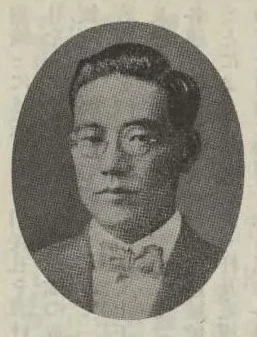
In this biography
Quick facts
- Born
- 19 March 1867
- Died
- 30 October 1930
- Birthplace
- Yamaguchi village, present-day Kosai, Shizuoka, Japan
- Country
- Japan
- Nationality
- Not independently established
- Known for
- Loom inventions, commercial testing and the Type G automatic loom
- Born
- 19 March 1867, Gregorian calendar
- First loom patent
- 1891, following the 1890 wooden hand loom
- Type G
- Completed in 1924 in museum and company accounts
- Company registration
- Toyoda Automatic Loom Works registered 18 November 1926
Why this life matters
His career connects practical invention, production testing and the institutions that turned textile machinery into a durable industrial business.
Timeline
Key moments
Birth
Born on 19 March in the Gregorian calendar.
First patent
Obtains a patent for an improved wooden hand loom.
Commercial trial plant
Establishes an independently operated weaving mill in Nagoya.
Type G
Non-stop shuttle-change automatic loom is completed.
Company established
Incorporation meeting on 17 November; registration on 18 November.
Platt agreement
Company transfers specified territorial production and marketing rights.
Death
Dies on 30 October.
A carpenter’s son pursued practical invention
Sakichi Toyoda was born in Yamaguchi village, now part of Kosai in Shizuoka Prefecture. The National Diet Library gives 19 March 1867 as his Gregorian birth date and separately records the traditional calendar date. His father combined farming with carpentry, and Sakichi learned practical work in that household. Toyota Industries describes his growing interest in machinery and the patent system during the Meiji period. Such recollections form part of the company’s account of its origins; they should not turn every youthful thought into a documented prediction of the later automobile industry.
An improved hand loom came before powered machinery
The company and museum date his wooden hand loom to 1890 and the first patent to 1891. The machine improved an existing weaving process rather than inventing weaving itself. Sakichi then pursued powered looms and mechanisms to reduce interruptions and flawed cloth. The successive machines belong to different stages: a manually operated improvement, motorisation and greater automation. Treating them all as one invention loses the engineering problem each addressed. The patent year also differs from a prototype’s completion date, a distinction that remains useful when tracing technical work through later commemorative summaries.
Business setbacks made testing central
Sakichi’s work required capital, customers and workshops as well as ideas. Toyota Industries recounts unsuccessful early business operations and disappointing tests of an early shuttle-changing mechanism. He became committed to commercial trials before selling a machine as a finished product. After leaving an earlier loom business in 1910, he established an independent weaving mill in Nagoya in 1911. The site later became the commemorative museum. This history shows experimentation inside operating production, where reliability and the quality of yarn could expose problems that a demonstration alone might miss.
Sources for this section: [3]
The Type G combined different automatic responses
In 1924 the Type G automatic loom was completed through work involving Sakichi, Kiichiro and their colleagues. Its shuttle-changing mechanism replenished weft yarn without reducing operating speed. Other mechanisms stopped the machine when warp or weft broke, limiting defective production. Continuing smoothly and stopping deliberately were therefore compatible design goals responding to different conditions. The engineering heritage record identifies the preserved first machine, while the museum explains its place in loom development. Their enthusiastic productivity claims are historical institutional assessments, not measurements independently reproduced for this biography.
An industrial company took shape around the invention
Toyota Industries records the incorporation meeting of Toyoda Automatic Loom Works on 17 November 1926 and registration the next day. Sakichi’s son-in-law Risaburo became president and Kiichiro managing director. Founder, inventor and company president were consequently different roles. In 1929 the company agreed to transfer Type G production and marketing rights to Platt Brothers for specified territories, excluding Japan, China and the United States. This was not the sale of every Toyota business. It connected a Japanese machinery enterprise with an established British manufacturer through a defined commercial arrangement.
Sources for this section: [3]
The automotive legacy followed his lifetime
Sakichi died on 30 October 1930. Kiichiro later founded Toyota Motor, so calling Sakichi the direct founder of the 1937 automobile company compresses two generations and separate organisations. His significance is substantial without that shortcut: repeated loom development, production-based testing and a business foundation helped create conditions for later work. Toyota’s histories also preserve his principles through subsequent corporate commemoration. Those principles explain the company’s account of continuity; they cannot establish that every later management decision, labour relationship or product outcome was personally designed or endorsed by him.
Quick answers
Frequently asked questions about Sakichi Toyoda
- Why is the birth date 19 March rather than 14 February?
- NDL explicitly distinguishes the traditional second-month, fourteenth-day date from its Gregorian equivalent, 19 March 1867.
- Did the automatic loom always keep running?
- No. Non-stop shuttle replenishment coexisted with automatic stopping when a warp or weft thread broke.
- Was Sakichi the president appointed in November 1926?
- Toyota Industries names Risaburo Toyoda as president and Kiichiro as managing director.
Keep exploring
Lives connected to this story
- Kiichiro Toyoda
Follow the next generation’s separate move into automobile production.
- Shozo Kawasaki
Compare another industrial founder whose company’s first president was a different person.
- Michio Suzuki
Compare another textile-machinery career and its distinct transition toward transport manufacturing.
Sources and further reading
Explore the evidence
These references support the biography and offer further reading. Official records, first-person accounts and independent reporting provide different perspectives; image records document attribution and licensing.
- 1. National Diet Library, JapanToyoda Sakichi: historical biography and Gregorian lifespan
Summary associates completion of an automatic loom with 1926; the detailed museum/company records date Type G to 1924 and company formation to 1926. Those stages remain separately labelled.
- 2. National Diet Library, Japan豊田佐吉: traditional and Gregorian dates
Japanese record explicitly pairs Keio 3, month 2, day 14 with 19 March 1867 Gregorian. English editorial paraphrase; no independent calendar calculation performed.
- 3. Toyota Industries CorporationThe Story of Sakichi Toyoda: inventions, trials and company establishment
Primary corporate narrative, not an independent impact audit. Registration, named officers, testing and territorial-rights scope read; no original patent specification or 1929 contract inspected.
- 4. Toyota Motor Corporation75 Years of Toyota: Sakichi Toyoda
English company history prints 14 February 1867. Prefer the NDL’s explicit traditional/Gregorian mapping. It also distinguishes Kiichiro’s automotive founding from Sakichi’s earlier work.
- 5. Toyota Commemorative Museum of Industry and TechnologySakichi Toyoda: life and invention chronology
- 6. Japan Society of Mechanical EngineersMechanical Engineering Heritage No. 16: Type G automatic loom
Heritage record describes stop and replenishment functions. Its 25 mechanisms differ from the museum’s 24; no reconciled mechanism total or independently tested productivity multiplier asserted.
- 7. Toyota Commemorative Museum of Industry and TechnologyDevelopment of Loom Technology: Type G and earlier looms