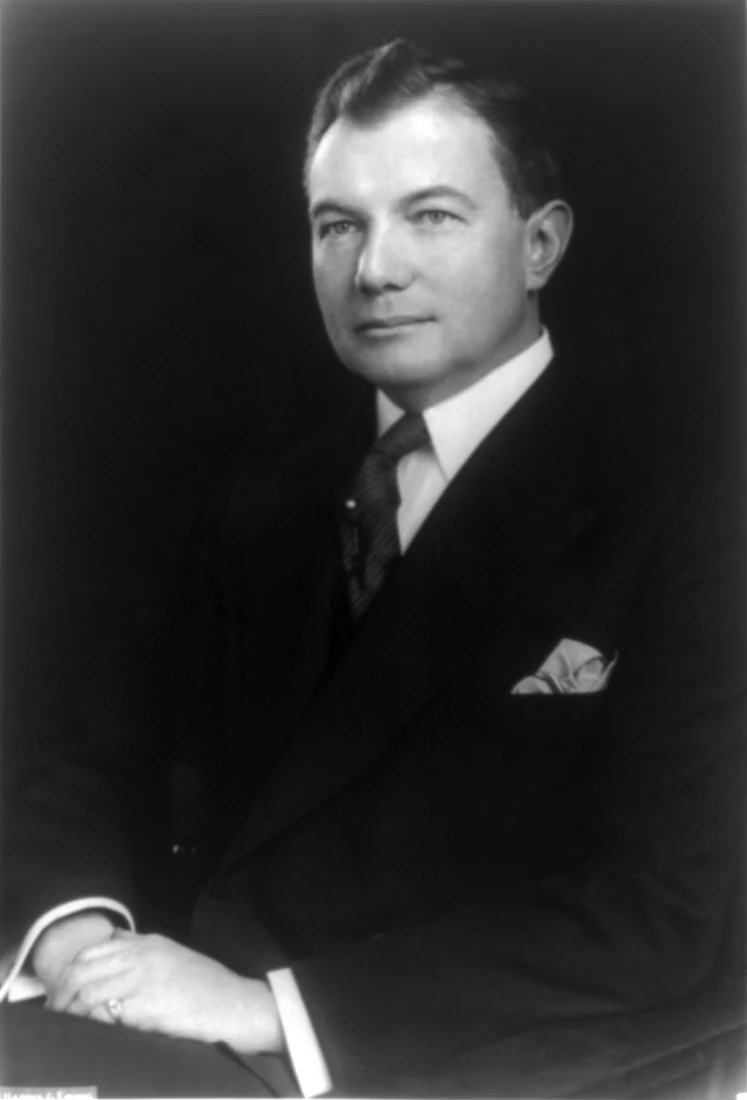
In this biography
Quick facts
- Born
- 13 February 1892
- Died
- 9 October 1954
- Birthplace
- Spring Creek, Pennsylvania, United States
- Country
- United States
- Nationality
- Not independently established
- Known for
- Civil liberties and the Nuremberg prosecution
- Full name
- Robert Houghwout Jackson
- Supreme Court oath
- 11 July 1941
Why this life matters
He combined executive legal service, constitutional opinions and an international prosecution.
Timeline
Key moments
New York bar
Entered legal practice after reading law.
Solicitor general
Began service as the federal government’s Supreme Court advocate.
Nuremberg
Served as chief U.S. prosecutor.
An apprenticeship route into law
Jackson grew up in western New York, attended Albany Law School for a year and continued his training in a law office. He entered the New York bar in 1913 without graduating from law school.
His career began in local practice, not immediately in Washington. That background matters when reading the later public image of an eloquent national advocate: it preceded, rather than resulted from, federal appointment.
Sources for this section: [2]
Successive offices, different responsibilities
The Federal Judicial Center records his private practice in Jamestown and Buffalo, Treasury work from 1934 and successive Justice Department positions. He served as solicitor general from 1938 to 1940, attorney general from 1940 to 1941 and then joined the Supreme Court.
Those offices did not give him the same task. An advocate represents the government’s position; an attorney general leads its legal department; a justice decides cases with other members of a court.
Sources for this section: [1]
Liberty and wartime state power
Jackson wrote the Court’s 1943 opinion rejecting compelled public-school flag salutes in Barnette. He also dissented in Korematsu in 1944, objecting to judicial approval of the exclusion imposed on Japanese Americans.
A majority opinion and a dissent have different authority. Putting both under the heading “Jackson’s rulings” would obscure whether his argument represented the Court’s result or his opposition to it.
Sources for this section: [3]
Prosecution at Nuremberg
President Harry Truman appointed Jackson to lead the U.S. prosecution of major Nazi war criminals. He undertook that work while a Supreme Court justice; the Federal Judicial Center dates his prosecutorial service to 1945–1946.
He then continued his judicial career until his death in 1954. The two roles invite comparison, but an international prosecution should not be read as another domestic Supreme Court opinion. The linked flag-salute study focuses on one judicial dispute and the disagreement over constitutional responsibility within it.
Quick answers
Frequently asked questions about Robert H. Jackson
- Did Jackson graduate from law school before entering the bar?
- No. He attended Albany for a year and continued by reading law in a law office.
Keep exploring
Lives connected to this story
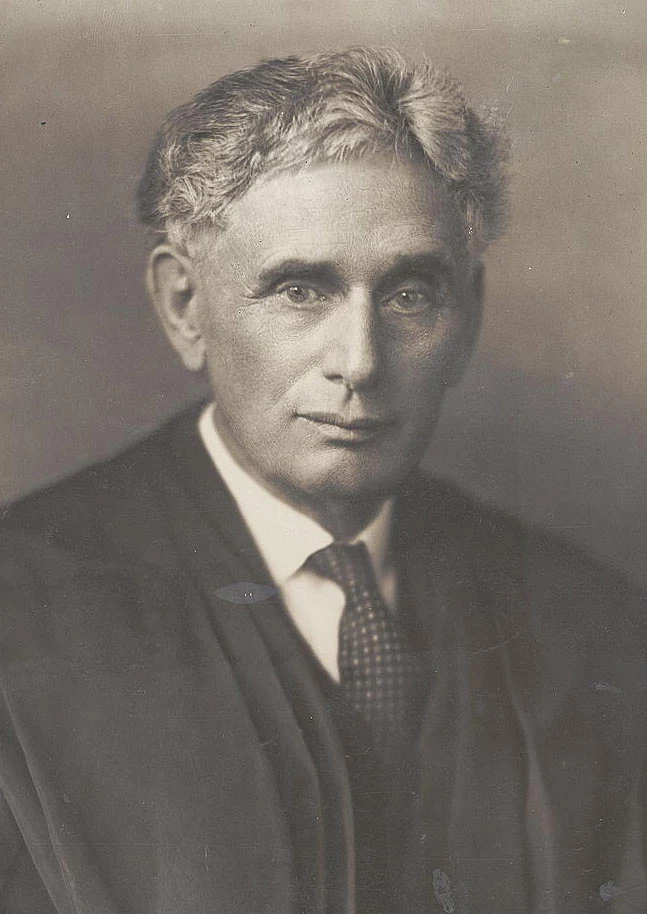
- Louis Brandeis
Compare a reform lawyer’s route to the Supreme Court.
- Franklin D. Roosevelt
Read the president whose administration brought Jackson to Washington.
Sources and further reading
Explore the evidence
These references support the biography and offer further reading. Official records, first-person accounts and independent reporting provide different perspectives; image records document attribution and licensing.
- 1. Federal Judicial CenterRobert Houghwout Jackson
- 2. U.S. Department of Justice; historical biographySolicitor General: Robert H. Jackson
- 3. Second Circuit Library, Western District of New York anniversary exhibitionRobert H. Jackson
- 4. U.S. Supreme Court; majority and dissenting opinions hosted by JustiaWest Virginia State Board of Education v. Barnette, 319 U.S. 624 (1943)