In this biography
Quick facts
- Born
- 14 September 1921
- Died
- 28 September 2005
- Birthplace
- New Haven, Connecticut, United States
- Country
- United States
- Nationality
- Not independently established
- Known for
- Desegregation litigation and federal judicial service
- Legal education
- Columbia Law School, 1946
- Federal court
- Southern District of New York
Why this life matters
She helped turn challenges to segregation into litigation, then served in elected office and on the federal bench.
Timeline
Key moments
Undergraduate degree
Graduated from New York University.
Federal commission
Received her judicial commission on 30 August.
Chief judge
Led the Southern District of New York.
A path to legal education
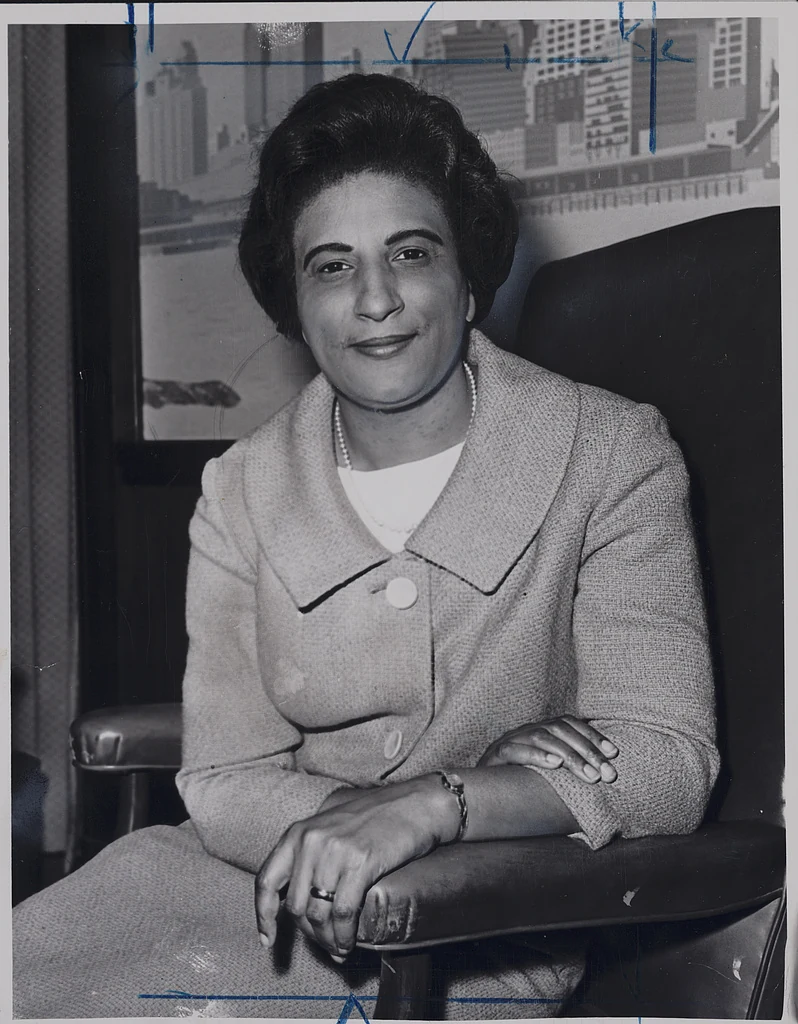
Motley grew up in New Haven in a working-class immigrant family. The U.S. Courts’ account describes how philanthropist Clarence Blakeslee offered financial support after hearing her speak about wanting to become a lawyer.
She graduated from New York University in 1943 and Columbia Law School in 1946. An educational opportunity became the starting point for a professional career challenging exclusion elsewhere.
A lawyer in a collective campaign
While still at law school, Motley joined the NAACP legal staff under Thurgood Marshall. She worked with colleagues including Robert L. Carter and became a major advocate in desegregation litigation. The judiciary’s retrospective credits her with nine wins in ten arguments before the Supreme Court.
The count describes arguments she made before that Court, not the totality of a long litigation programme. Research, trial work, appeals and other lawyers’ contributions also mattered.
Meredith’s admission case
Motley represented James Meredith in his attempt to enter the University of Mississippi. The Supreme Court Historical Society places this work within her wider litigation against segregation in public universities.
This record locates her work within a legal team and a procedural history. It should not be compressed into a story in which one lawyer obtained a single Supreme Court order and segregation immediately ended.
Sources for this section: [4]
Public office and the federal bench
Motley served in the New York State Senate and as Manhattan borough president before receiving a federal judicial commission in 1966. She was the first Black woman to become a federal judge. She later served as chief judge and took senior status in 1986.
Her service continued until her death in New York in 2005. The advocate, elected official and judge were successive roles with different responsibilities; understanding that sequence gives more substance to her biography than a list of firsts alone.
Quick answers
Frequently asked questions about Constance Baker Motley
- Did Motley work only as a lawyer?
- No. Her career also included state and borough office and service as a federal district judge.
Keep exploring
Lives connected to this story
- Thurgood Marshall
Follow another member of the desegregation legal network.
- Pauli Murray
Compare litigation with a legal scholar’s work on discrimination.
Sources and further reading
Explore the evidence
These references support the biography and offer further reading. Official records, first-person accounts and independent reporting provide different perspectives; image records document attribution and licensing.
- 1. Federal Judicial CenterConstance Baker Motley
- 2. Administrative Office of the U.S. Courts, 20 February 2020Constance Baker Motley: Judiciary’s Unsung Rights Hero
- 3. U.S. Court of Appeals for the Fifth Circuit, 25 June 1962; opinion hosted by JustiaMeredith v. Fair, 305 F.2d 343 (1962)
The opinion was issued on 25 June 1962. The host also displays the later 8 October certiorari-denial date; these are different procedural events.
- 4. Supreme Court Historical Society, Civics and History; selected career accountConstance Baker Motley