In this biography
Quick facts
- Born
- 27 August 1947
- Birthplace
- Brunei Town, Brunei
- Country
- Brunei
- Nationality
- Bruneian
- Known for
- Building the foreign ministry and representing independent Brunei for three decades
- Royal title
- Pengiran Perdana Wazir
- Foreign minister
- 1984–2015
- Institutional milestone
- First holder of the office
- Diplomatic era
- From independence to established global relations
Why this life matters
Mohamed Bolkiah helped a newly independent microstate establish diplomatic relationships and participate in ASEAN, the United Nations and wider multilateral forums.
Timeline
Key moments
Born in Brunei Town
Born on 27 August, the second son of the future 28th Sultan.
His brother became sultan
Hassanal Bolkiah’s accession marked a change in the brothers’ public roles.
Diplomatic service preparation began
Brunei established a Diplomatic Service Department to prepare for control of its external affairs.
Joined preparations for a diplomatic service
A published account of his memoir describes his participation in staffing and preparation before independence.
Became first foreign minister
Took charge of the ministry created when Brunei resumed full independence.
Published Time and the River
His memoir recorded the royal, professional and diplomatic experiences behind his public career.
Foreign affairs and trade were combined
The ministry absorbed the government’s international relations and trade department.
Co-chaired the ASEAN–EU ministerial meeting
The meeting adopted the Bandar Seri Begawan Plan of Action for cooperation in 2013–2017.
Chaired ASEAN ministerial preparations
Led meetings on political-security cooperation and coordination before Brunei hosted the ASEAN Summit.
Completed ministerial service
The cabinet reshuffle transferred the foreign-affairs and trade portfolio to Sultan Hassanal Bolkiah.
Royal upbringing, military training and a diplomatic role
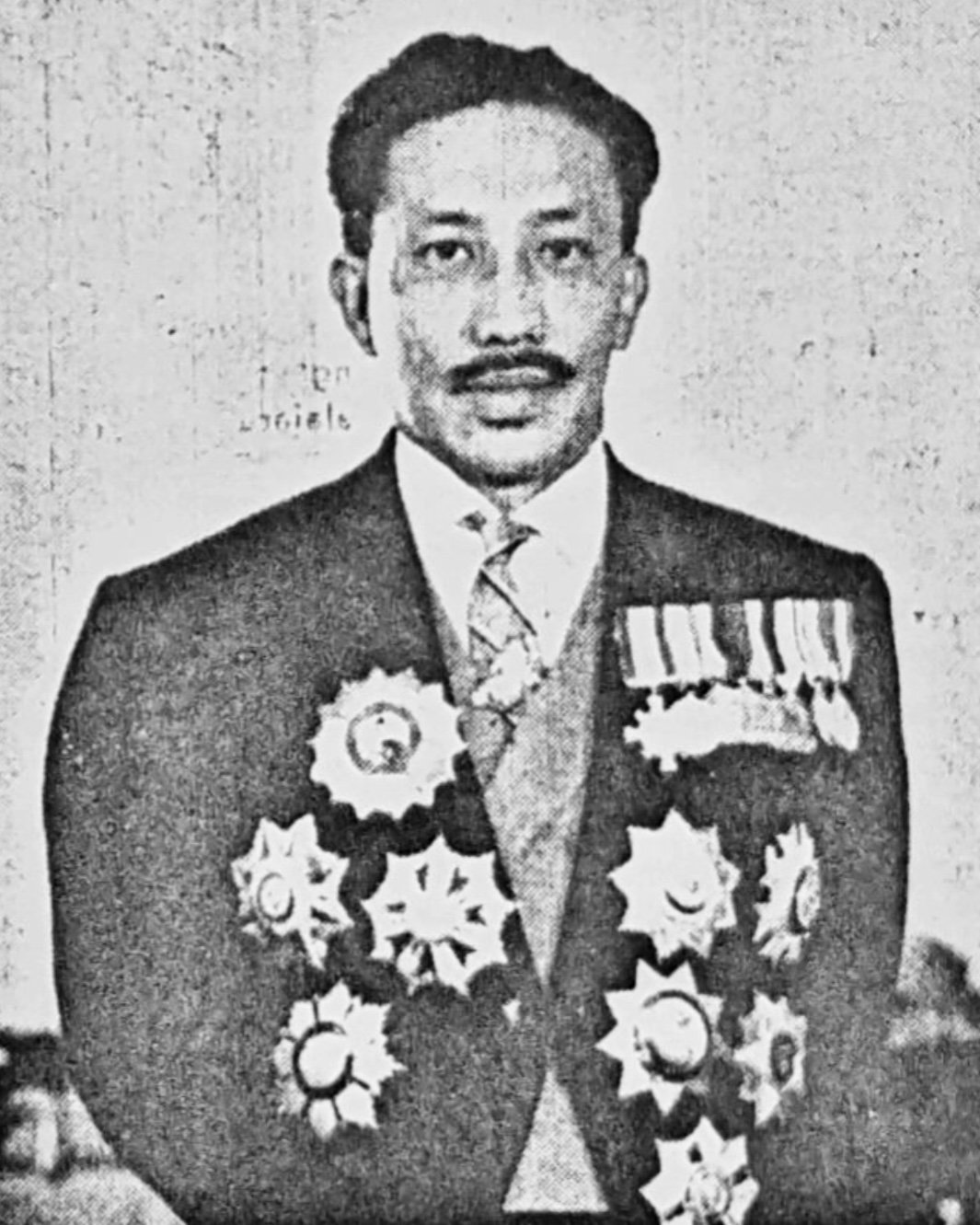
Prince Mohamed Bolkiah was born in Brunei Town on 27 August 1947 and is the younger brother of Sultan Hassanal Bolkiah. A published scholarly review of his memoir describes their shared education at Victoria Institution in Kuala Lumpur and military training at Sandhurst. Their public responsibilities diverged when Hassanal became sultan in 1967.
Mohamed’s senior royal title is Pengiran Perdana Wazir. His later ministerial work gave that background a distinct administrative purpose: preparing a diplomatic service and representing an independent Brunei. He was not the sultan, and his foreign-minister appointment should not be confused with succession to the throne.
Sources for this section: [7]
Creating a foreign ministry at independence
Brunei began building a Diplomatic Service Department in early 1979, before assuming full responsibility for external affairs. Mohamed joined the preparation process in 1980, according to the published account of his memoir. Recruiting and training staff was therefore part of his work before the foreign ministry formally existed.
The Ministry of Foreign Affairs was established on 1 January 1984, when Brunei resumed full independence, and Mohamed became its first minister. The country’s commissions in Kuala Lumpur, London and Singapore became high commissions. Brunei joined ASEAN on 7 January and the United Nations on 21 September that year, placing the new diplomatic institution within regional and global forums almost immediately.
Trade diplomacy and a memoir of state-building
Mohamed’s memoir Time and the River appeared in 2000. A. V. M. Horton’s later review describes its account of building a ministry, learning through direct contact with foreign leaders and pursuing diplomacy that allowed differences to be resolved without public confrontation. It provides a view of how Mohamed understood his job, rather than an independent measure of every policy outcome.
The institution changed further on 1 August 2005, when the International Relations and Trade Department was merged into the foreign ministry. The portfolio became foreign affairs and trade. Political representation and economic relationships now sat within the same ministry, and the UN’s 2009 General Debate programme identifies Mohamed by that combined ministerial title.
ASEAN chairmanship and the European partnership
On 27 April 2012, Mohamed co-chaired the nineteenth ASEAN–EU ministerial meeting in Brunei with Catherine Ashton. Ministers adopted the Bandar Seri Begawan Plan of Action for 2013–2017 and reviewed political and economic cooperation. The meeting demonstrates the convening role available to a small state through regional institutions and their dialogue partners.
During Brunei’s 2013 ASEAN chairmanship, he led the foreign ministers’ retreat, the Political-Security Community Council and the Coordinating Council ahead of the April summit. The agenda included political-security cooperation, the Treaty of Amity and Cooperation and reports for ASEAN leaders. These were ministerial and coordination responsibilities, distinct from the heads-of-government summit chaired at leader level.
The 2015 cabinet change and institutional continuity
Mohamed remained active in bilateral diplomacy near the end of his tenure. An official ministry record describes his audience with Singapore’s Teo Chee Hean on 6 October 2015, including discussion of bilateral and regional affairs during the Young Leaders’ Programme visit.
The cabinet reshuffle of 22 October transferred the foreign-affairs and trade portfolio to Sultan Hassanal Bolkiah, ending Mohamed’s service after more than three decades. His departure did not mark the end of Brunei’s foreign ministry or its ASEAN membership. His career is most significant for the continuity between preparing a national service before independence and carrying out its regular diplomatic work once Brunei had become an established international participant.
Quick answers
Frequently asked questions about Prince Mohamed Bolkiah
- Was Prince Mohamed Bolkiah the Sultan of Brunei?
- No. He is Sultan Hassanal Bolkiah’s younger brother and served as Brunei’s first foreign minister. His royal title Pengiran Perdana Wazir and his ministerial office are distinct from the sultanship.
- When was Mohamed Bolkiah foreign minister?
- He became Brunei’s first foreign minister at independence on 1 January 1984 and left the portfolio in the cabinet reshuffle of 22 October 2015. The ministry incorporated trade responsibilities in August 2005.
- Did Mohamed create the diplomatic department in 1979?
- Brunei established the department in early 1979. A published account of his memoir dates his participation in the preparations to 1980. The department’s creation and his own involvement should not be treated as the same event.
- What is Time and the River?
- It is Mohamed Bolkiah’s memoir, published in 2000, reflecting on Brunei’s development and his own royal, military and diplomatic experiences. This profile uses a published scholarly review, not an independently inspected full text of the memoir.
Keep exploring
Lives connected to this story
- Erywan Yusof
Compare the first foreign minister’s institution-building with a later second minister’s separate trade and ASEAN responsibilities.
- Omar Ali Saifuddien III
Place the prince’s upbringing within the reign and state-building work of his father.
- Hassanal Bolkiah
Distinguish Mohamed’s foreign-minister role from his brother’s position as sultan and the 2015 portfolio transfer.
- Surin Pitsuwan
Compare ASEAN coordination with the work of a Thai foreign minister and later ASEAN secretary-general.
Sources and further reading
Explore the evidence
These references support the biography and offer further reading. Official records, first-person accounts and independent reporting provide different perspectives; image records document attribution and licensing.
- 1. Ministry of Foreign Affairs Brunei DarussalamMinistry of Foreign Affairs — institutional history
The ministry’s institutional history separates its 1979 departmental origins, formal 1984 creation and August 2005 trade merger. Its old combined ministry name is not treated as a current 2026 cabinet roster.
- 2. Association of Southeast Asian NationsBrunei Darussalam joined ASEAN on 7 January 1984
- 3. United Nations Digital LibraryAdmission of Brunei Darussalam to UN membership
- 4. United NationsBrunei statement at the UN General Debate
The indexed UN programme identifies the 2009 speaker and ministerial title. No substantive interpretation or quotation from the full speech is claimed.
- 5. Ministry of Foreign Affairs Brunei DarussalamMinister chairs ASEAN meetings during Brunei’s chairmanship
- 6. Ministry of Foreign Affairs, Brunei DarussalamFirst foreign minister — institutional archive
- 7. Asian Analysis / ASEAN Focus Group; reproduced by Sultanate.comA. V. M. Horton on Mohamed Bolkiah’s memoir and diplomacy
A reproduced 2007 scholarly review of the memoir supports personal background, training and his account of ministry preparation. The full memoir was not inspected, and the review’s praise is not used as an objective rating of his diplomacy.
- 8. Ministry of Foreign Affairs, Brunei DarussalamNineteenth ASEAN–EU ministerial meeting — April 2012
The article’s event date is 27 April 2012. SharePoint creation or migration timestamps in 2015 are not substituted for the meeting date.
- 9. Ministry of Foreign Affairs, Brunei DarussalamAudience with Teo Chee Hean — 6 October 2015
- 10. Diplomat MagazineSultan takes the foreign-affairs portfolio — October 2015
A contemporary diplomatic report supports the 22 October 2015 portfolio transfer. It is not used to speculate about private reasons for the reshuffle.
- 11. Wikimedia Commons2009 portrait and public-domain record