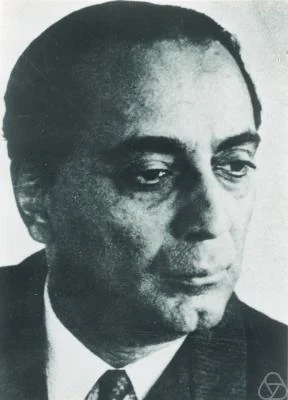
In this biography
Quick facts
- Born
- 29 January 1926
- Died
- 21 November 1996
- Birthplace
- Jhang Maghiāna, British India (now Pakistan)
- Country
- United Kingdom
- Nationality
- Not independently established
- Known for
- Electroweak theory and ICTP.
- Early qualification
- Cambridge BA, 1949
- Long-term institution
- Imperial College London
- International institution
- ICTP, Trieste
Why this life matters
He pursued unification in physics while building routes through which researchers could participate in science without permanently abandoning their home institutions.
Timeline
Key moments
Cambridge
Returns as a lecturer.
Imperial
Mathematics professorship.
International centre
ICTP established.
Physics recognition
Shares the Nobel Prize.
Education, return and research conditions
Salam earned a Punjab MA in 1946 and a Cambridge double-first BA in 1949. He returned to teach in Lahore in 1951, but found inadequate conditions for sustained theoretical research.
His CV lists the Cambridge doctorate in 1952.
Imperial’s history also describes religious persecution among the pressures behind his departure. He returned to Cambridge in 1954.
This account keeps educational completion, employment and the conditions of research separate, rather than turning movement between countries into a simple career preference.
A group and a collaborative theory
He joined Imperial in 1957, initially in Mathematics, moving to Physics in 1960. With Paul Matthews he built its theoretical-physics group.
His later lecture credits John Ward, Glashow, Weinberg, Kibble and many others in the development of electroweak theory.
Salam, Sheldon Glashow and Steven Weinberg shared the 1979 physics Nobel.
The historical contribution is substantial without making it sole authorship. The theory’s formulation, mathematical development and experimental tests were different parts of an extended collaborative process.
Institutions as scientific infrastructure
In 1964 he established the International Centre for Theoretical Physics in Trieste with Italian and UNESCO support.
Its associateship system enabled researchers to spend periods working with international peers and return to their home institutions. He also served as science adviser to Pakistan’s president from 1961 to 1974.
That approach addressed a practical tension between access to active research networks and the loss of trained researchers from less well-resourced institutions. It made institutional design part of his scientific career.
Beyond the prize
With Jogesh Pati he explored a broader unification of quarks and leptons. His later collaborations extended into supersymmetry, supergravity and higher-dimensional theories.
He died in Oxford on 21 November 1996.
These later theoretical programmes should be distinguished from experimentally confirmed results and from the earlier contribution recognised by the prize. The career includes both successful explanatory work and more speculative attempts to find a wider framework.
Quick answers
Frequently asked questions about Abdus Salam
- Did one scientist independently create the whole theory?
- No. Distinguish the tasks of formulating a model, developing its mathematics and testing its predictions; credit requires evidence for each task.
- Why distinguish the early degree dates?
- The biography dates the thesis publication to 1951; the CV lists the doctorate in 1952. These are different recorded events, not interchangeable dates.
Keep exploring
Lives connected to this story
- Homi J. Bhabha
Compare a different approach to building scientific institutions.
- Walter Gilbert
Explore Walter Gilbert’s related research on dna sequencing.
- Sheldon Glashow
Explore Sheldon Glashow’s related research on gim mechanism.
- Steven Weinberg
Explore Steven Weinberg’s related research on electroweak theory.
Sources and further reading
Explore the evidence
These references support the biography and offer further reading. Official records, first-person accounts and independent reporting provide different perspectives; image records document attribution and licensing.
- 1. Nobel Prize OutreachAbdus Salam: Facts
- 2. Miriam Lewis / Nobel FoundationAbdus Salam: Biographical
- 3. Abdus Salam / Nobel FoundationAbdus Salam: Curriculum Vitae
- 4. Imperial College LondonProfessor Abdus Salam 1926–1996, Nobel Prize in Physics 1979
- 5. Abdus Salam / Nobel Foundation, 8 December 1979Gauge Unification of Fundamental Forces