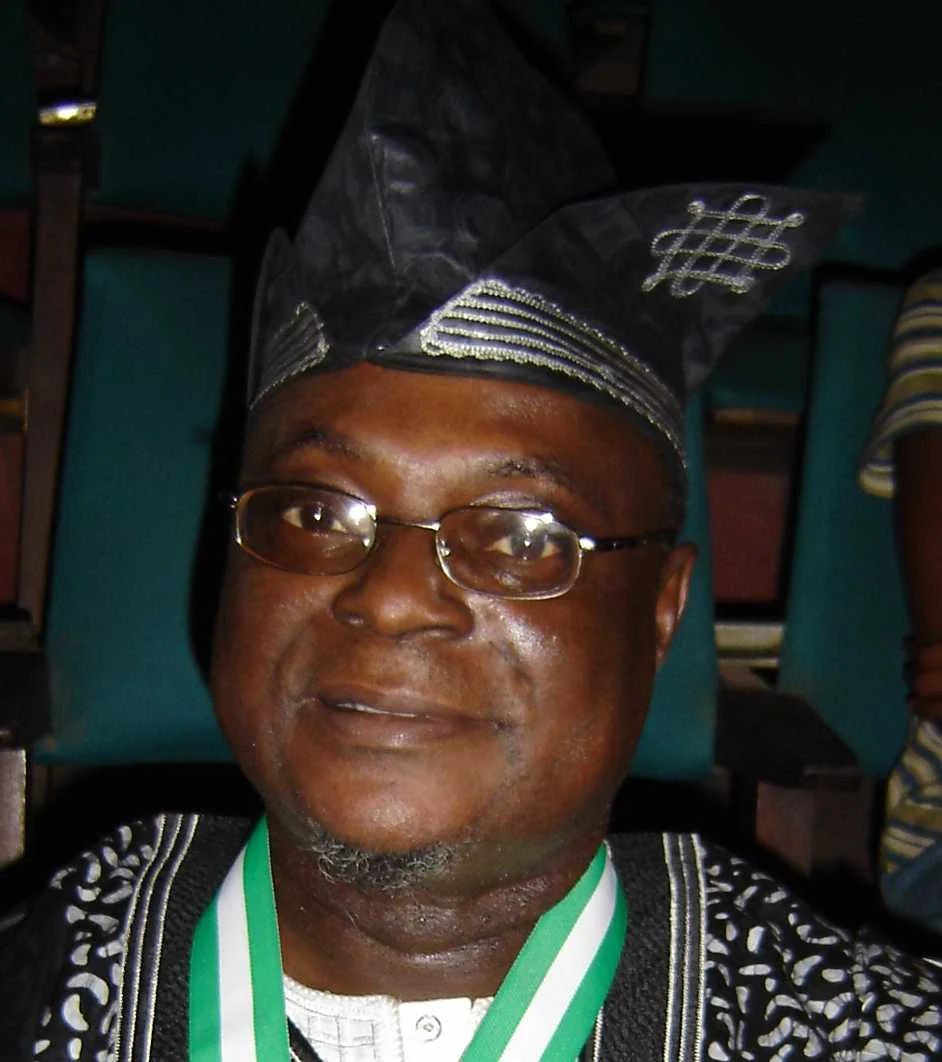
In this biography
Quick facts
- Born
- 13 April 1938
- Died
- 18 August 2000
- Birthplace
- Sapele, Nigeria
- Country
- Nigeria
- Nationality
- Not independently established
- Known for
- The Gods Are Not to Blame and experiments with English, Yoruba expression and historical drama
- Birth
- 13 April 1938, Sapele
- Graduate study
- Yale, completed 1966
- The Gods Are Not to Blame
- First presented 1968; published 1971
- Death
- 18 August 2000
Why this life matters
His account of adapting English to local expressive life explains a practical artistic problem: how a foreign language can address a theatre audience without flattening its cultural experience.
Timeline
Key moments
Birth
Born in Sapele on 13 April.
United States study
Studied theatre at Boston University and Yale.
Ife
Returned to Nigeria and joined the University of Ife.
The Gods Are Not to Blame
First presentation and book publication are distinct milestones.
Author interview
Discussed leadership, historical drama and language with Onuora Ossie Enekwe.
Port Harcourt
Served as arts dean; theatre work included the Crab venue.
Death
Died on 18 August.
Family performance preceded professional training
Born in Sapele on 13 April 1938, Emmanuel Gladstone Olawale Rotimi grew up with a Yoruba father and an Ijaw mother. The scholarly biography describes parents involved in amateur theatre, an important context for a future dramatist. Schooling in Port Harcourt and Lagos preceded study in the United States from 1959 to 1966. He attended Boston University and pursued graduate theatre study at Yale with scholarship support. The training supplied formal techniques, but his later account makes clear that professional education was only one part of his formation: local artists and audiences also became teachers.
University theatre supplied a working ensemble
After returning to Nigeria in 1966, Rotimi joined the University of Ife and worked with the Ori-Olokun Players. Teaching, directing and writing developed together. The Gods Are Not to Blame was first presented at Ife in 1968 and published in 1971. Those dates refer to different events, rather than competing answers to one publication question. His subsequent career included the University of Port Harcourt, the theatre known as the Crab and service as arts dean from 1982 to 1984. Institutional positions mattered because they provided people, rehearsal settings and audiences through which ideas could become theatre.
Sources for this section: [1]
An inherited plot could address a local prejudice
In the interview conducted by Onuora Ossie Enekwe on 25 May 1981, Rotimi resists the suggestion that the community in The Gods Are Not to Blame is guilty simply for accepting a stranger. His stated target is ethnic chauvinism, not hospitality. This is an important interpretive correction supplied by the playwright himself. The play’s relationship with the Oedipus story does not mean that all its political meanings can be imported unchanged from a Greek source. Nor does the interview settle every possible reading: it identifies his declared purpose, which a reader can then test against the text.
English was an experiment in audience connection
Rotimi described becoming conscious of the distance a foreign language could create between writer and public. He sought out Yoruba artists, priests, chanters and performances, attending to imagery and expressive power. His goal was to make English approximate the impact of the home language, rather than insert isolated local words as decoration. In the 1981 interview he presents The Gods Are Not to Blame, Kurunmi and Ovonramwen as stages in that experiment. The account makes language a practical theatrical choice involving response and comprehension, while leaving the actual effects of particular productions open to examination.
Sources for this section: [2]
History offered material for contemporary questions
Rotimi also explained that he did not simply transfer historical events onto the stage. Imagination shaped the material into arguments with contemporary human relevance. His discussion of leadership ranges across several plays, and his work on Harcourt Whyte was still prospective at the time of the interview. Keeping that date visible prevents a later finished work from being read back into an earlier plan. The distinction also protects historical inquiry: a dramatist’s purposeful selection of events is evidence of artistic method, not independent proof that a scene happened exactly as presented.
Sources for this section: [2]
A career joined institutions and changing experiments
Later work included an independent theatre initiative and teaching at Macalester College in the 1990s before his return to Nigeria. Rotimi died on 18 August 2000. His importance extends beyond a single adaptation: he built ensembles, directed, taught and repeatedly reconsidered the relation between language and audience. The surviving interview records an artist describing a developing practice, including experiments he had not yet completed. Read beside the scholarly career account, it offers a grounded way to approach the plays while preserving the difference between an author’s intention, a production’s reception and a reader’s own interpretation.
Quick answers
Frequently asked questions about Ola Rotimi
- When did The Gods Are Not to Blame appear?
- The selected scholarly biography distinguishes first presentation in 1968 from publication in 1971.
- Did Rotimi call drama a literal historical transcript?
- No. In the 1981 interview he describes imaginative transformation for contemporary relevance.
Keep exploring
Lives connected to this story
- Femi Osofisan
Compare another dramatist’s use of inherited drama to investigate Nigerian history.
- J. P. Clark
Explore a distinct relationship between oral narrative, translation and a newly written play.
- Wole Soyinka
Read another Nigerian theatre career with a different language and performance practice.
Sources and further reading
Explore the evidence
These references support the biography and offer further reading. Official records, first-person accounts and independent reporting provide different perspectives; image records document attribution and licensing.
- 1. Donald Burness, Thomas J. Taylor and R. C. Lutz; EBSCO Research StartersOla Rotimi
Actual selected biography and achievements paragraphs read for birth/death, family, study, theatre institutions and 1968 production/1971 publication of The Gods Are Not to Blame. Not the whole article’s play analyses or a full play. Degree-label and late-1990s democracy shortcuts are not repeated.
- 2. Onuora Ossie Enekwe; Okike 25/26, University of Nigeria repositoryInterview with Ola Rotimi, conducted 25 May 1981
Actual 130-page issue PDF acquired; selected interview PDF pages 43–45 and 48–49 read, not the full issue or full interview. PDF pages 48–49 (printed 41–42) independently rendered and visually read for history, language apprenticeship, English/Yoruba effect and the 25 May 1981 footnote. PDF 45 read for Rotimi’s rejection of the stranger-blame premise. No full drama or performance inspected.