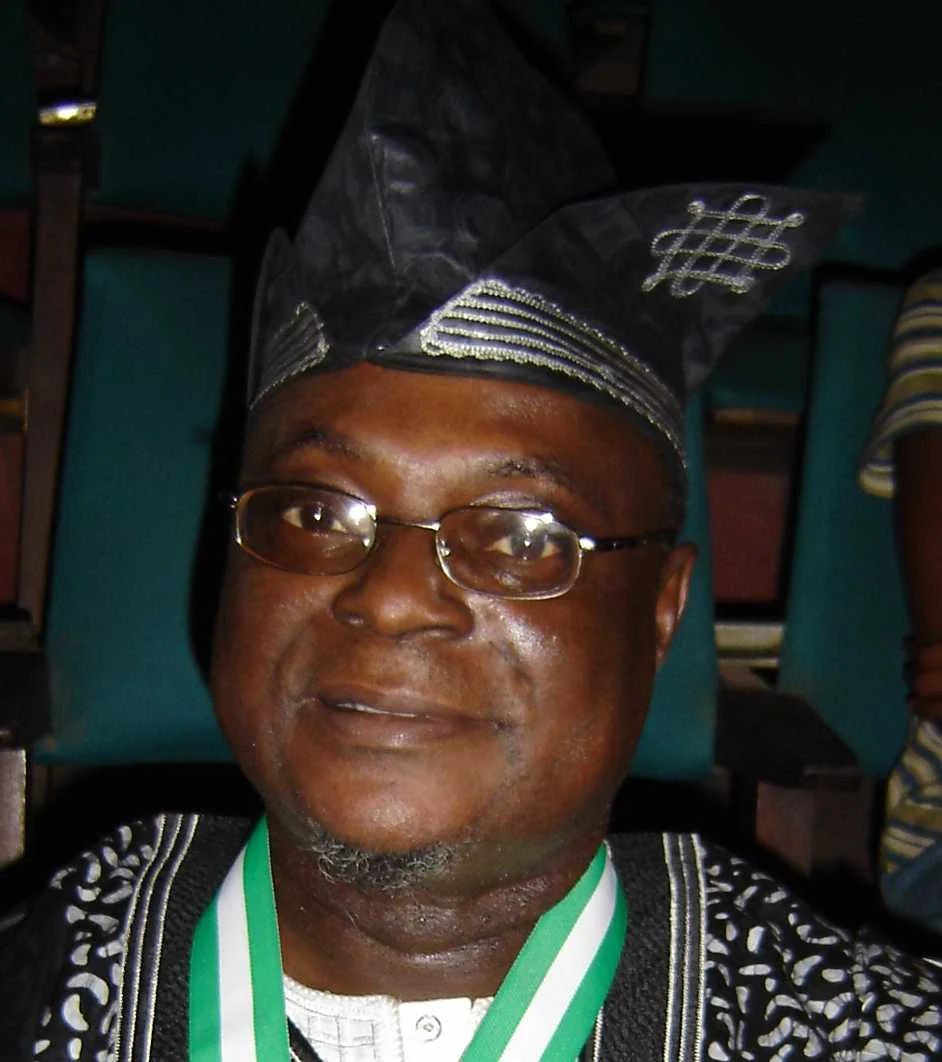
In this biography
Quick facts
- Born
- 1930s
- Died
- 13 October 2020
- Birthplace
- Niger Delta, Nigeria
- Country
- Nigeria
- Nationality
- Not independently established
- Known for
- Poetry, The Raft and the collection and translation of the Ozidi epic
- Birth
- 1930s; exact date and locality disputed
- Research
- Ozidi performance collection from 1963
- Epic publication
- The Ozidi Saga, 1977
- Death
- 13 October 2020
Why this life matters
His career shows that editing a magazine, recording a performance, translating an epic and writing a new play are related forms of cultural work with distinct authorship claims.
Timeline
Key moments
Niger Delta beginnings
Sources disagree about the exact birth date and locality.
Princeton fellowship
A year abroad informed America, Their America.
Ibadan research
Began collecting versions of the Izon Ozidi epic.
Lagos
Moved to the University of Lagos.
Two Ozidi works
His play Ozidi and the bilingual epic publication are separate works.
Retirement and theatre
Retired early from the University of Lagos; later theatre work continued.
Death
Died on 13 October.
An early life that should retain its uncertainty
Clark came from the Niger Delta and grew up among Izon family and language traditions. The Monmouth-hosted portrait gives 6 December 1933 at Erhuwaren, whereas TheCable’s obituary gives 6 April 1935 at Kiagbodo. Neither is treated here as a civil birth record. The broader 1930s date preserves what the accounts share. The institutional portrait traces his schooling through Okrika, Jeremi and Government College, Ughelli, before English studies at University College, Ibadan. That educational route connected a local linguistic inheritance to the English-language institutions through which his early writing circulated.
Editing helped build a literary public
At Ibadan he worked on the student magazine Beacon and became the first editor of The Horn. The portrait connects that magazine with emerging writers including Christopher Okigbo and Wole Soyinka. Editing therefore belongs within his literary formation: it meant selecting work, making space for peers and addressing readers, alongside producing his own poems. After graduation, employment in regional information work and as a features editor at the Express extended that engagement with public language. These jobs also prevent a misleading picture of a career spent entirely inside a university department.
Sources for this section: [1]
Drama and travel widened the work
Mbari provided another collaborative setting, and Song of a Goat brought Clark into the theatre as well as print. A Princeton fellowship in 1962 took him to the United States; America, Their America emerged from that experience. The Masquerade and The Raft also belong to this early period of dramatic development. The portrait describes relationships among writers, directors and performers, rather than a solitary author producing finished books in isolation. Its account establishes the range of his activities without supplying grounds for a fresh review of every play or an assessment of the performances.
Sources for this section: [1]
Ozidi required more than one kind of authorship
As an Ibadan research fellow from 1963, Clark collected performances of the Izon Ozidi epic using recording and film. The portrait names several performer versions, including that of Okabou. His bilingual The Ozidi Saga appeared in 1977 through Oxford and Ibadan University Press, followed by a Howard University Press reissue in 1991. This collection and translation must remain distinct from his own play Ozidi, published in 1966. The difference matters: an oral performer, a collector-translator and a dramatist contribute different kinds of labour, even when a shared narrative connects their work.
Sources for this section: [1]
University employment did not contain the theatre
Clark moved to the University of Lagos in 1965 and retired early in 1980. The portrait also describes the PEC Repertory Theatre partnership with his wife, Ebun Clark. Theatre making involved organisation, performers and audiences as well as manuscripts. Later dramatic publications included the Bikoroa trilogy and The Wives’ Revolt. His poetry and drama also addressed Nigeria’s political life: the portrait places Casualties in the civil-war aftermath and records later collections and work concerned with oil. Those contexts establish recurring public concerns without making every poem a direct statement of the author’s political programme.
Sources for this section: [1]
A varied legacy needs more than a single label
Clark died on 13 October 2020, reported by TheCable in its obituary the following day. Poetry remained central to his reputation, but the record also includes magazines, journalism, plays, research recordings, translation and a theatre organisation. Each leaves a different kind of evidence. A bibliography can identify a publication; it cannot recreate a seven-day epic performance, and an institutional tribute is not a substitute for hearing the source recordings. Reading his career across these activities makes the contributions of performers, editors and Ebun Clark more visible, while keeping unresolved birth details separate from established achievements.
Quick answers
Frequently asked questions about J. P. Clark
- Why does the biography use a decade for his birth?
- The selected institutional portrait and obituary disagree on both exact date and locality; no civil birth record was read.
- Are Ozidi and The Ozidi Saga the same publication?
- No. The 1966 play is distinct from the 1977 bilingual epic collection and translation.
Keep exploring
Lives connected to this story
- Wole Soyinka
Compare a contemporary whose writing also developed through Ibadan and theatre networks.
- Ola Rotimi
Explore another dramatist’s explicit account of language and performance.
- Niyi Osundare
Follow a later poet’s connection between print, performance and public audiences.
Sources and further reading
Explore the evidence
These references support the biography and offer further reading. Official records, first-person accounts and independent reporting provide different perspectives; image records document attribution and licensing.
- 1. Monmouth University, Department of World Languages and CulturesA Portrait of J. P. Clark
Actual institutional-hosted nine-page PDF acquired. Selected PDF pages 1–5 read for education, editing, employment, Ozidi collection/publications, theatre partnership and political writing; not the cited literary works, recordings or documentary. Precise birth date/place conflicts with the obituary, so neither exact version is adopted. Text extraction of other pages is not a full-read claim.
- 2. Olufemi Owolabi; TheCable, 14 October 2020OBITUARY: JP Clark, literacy icon who resisted the urge to be distracted from his calling
Actual indexed obituary body read and saved in the web-tool capture; origin download returned 403. Read conflicting 6 April 1935/Kiagbodo birth account and report of death on the preceding Tuesday, 13 October 2020. Its reported 1970 interview is a secondary quotation, not an original interview read. No reported age is adopted.