In this biography
Quick facts
- Born
- 23 July 1913
- Died
- 3 March 2010
- Birthplace
- Plymouth, England
- Country
- United Kingdom
- Nationality
- Not independently established
- Known for
- Political journalism, biography and Labour politics
- Government office
- Employment, 1974–1976
- Parliamentary leadership
- Commons leader, 1976–1979
Why this life matters
His career joined literary argument to parliamentary action. The same commitment to public persuasion operated in a newspaper, a political biography, a ministerial bill and a campaign outside government.
Timeline
Key moments
Elected to Parliament
Represents Plymouth Devonport.
Opposition leadership
Leads the opposition.
Leaves the Commons
Parliamentary service ends; public activity continues.
Journalism and political writing
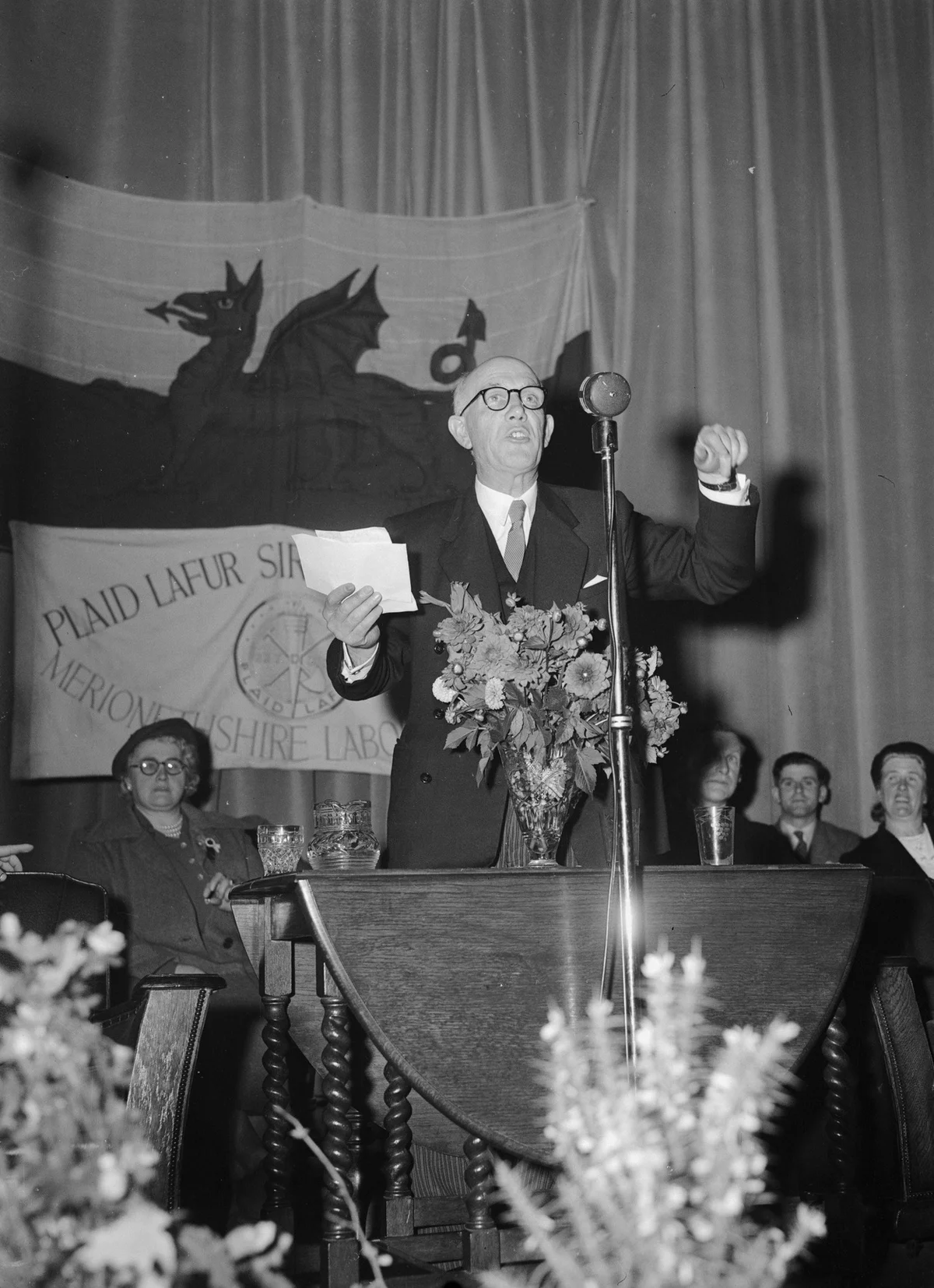
Born into a Liberal family in Plymouth, Foot studied at Wadham College, Oxford, and joined Labour in 1935. He worked at Tribune and the Evening Standard, which he edited from 1942. He also co-wrote Guilty Men under the shared name Cato and later produced a two-volume biography of Aneurin Bevan.
Political writing was not an interval between elected jobs. It supplied another way to contest public decisions, select historical examples and address an audience beyond the Commons.
Sources for this section: [2]
Backbenches and government
He represented Plymouth Devonport from 1945 until 1955 and returned to the Commons for Ebbw Vale in 1960. His ministerial career included Employment in 1974–1976 and leadership of the Commons in 1976–1979.
When Albert Booth introduced the Employment Protection Bill in 1975, he credited Foot’s work while explaining the Secretary of State’s absence. The parliamentary record preserves their different roles in bringing the proposal before the House.
A minister’s political responsibility and another minister’s presentation can belong to the same legislative project. Recognising both avoids treating a department as the work of a single speaker.
A difficult period of party leadership
Foot led the opposition from 1980 to 1983.
His leadership coincided with the Social Democratic breakaway and Labour’s 1983 defeat. Neil Kinnock succeeded him, but Foot remained an MP until 1992.
The period tested a politician formed in argument and dissent with responsibility for holding a party together. Electoral defeat is part of the career, alongside the writing and parliamentary work through which he had acquired authority.
Public activity beyond the leadership
Foot continued to take part in humanist causes and peace campaigning, including opposition to the Iraq War in 2003.
He died in 2010.
His later public life makes retirement from office an incomplete endpoint. Books, speeches and campaigning remained means of intervention even when he no longer directed the party’s parliamentary strategy.
Quick answers
Frequently asked questions about Michael Foot
- Was Cato his individual pen name?
- No. Cato was shared by the coauthors.
Keep exploring
Lives connected to this story
- Aneurin Bevan
Read the politician whose biography he wrote.
- James Callaghan
Compare another route from cabinet to party leadership.
- Tony Benn
Compare another Labour career combining office and campaigning.
Sources and further reading
Explore the evidence
These references support the biography and offer further reading. Official records, first-person accounts and independent reporting provide different perspectives; image records document attribution and licensing.
- 1. UK Parliament, Historic HansardMr Michael Foot: person record
Short office and constituency fields read. Its blank death field is stale metadata; it is not evidence that he is living.
- 2. Humanist Heritage / Humanists UKMichael Foot (1913–2010)
Selected movement-history text read. The organisation’s esteem for its supporter is attributed; books and quoted broadcasts were not consumed. A precise degree subject is withheld because the retained sources differ.
- 3. Mervyn Jones, The GuardianMichael Foot obituary
Actual indexed obituary read; only the short name/death claims are used within its special allowance. No wholesale career paraphrase.
- 4. House of Commons, HansardEmployment Protection Bill, 28 April 1975
Selected opening read, not the full debate. Booth is the speaker; political responsibility is not merged with speaking or sole authorship.