In this biography
Quick facts
- Born
- 19 September 1926
- Died
- 12 November 2020
- Birthplace
- Toyohashi, Japan
- Country
- Japan
- Nationality
- Not independently established
- Known for
- Kamiokande and the development of neutrino astronomy
- Doctorate
- University of Rochester,1955
- Major collaboration
- Kamiokande-II
- Supernova signal
- 23 February 1987
- Nobel Prize
- Physics,2002; quarter share
Why this life matters
His work illustrates how detector design, background control, collaboration and careful interpretation allow a small group of events to answer an astronomical question.
Timeline
Key moments
Birth
Born in Toyohashi.
Tokyo graduation
Graduated in physics from the University of Tokyo.
Rochester doctorate
Completed a cosmic-ray physics doctorate.
Tokyo appointment
Became an associate professor in Tokyo.
Professorship
Became a professor at the University of Tokyo.
Supernova observation
Kamiokande-II recorded a burst associated with SN 1987A.
Nobel Prize
Received one quarter of the Physics Prize.
Death
Died in Tokyo on 12 November.
Cosmic-ray physics provided an experimental foundation
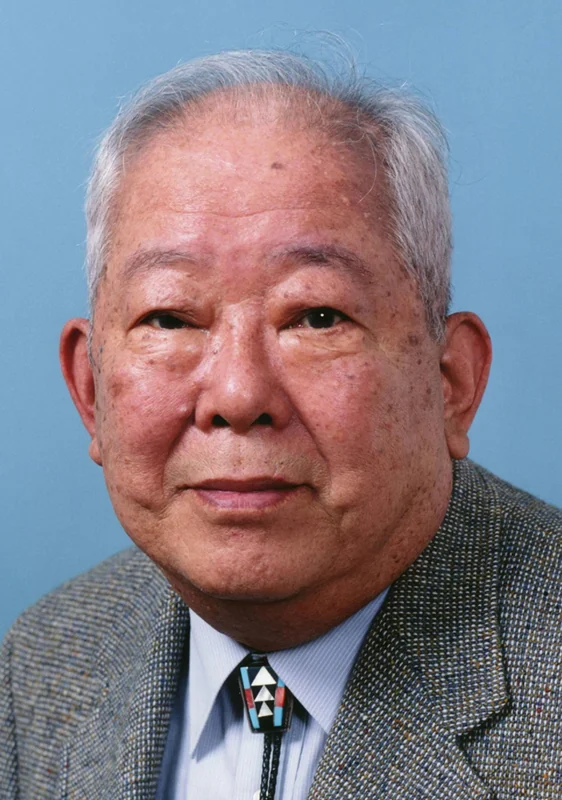
Koshiba was born in Toyohashi on 19 September 1926. His Nobel curriculum vitae records graduation from the University of Tokyo in 1951 and graduate study there before moving to Rochester. He completed a physics doctorate in 1955 on ultra-high-energy cosmic-ray phenomena. Early appointments took him to the University of Chicago and back to Tokyo, with overlapping periods of leave for international research. Those transitions matter more than a simplified account in which one person suddenly designed a supernova telescope: he developed within a wider experimental-particle-physics community.
A detector programme had several possible purposes
At Tokyo, Koshiba became a professor in 1970 and held roles organising high-energy and international particle-physics work. The Kamiokande programme emerged in this experimental setting. Its water detector used light sensors to register charged-particle signals produced by interactions in the water. Turning such signals into useful evidence required attention to background, thresholds and detector response. His 2002 lecture recalls improvements that made lower-energy work possible. An instrument’s construction history should be distinguished from the later scientific uses that a new event or improved sensitivity could make possible.
A supernova prompted a search through recorded data
After the optical discovery of SN 1987A, the collaboration examined its existing records. The contemporary conference report describes an event sequence recorded on 23 February and provides the detector conditions and selection rules. This was not simply an astronomer looking through an optical telescope and directly seeing neutrinos. The inference connected a clustered group of detector events with an extraordinary astronomical occurrence. The report’s coauthor list spans Japanese and American institutions, and the conference presentation was given by Takaaki Kajita. Koshiba’s leadership belongs within that collaboration, without transferring all its observations or analysis to one person.
Twelve listed entries and eleven selected events can coexist
The acquired conference report explicitly says that event 6 was excluded from its signal analysis because its hit count was below the stated threshold. A table or plot can therefore preserve twelve numbered entries while the abstract describes eleven selected events. The timing record also has several distinct quantities: absolute clock time, relative intervals, energy and sensor hits. These should not be merged into one supposedly exact measurement. The linked guide works through that distinction with the report and a separately labelled fictional clock exercise. It does not classify every listed entry as an independently proved supernova neutrino.
Sources for this section: [4]
Neutrino astronomy developed beyond one burst
Koshiba’s lecture places the 1987 observation alongside work towards solar-neutrino measurements. His curriculum vitae lists a later Kamiokande-II solar-data paper and a career that continued through Tokai University and international visits after his Tokyo professorship. Each result required its own analysis; a burst association does not establish every property of solar neutrinos or supply a present-day neutrino-mass limit. The historical significance lies in establishing an experimental route by which very weakly interacting particles could reveal astronomical processes that ordinary light alone does not describe.
Quick answers
Frequently asked questions about Masatoshi Koshiba
- Did the report select all twelve numbered entries?
- No. The conference text explicitly excludes event 6 from signal analysis.
- Was Koshiba the only2002 Physics laureate?
- No. He received a quarter share; Davis received a quarter and Giacconi a half.
Keep exploring
Lives connected to this story
- Takaaki Kajita
Read the career of another Kamiokande collaborator and a later neutrino-oscillation researcher.
- Makoto Kobayashi
Compare an experimental programme with a distinct theoretical particle-physics career.
Sources and further reading
Explore the evidence
These references support the biography and offer further reading. Official records, first-person accounts and independent reporting provide different perspectives; image records document attribution and licensing.
- 1. Nobel Foundation; Masatoshi KoshibaMasatoshi Koshiba: autobiographical account
- 2. Nobel FoundationMasatoshi Koshiba: Nobel Prize facts
- 3. Masatoshi Koshiba; Nobel FoundationBirth of Neutrino Astrophysics, Nobel Lecture, 8 December 2002
Actual15-page PDF acquired. Selected PDF8/printed91 read for1987 readiness, background improvement, supernova data search and retrospective timescale; no full lecture or every detector record.
- 4. Kamiokande-II collaboration; presented by T. Kajita; INSPIRE-hosted scanObservation of a Neutrino Burst from the Supernova SN 1987A: 1987 conference report, pp727–734
Actual8-page1987conference scan pp727–734 acquired through INSPIRE, not PRLfacsimile. PDF1–3,6,8 visually read: title/authors/presenter and11-eventabstract/±1minclock; detector/cuts; p729explicitexclusionofevent6; p732TableI12rows/NHIT16event6/last12.439s; p734energy/angleplot. No raw detector-data refit.