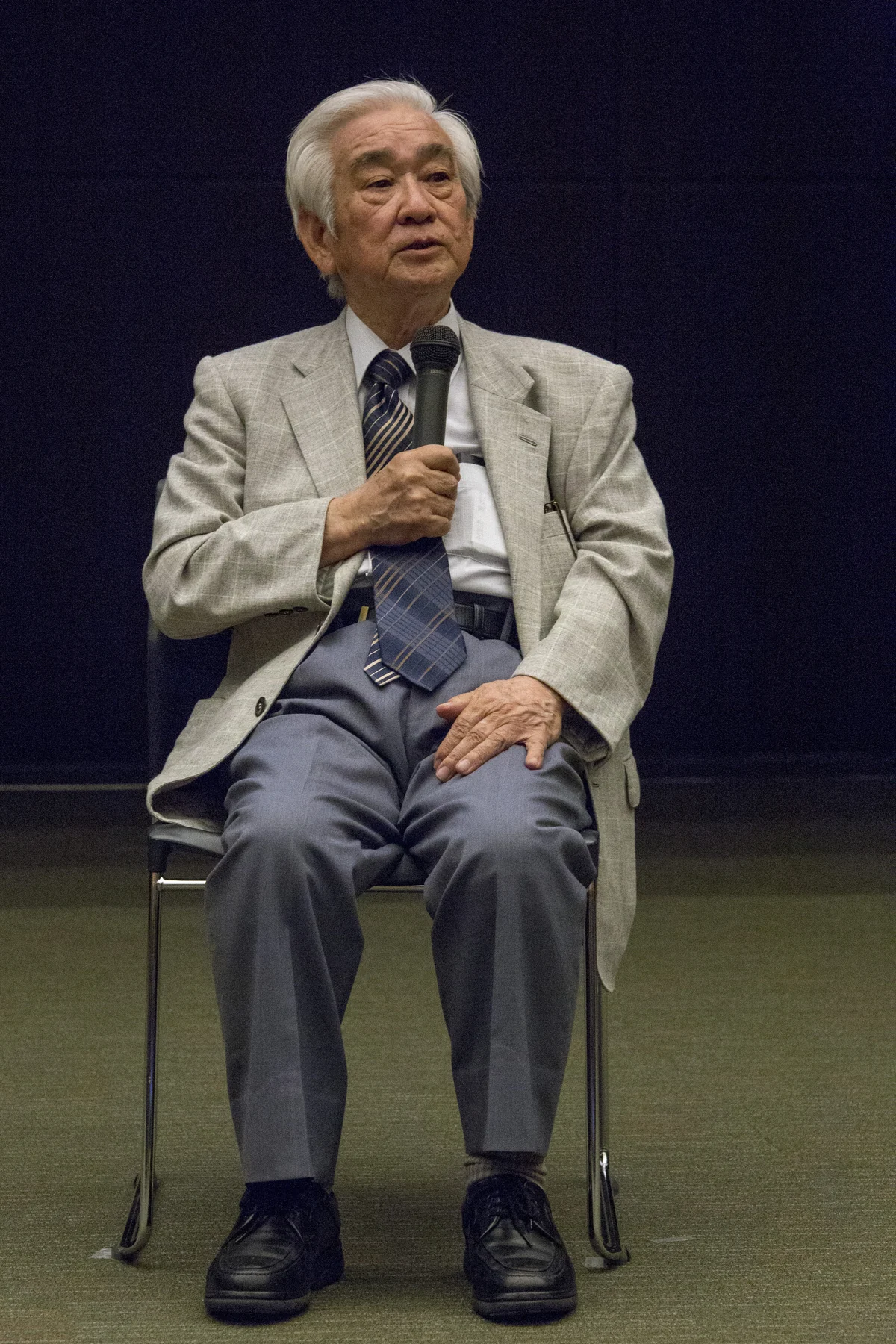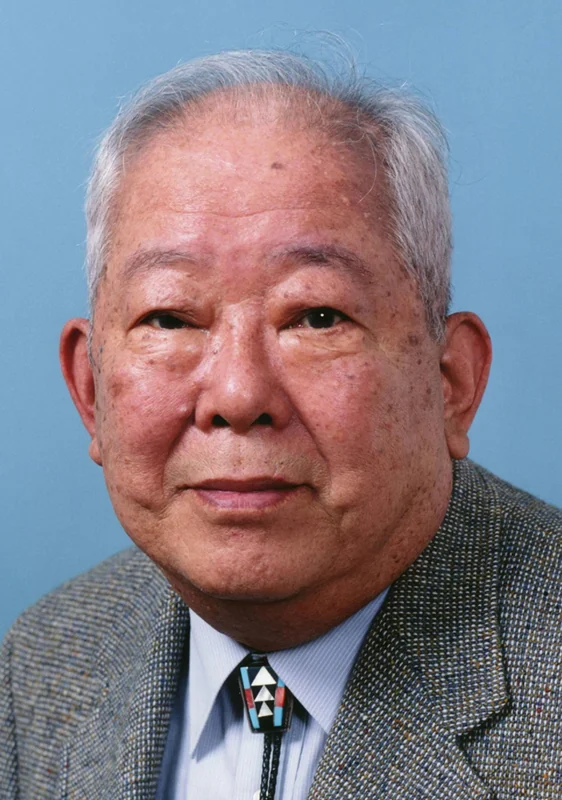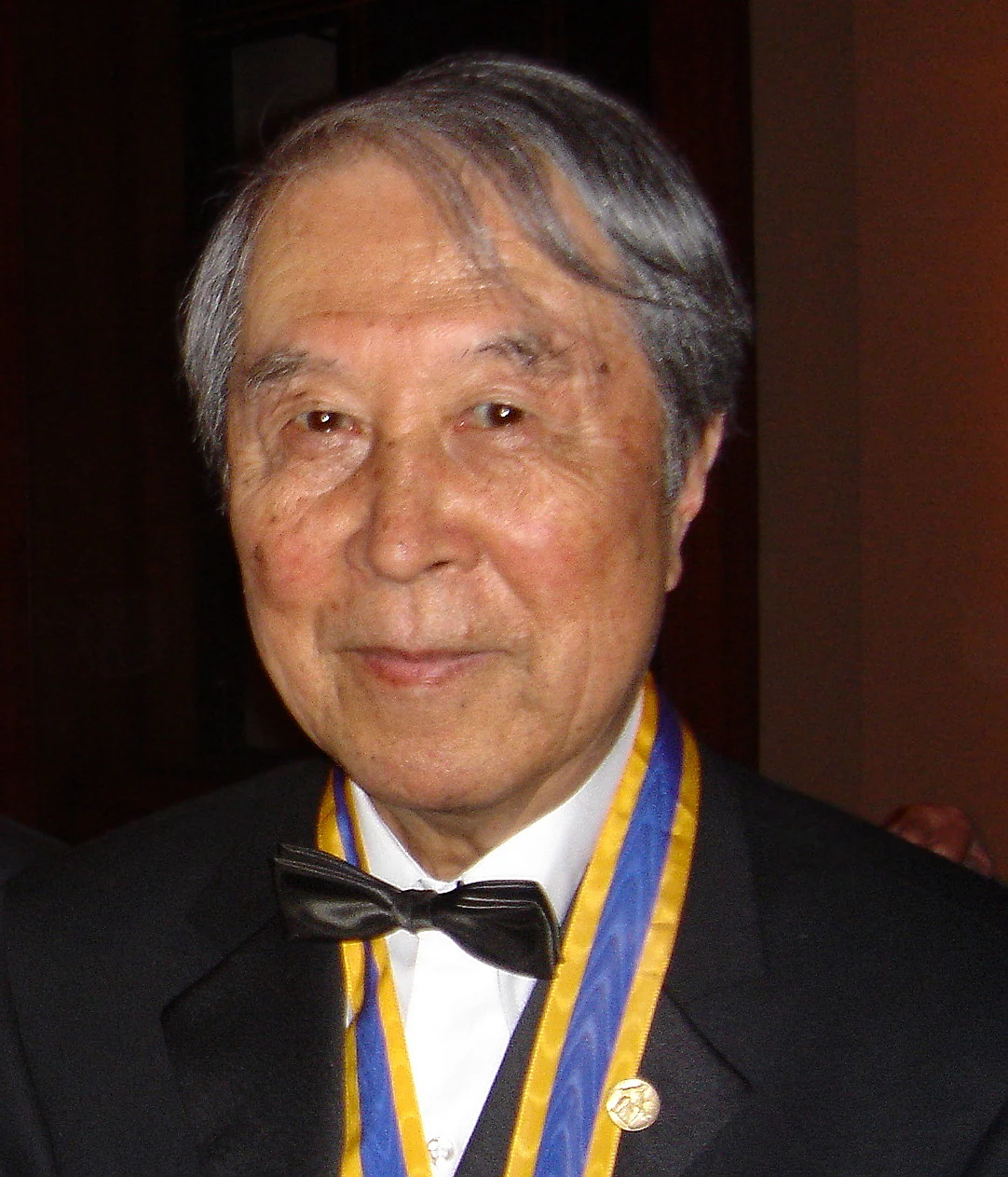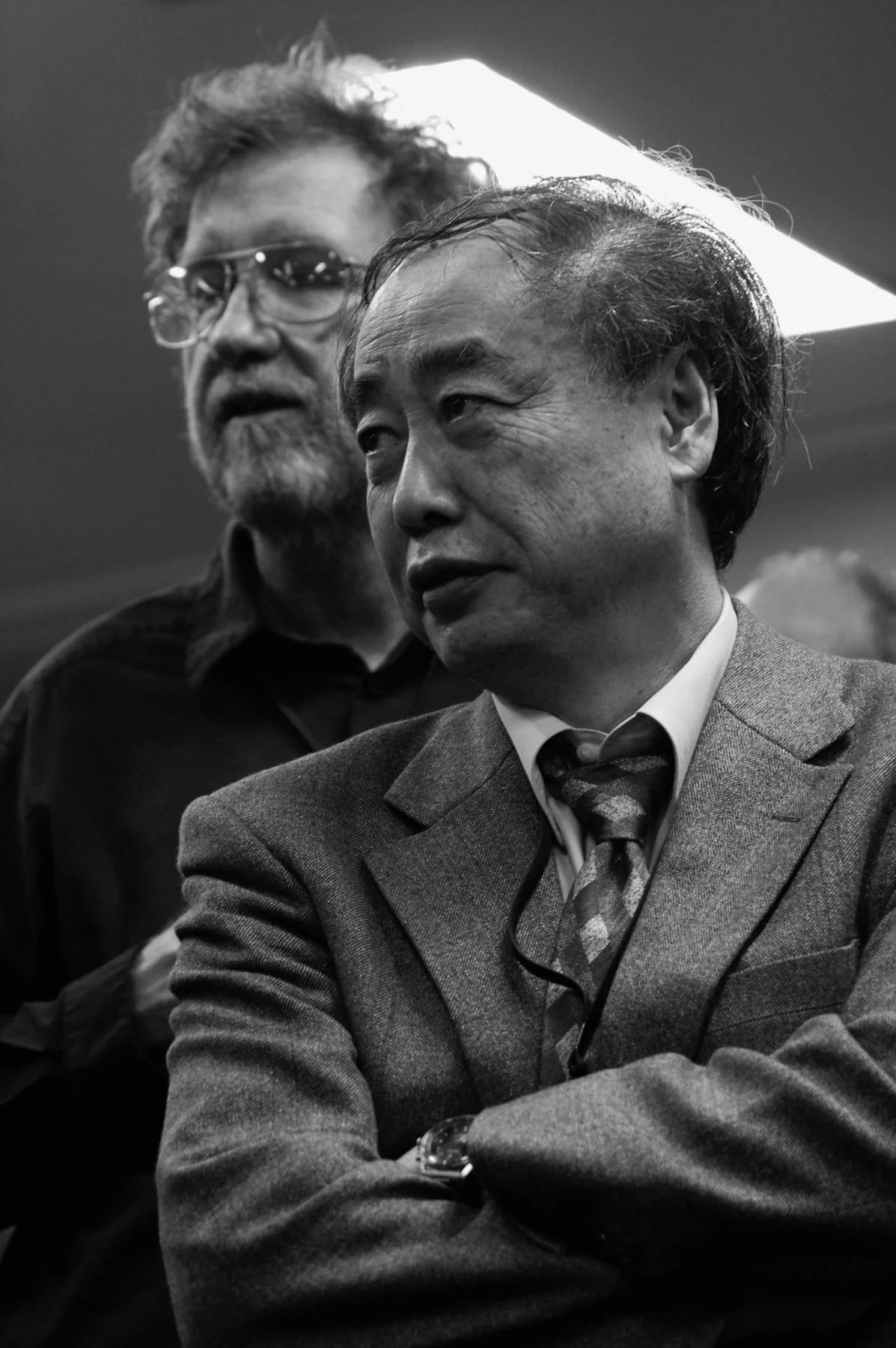
In this biography
Quick facts
- Born
- 7 April 1944
- Birthplace
- Nagoya, Japan
- Country
- Japan
- Nationality
- Not independently established
- Known for
- The Kobayashi–Maskawa mechanism of CP violation
- Doctorate
- Nagoya University,1972
- Coauthor
- Toshihide Maskawa
- Key paper
- PTP 49,652–657,1973
- Nobel Prize
- Physics,2008; quarter share
Why this life matters
His career connects a 1973 theoretical possibility with the later experimental programmes that tested quark mixing and CP violation.
Timeline
Key moments
Birth
Born in Nagoya.
Doctorate and Kyoto move
Completed his doctorate and moved to Kyoto inApril.
CP-violation paper
Published the theory with Maskawa; manuscript received inSeptember 1972.
KEK division role
Became head of Physics Division II.
B-factory experiments
The programme described in his account began experiments.
Institute director
Became director of KEK’s Institute of Particle and Nuclear Studies.
Retirement from KEK
Retired when that directorship ended.
Nobel Prize
Received one quarter of the Physics Prize.
Nagoya supplied a theoretical community
Born in Nagoya on 7 April 1944, Kobayashi studied within the particle-physics environment associated with Shoichi Sakata and Yoshio Ohnuki. His autobiography describes meeting Maskawa before their later Kyoto collaboration. He completed his doctorate inMarch 1972 and moved to Kyoto the next month. The chronology matters: the famous paper belongs to a period when the experimentally established quark picture was much more limited than the later six-quark framework. It was a theoretical investigation of possible mechanisms, not an announcement that all the particles required by one model had already been observed.
A symmetry problem motivated the 1973 paper
Kobayashi and Maskawa investigated how CP violation could fit a renormalisable weak-interaction theory. Their paper was received on 1 September 1972 and published inFebruary 1973. The opening sets out assumptions about particle content and interactions, then considers extensions. In the sixplet case, a three-by-three mixing matrix can retain a complex phase that cannot be removed by redefining quark-field phases. This differs from the restricted two-family mixing case. The claim concerns a mechanism available within a specified framework; it is not the statement that every conceivable two-family theory must conserve CP.
The elegant possibility was not yet a unique prediction
Kobayashi’s 2008 lecture says the authors initially had no further reason to single out the six-quark possibility from alternatives. Later discoveries changed that assessment. The distinction is useful: a theory can identify an important viable structure before evidence makes it the preferred account. The original scan’s final page also contains a corrected form of one equation. This biography does not reproduce the uncorrected matrix as though it were definitive. The linked guide instead compares parameter freedoms under explicit assumptions and separates a model’s capacity for CP violation from actual measurement of an effect.
KEK connected theoretical work with large experiments
At KEK, Kobayashi participated in planning the TRISTAN accelerator programme. His account describes an electron-positron collider approved in 1981 and operating from 1987, followed by plans for a B-factory using the tunnel. He became head of Physics Division II in 1989, and later director of the Institute of Particle and Nuclear Studies in 2003. These were institutional and organisational roles as well as a theoretical career. The B-factory’s observations were the work of experimental collaborations; holding a leadership position does not make him the sole author of their detector systems or analyses.
Sources for this section: [1]
Tests came decades after the first manuscript
The later programme investigated CP violation in B-meson systems, providing evidence relevant to the mechanism. Kobayashi’s recollection places the start of experiments in 1999 and early results in 2000. Those milestones should not be collapsed into the receipt date of the 1972 manuscript or presented as if the first paper already contained the observations. He retired from KEK in 2006 when his directorship ended. Award-era or autobiographical present-tense descriptions are used here to identify historical roles, without certifying an unverified current appointment.
Quick answers
Frequently asked questions about Makoto Kobayashi
- Did Kobayashi and Maskawa observe six quarks in 1973?
- No. Their paper examined a theoretical mechanism before the later particle discoveries.
- Were all three2008 Physics prize shares equal?
- No. Nambu received one half, Kobayashi and Maskawa one quarter each.
Keep exploring
Lives connected to this story
- Toshihide Maskawa
Read the collaborator’s route from Nagoya field theory to the 1973 paper.
- Yoichiro Nambu
Distinguish the other2008 Physics citation and its spontaneous-symmetry question.
- Masatoshi Koshiba
Compare theory with another Japanese particle-physics programme built around detector observations.
Sources and further reading
Explore the evidence
These references support the biography and offer further reading. Official records, first-person accounts and independent reporting provide different perspectives; image records document attribution and licensing.
- 1. Nobel Foundation; Makoto KobayashiMakoto Kobayashi: autobiographical account
- 2. Nobel FoundationMakoto Kobayashi: Nobel Prize facts
- 3. Makoto Kobayashi and Toshihide Maskawa; Yukawa Institute original-paper scanCP-violation in the Renormalizable Theory of Weak Interaction, PTP 49,652–657 (1973)
Actual6-page scan acquired; PDF1/printed652 andPDF6/printed657 visually read: received1 September 1972, model assumptions, sixplet possibility and final-page corrected Eq13. No OCR claimed; original uncorrected matrix not transcribed.
- 4. Makoto Kobayashi; Nobel FoundationCP Violation and Flavor Mixing, Nobel Lecture, 8 December 2008
Actual17-page written lecture acquired, distinct from slides. PDF7–8/printed74–75 read for two/three-family rephasing, fourparameters, alternative models and later discovery. No whole particle-data review or experimental refit.
- 5. Royal Swedish Academy of SciencesBroken Symmetries: scientific background to the Nobel Prize in Physics 2008
Actual primary scientific-background PDF reused from batch19cache; newly selected PDF14 parameter-count paragraph read. General unitary n-family quark mixing/rephasing assumptions, n²−(2n−1), threeangles/onephase atn3. Not evidence of a fourth observed family.