In this biography
Quick facts
- Born
- 10 November 1954
- Birthplace
- Baucau, Portuguese Timor (now Timor-Leste)
- Country
- Timor-Leste
- Nationality
- Timorese
- Known for
- Parliamentary financial oversight and election as speaker in 2023
- Born
- 10 November 1954, Baucau
- Education
- Bachelor-level telecommunications training; institution’s modern name and graduation year not verified
- Party
- CNRT, joined in 2007
- Parliamentary entry
- 2007
- Public Finance Commission chair
- 2018–2020
- Speaker election
- 22 June 2023; 45 votes, 19 abstentions and one blank ballot
Why this life matters
Her career connects women’s parliamentary leadership with the less visible work of rules, budget scrutiny and institutional oversight in a young democracy.
Timeline
Key moments
Baucau birth
Born on 10 November, according to Parliament’s official biography.
Enters Parliament
Joined CNRT and began parliamentary service.
Rules and mandates
Chaired Commission G, covering internal rules, ethics and members’ mandates.
Financial scrutiny
Served as vice-chair of Public Finance Commission C across two legislatures.
Institutional cooperation
Coordinated PRO PALOP-TL activities supporting scrutiny of public finances.
Finance committee chair
Chaired Commission C, then remained a member through 2023.
First woman speaker
Elected on 22 June to lead the National Parliament.
Parliamentary coordination
Discussed the year’s agenda and judicial-reform plans with the president in January.
Baucau origins and technical education
Maria Fernanda Lay was born in Baucau on 10 November 1954, when the territory was Portuguese Timor. Parliament records her qualification as a bacharelato, while TATOLI describes telecommunications study at bachelor level in Bandung, Indonesia. The available accounts do not justify replacing that description with a guessed modern university name or graduation year.
Her later public career became closely associated with parliamentary institutions rather than a single technical occupation. The distinction matters because accounts of her life sometimes attach unsupported employment claims to the period before independence. Her documented parliamentary record offers a firmer basis for understanding the development of her public responsibilities.
Learning parliamentary procedure and scrutinising finance
Lay joined CNRT after its establishment in March 2007 and entered Parliament that year. During the 2007–2012 legislature, she chaired Commission G, responsible for internal rules, ethics and members’ mandates. Such work concerns how a legislature operates: the standing of its members, the procedures it follows and the rules governing its own conduct.
She subsequently served as a parliamentary bureau secretary and developed a substantial public-finance role. Parliament’s biography records her as vice-chair of Commission C in 2012–2017 and 2017–2018, then chair in 2018–2020 and a member in 2020–2023. These periods should not be compressed into a claim that she chaired the finance commission throughout the fifth legislature.
Sources for this section: [1]
Financial governance and international cooperation
Lay’s international work also involved parliamentary organisation. She became secretary of Timor-Leste’s national group in the CPLP Parliamentary Assembly in 2010 and served in the leadership of its women’s network through 2015. These were parliamentary connections, distinct from executive foreign-ministry appointments.
TATOLI’s career account also describes her coordination of PRO PALOP-TL activities in 2014–2016. The cooperation concerned stronger institutional scrutiny of public finances across Portuguese-speaking African countries and Timor-Leste. Alongside audit-related party work and anti-corruption parliamentary networks, it provides a consistent oversight theme. It is evidence of participation and responsibility, not proof that one individual independently delivered every institutional improvement.
Sources for this section: [3]
The 2023 speakership and subsequent agenda
CNRT and the Democratic Party nominated Lay for speaker with signatures from seventeen CNRT and two PD deputies. She was elected on 22 June 2023 with 45 votes, nineteen abstentions and one blank ballot, becoming the first woman to head the National Parliament. The nomination and the subsequent ballot were separate steps in that transition.
Parliament and the Inter-Parliamentary Union continue to identify her as speaker for the 2023–2028 legislature. A January 2026 meeting with the president addressed parliamentary coordination, judicial recruitment and preparations for a Supreme Court. Those discussions document an agenda and intended institutional work; they should not be rewritten as proof that all proposed judicial reforms were completed.
Quick answers
Frequently asked questions about Maria Fernanda Lay
- When and where was Maria Fernanda Lay born?
- She was born in Baucau on 10 November 1954, according to Parliament’s official biography.
- Why was her 2023 election historic?
- Her election on 22 June 2023 made her the first woman to head Timor-Leste’s National Parliament.
- Which party does Maria Fernanda Lay represent?
- She belongs to CNRT, which she joined in 2007.
- What did Lay do before becoming speaker?
- Her parliamentary responsibilities included rules and members’ mandates, bureau work and public-finance scrutiny, including chairing Commission C from 2018 to 2020.
Keep exploring
Lives connected to this story
- Aniceto Guterres Lopes
Read about Aniceto Guterres Lopes’s earlier speakerships, human-rights work and subsequent parliamentary responsibilities.
- Adaljiza Magno
Compare a different Timorese woman’s career in diplomacy and government.
- Zacarias Albano da Costa
Explore the distinct executive and diplomatic work of a former foreign minister.
Sources and further reading
Explore the evidence
These references support the biography and offer further reading. Official records, first-person accounts and independent reporting provide different perspectives; image records document attribution and licensing.
- 1. National ParliamentOfficial biography and committee chronology
Use the precise committee chronology rather than generalising the finance chairmanship across a whole legislature. Bacharelato is retained at bachelor-level precision without inventing a degree institution or completion year.
- 2. TATOLI · June 2023Education and first-woman-speaker profile
Do not repeat unsupported pre-independence Timor Telecom employment. Exact election results concern 22 June, not the preceding nomination.
- 3. TATOLI · Portuguese career accountFinancial oversight and international parliamentary work
The English report’s PRO PALOP phase label is not adopted. The documented activity period is 2014–2016.
- 4. TATOLI · 21 June 2023Coalition nomination before the ballot
- 5. National ParliamentCurrent presidency record
- 6. Inter-Parliamentary UnionParliament and speaker record
- 7. TATOLI · January 2026Work-plan discussions and judicial reform proposals
Judicial recruitment and Supreme Court preparations are reported plans, not independently established completion.
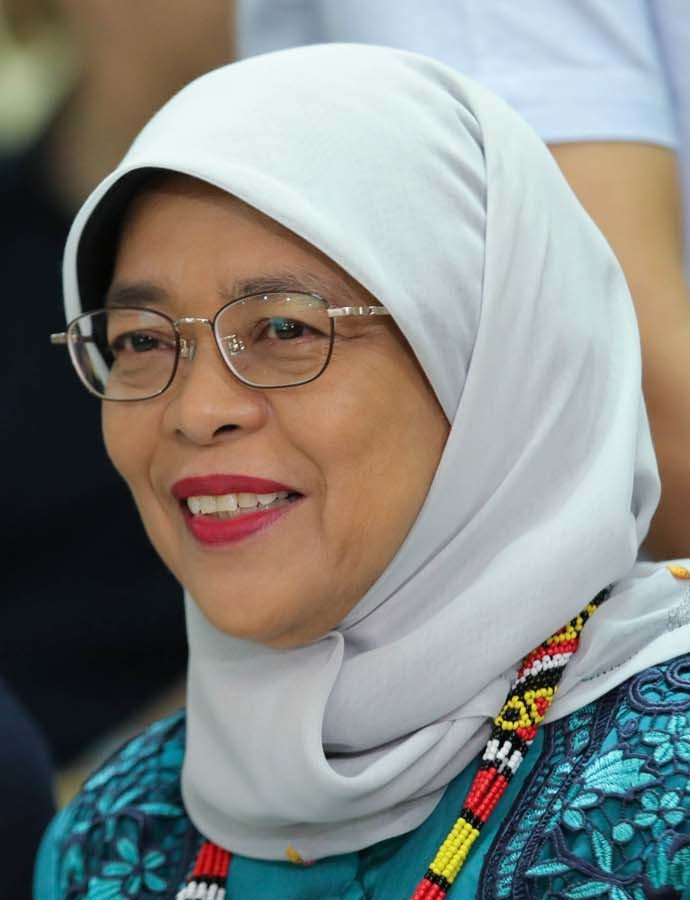
- 8. Wikimedia Commons · Parlamento NacionalDated government photograph and PD-TLGov declaration
Published by Parliament in 2019, within the pre-27 May 2023 period covered by the PD-East TimorGov declaration. The historical full group frame is retained and the subject identified at centre.