

In this biography
Quick facts
- Born
- 26 February 1963
- Died
- 2 June 2015
- Birthplace
- Manutasi, Ainaro, Timor-Leste
- Country
- Timor-Leste
- Nationality
- Timorese
- Known for
- RENETIL, the Democratic Party, parliamentary leadership and an acting presidency in 2008
- Born
- 26 February 1963, Manutasi, Ainaro
- University study
- Udayana, 1985–1991; Melbourne environmental studies, 2000–2001; attendance, not verified completed degrees
- RENETIL
- Co-founder, 20 June 1988; secretary-general until 2000
- Parliamentary presidency
- 31 July 2007–30 July 2012
- Acting head of state
- 13 February–17 April 2008
- Died
- 2 June 2015, Díli
Why this life matters
His career connects the student independence movement with the practical work of building parliamentary and social-policy institutions after independence.
Timeline
Key moments
Ainaro birth
Born in Manutasi on 26 February, according to Parliament.
Studies in Bali
Attended Udayana University’s literature faculty in Denpasar.
RENETIL
Co-founded the student resistance network on 20 June.
Imprisonment
Parliament records detention from 24 November 1991 to 24 March 1998.
Transitional administration
Served as vice-minister for foreign affairs and cooperation.
Parliamentary leadership
President of the National Parliament; separately acting president of the republic in 2008.
Vice-premiership
Became vice-prime minister and social-affairs coordinator in August.
Education and death
Held education and social-affairs portfolios from February; died on 2 June and received a posthumous national order.
Childhood under occupation and studies abroad
Fernando de Araújo was born on 26 February 1963 in Manutasi, Ainaro, according to Timor-Leste’s National Parliament. Known as La Sama or Lasama, he came from a farming family. The government’s obituary describes displacement after the 1975 Indonesian occupation, followed by secondary schooling in Díli and later study in Bali.
Parliament records his attendance at Udayana University’s literature faculty in Denpasar from 1985 to 1991. It also records postgraduate environmental studies in Melbourne in 2000–2001. The wording establishes attendance, not an awarded degree. His time outside Timor became part of a wider story in which students organised politically while studying under Indonesian rule.
RENETIL and imprisonment
On 20 June 1988, Araújo co-founded RENETIL, the National Resistance of East Timorese Students, and served as its secretary-general until 2000. The student network formed one strand of the independence movement, alongside other forms of resistance. His role centred on organising and communicating the Timorese cause rather than commanding an armed force.
Parliament dates his imprisonment in Indonesia from 24 November 1991 to 24 March 1998. Amnesty International’s contemporary case report described his involvement in peaceful political activity, including a Jakarta protest after the Santa Cruz killings, and regarded him as a prisoner of conscience. Indonesian authorities convicted him of subversion in 1992; Amnesty’s assessment and the authorities’ charge are distinct accounts of the same detention.
Parliament and the temporary head-of-state role
After the occupation, Araújo became a Democratic Party leader and served as vice-minister for foreign affairs and cooperation in the second UNTAET transitional administration in 2001–2002. These responsibilities placed a former student organiser inside institutions preparing to govern an independent state.
He was president of the National Parliament from 31 July 2007 to 30 July 2012. Separately, he performed the republic’s presidential duties from 13 February to 17 April 2008. His longer parliamentary presidency must not be mistaken for an elected five-year presidential term. The two offices had different constitutional functions, even though the same individual temporarily occupied both roles.
Quick answers
Frequently asked questions about Fernando de Araújo
- Who was Fernando de Araújo, or Lasama?
- He was a Timorese student resistance organiser, Democratic Party leader, president of Parliament and later senior minister.
- Was Fernando de Araújo president of Timor-Leste?
- He temporarily performed the republic’s presidential duties from 13 February to 17 April 2008. His separate parliamentary presidency lasted from July 2007 to July 2012.
- Why was he imprisoned?
- Indonesian authorities convicted him of subversion in 1992. Amnesty regarded him as a prisoner of conscience held for peaceful political activity.
- Did he complete a university degree?
- The checked parliamentary biography records study at Udayana and postgraduate attendance in Melbourne. It does not establish completed degrees.
Keep exploring
Lives connected to this story
- António da Conceição
Explore the minister who filled the education and social-affairs vacancy after Fernando’s death in 2015, and his later presidential candidacy.
- Francisco Guterres “Lú-Olo”
Compare a different Timorese parliamentary leader’s subsequent elected presidency.
- Xanana Gusmão
Read about the prime minister whose fifth government included Araújo as vice-premier.
Sources and further reading
Explore the evidence
These references support the biography and offer further reading. Official records, first-person accounts and independent reporting provide different perspectives; image records document attribution and licensing.
- 1. Timor-Leste National ParliamentBirth, university attendance, RENETIL, detention and separate presidencies
Use the official 1963 birth year and the separately dated parliamentary and acting-republic presidencies. University attendance is not a completed degree.
- 2. Government of Timor-Leste · obituaryChildhood, resistance and public-service background
The checked sources differ on the Democratic Party’s founding year, so no year is asserted here.
- 3. Amnesty International · 1992 case reportContemporaneous account of peaceful activism and imprisonment
Use the report for its contemporary assessment of activism, not its inconsistent age or sentence-length details.
- 4. Government · Council of Ministers, 9 August 2012Vice-premiership and social-affairs coordination
- 5. Government · 2 June 2015 announcementDeath, final portfolios and national mourning
- 6. Presidential Decree 46/2015Posthumous Order of Nicolau Lobato
- 7. Agência Brasil · original 17 September 2009 galleryJosé Cruz photograph naming Araújo and José Sarney
Use the agency’s complete original 1800JC1107 frame, not a later portrait crop with an inappropriate uploader self-licence. The 2007 campaign image shows mainly a poster; a 2012 State Department candidate credits third-party UNMIT photography. Neither is used.
- 8. Wikimedia Commons · dated Agência Brasil licence recordHistorical CC BY 2.5 Brazil policy for photographs published in 2009
The dated agency licence record maps 14 August 2006–27 April 2011 publication to CC BY 2.5 Brazil. Do not apply this policy to agency photographs produced after 23 February 2017.

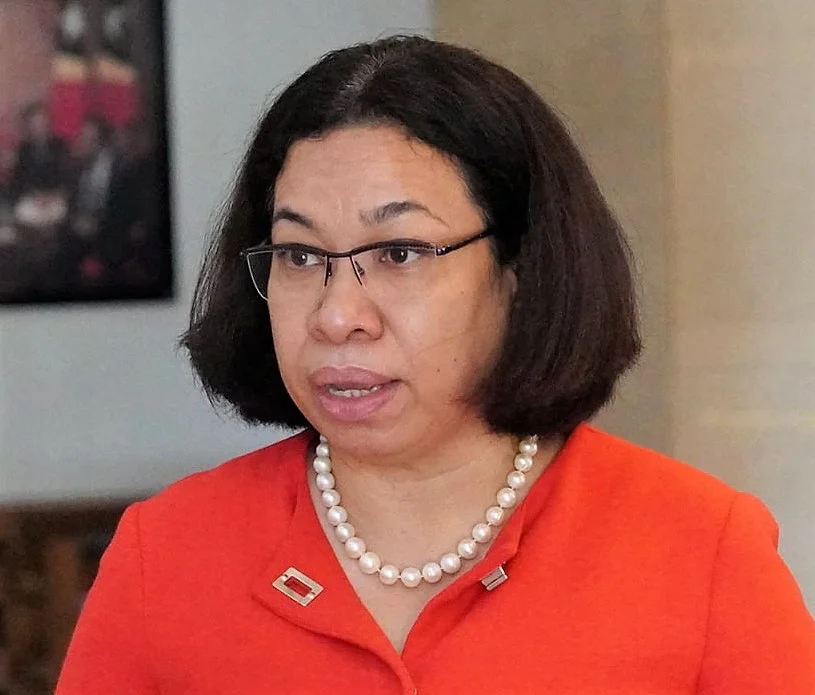
Social affairs, education and public commemoration
In August 2012 he entered Xanana Gusmão’s fifth constitutional government as vice-prime minister and coordinator of social affairs. Following the government change in February 2015, his responsibilities included minister of state, coordinating minister for social affairs and minister of education. The successive titles reflect different cabinets, not an unchanged appointment spanning every year.
Araújo died at Guido Valadares National Hospital in Díli on 2 June 2015. The government declared national mourning. A presidential decree dated 3 June awarded him the Order of Nicolau Lobato posthumously, recalling his resistance work and public service. His career thus spanned student mobilisation, imprisonment, legislative leadership and executive responsibility in the country whose independence he had advocated.
Sources for this section: [4] · [5] · [6]