In this biography
Quick facts
- Born
- 1873
- Died
- 1961
- Birthplace
- Not independently established
- Country
- United States
- Nationality
- Not independently established
- Known for
- Three-electrode Audion and Phonofilm
Why this life matters
His work on the Audion gave circuit designers a component in which a small electrical change could influence a larger current.
Timeline
Key moments
Experiments with wireless
Works on devices for detecting weak signals.
Space telegraphy patent
A published patent records an early Audion arrangement.
Phonofilm
Develops and demonstrates a system for sound with film.
Making a signal easier to control
De Forest pursued electrical research at Yale and entered wireless work at a time when most radio traffic was sent in code. A receiving station needed a way to detect a weak signal. He experimented with tubes in which current passed between electrodes, then explored how a third electrode could influence that current. The Audion was associated with this work.
A surviving experimental tube and a patent answer different questions. The tube allows a museum to identify a physical arrangement. The patent records the apparatus and use the inventor asked to protect. Neither gives a complete account of how later engineers turned the device into a dependable amplifier.
Inventing a component and designing a circuit
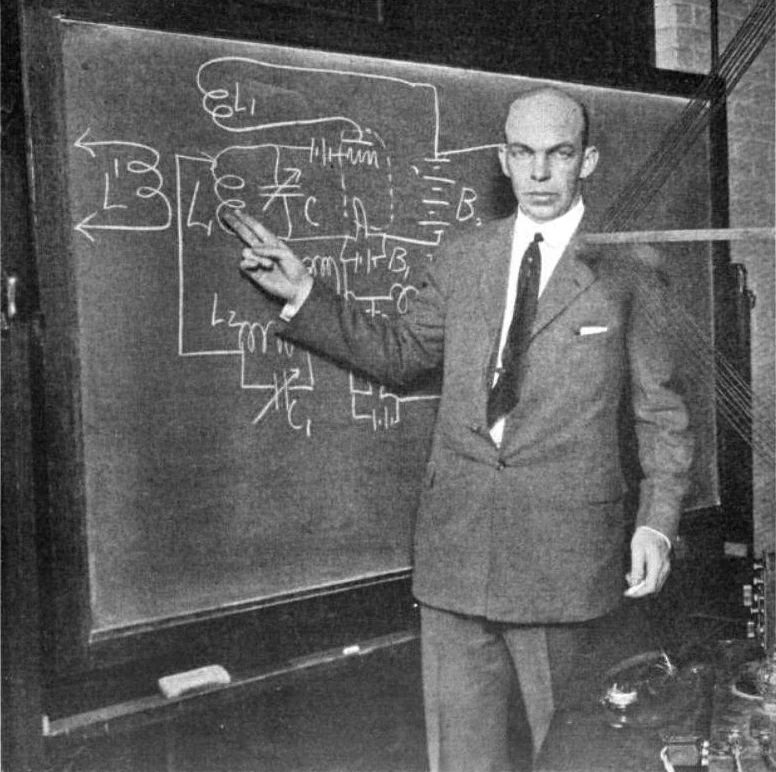
Armstrong’s experimental detector includes a De Forest tube. In that assembly the tube works with a larger network that returns part of the signal. The record lets us attribute the tube and the circuit relationship separately. That is useful in reading a history full of overlapping devices and disputes about priority.
De Forest promoted uses for radio beyond point-to-point signaling and tried to turn demonstrations into a business. The project involved a market for equipment and a reason for people to receive a programme, questions that the tube itself could never settle.
Carrying sound with a picture
His later Phonofilm work pursued sound with moving pictures. It posed another timing problem: a picture and a voice had to stay aligned during exhibition. The projects differ in their mechanics, but both give his career a recurring theme. To move sound successfully, an inventor had to decide how to represent it, recover it and put the recovered signal to work in a real setting.
Quick answers
Frequently asked questions about Lee de Forest
- What did the third electrode add to the Audion?
- It provided a way for a voltage on the grid to influence the current through the tube.
Keep exploring
Lives connected to this story
- Edwin Howard Armstrong
Read about the circuit designer who put an Audion into a feedback loop.
- Philo Farnsworth
Compare the use of electron tubes to turn a picture into signals.
Sources and further reading
Explore the evidence
These references support the biography and offer further reading. Official records, first-person accounts and independent reporting provide different perspectives; image records document attribution and licensing.
- 1. Lemelson-MITLee DeForest
- 2. National Museum of American HistoryExperimental DeForest Audion tube
- 3. U.S. Patent OfficeSpace telegraphy, US879532A
Read the drawings and specification of the 1908 grant, not a priority determination.
- 4. National Museum of American HistoryExperimental radio wave detector
Museum record identifies the Audion inside a separate engineer’s apparatus.
- 5. Library of CongressLee De Forest Papers