
In this biography
Quick facts
- Born
- 14 October 1888
- Died
- 9 January 1923
- Birthplace
- Wellington, New Zealand
- Country
- New Zealand
- Nationality
- Not independently established
- Known for
- Modernist short fiction including Prelude, Bliss, At the Bay and The Garden Party
- Education
- Queen's College, London, 1903–1906
- First collection
- In a German Pension, 1911
- Separate publication
- Prelude, Hogarth Press, 1918
- Later collections
- Bliss and Other Stories, 1920; The Garden Party and Other Stories, 1922
Why this life matters
Her stories make shifts of consciousness and small social encounters carry the weight often assigned to elaborate plots.
Timeline
Key moments
Born in Wellington
Born Kathleen Mansfield Beauchamp on 14 October.
London schooling
Attends Queen's College before returning to New Zealand.
Leaves New Zealand
Returns to London to pursue a writing career.
First collection
In a German Pension is published.
Prelude
The Hogarth Press publishes the story as a separate book.
Bliss and Other Stories
Constable publishes the collection, including Prelude.
The Garden Party and Other Stories
The collection includes At the Bay and Miss Brill.
Death in France
Dies on 9 January at Avon-Fontainebleau.
A Wellington childhood and a London education
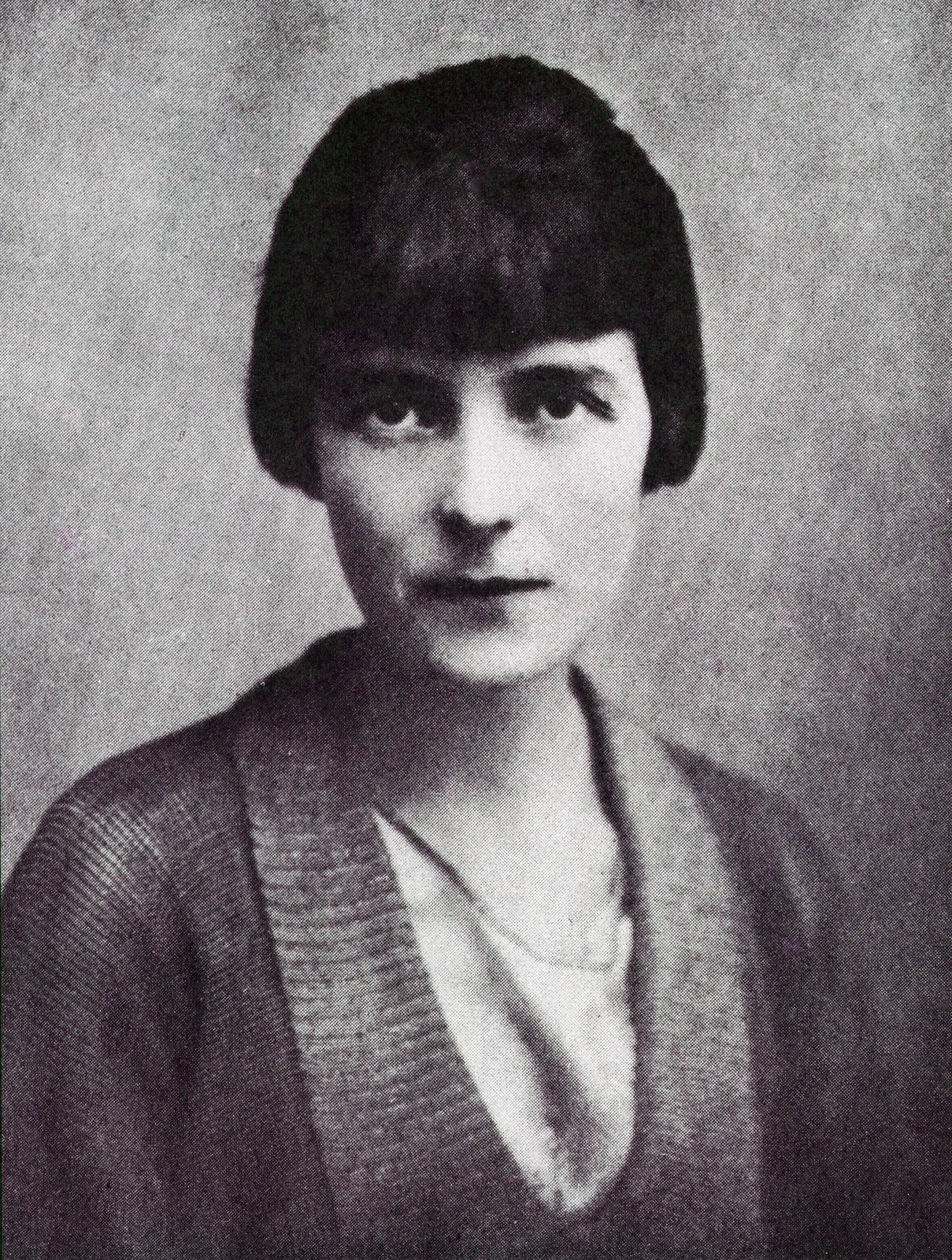
Katherine Mansfield was born Kathleen Mansfield Beauchamp in Wellington on 14 October 1888. Her father, Harold Beauchamp, became a prominent businessman. The family's moves between houses, and her experiences of children, servants and adult expectations, later supplied material that she reshaped into fiction.
She attended schools in Wellington before studying at Queen's College in London from 1903 to 1906. Reading, music and early publication were already important to her. Returning to New Zealand did not settle her ambitions: in 1908 she left again for London with financial support from her father. Schooling and literary experimentation, rather than a university degree, formed her early education.
Building a literary career through journals
Mansfield's first collection, In a German Pension, appeared in 1911. Her career also developed through magazines, where short fiction, poetry and reviews could reach readers between books. She met John Middleton Murry, associated with the journal Rhythm, and their personal and working relationship became central to her life.
She lived in several European countries and maintained connections with writers including D. H. Lawrence and Virginia Woolf. These contacts could offer publication, conversation and friction. They did not replace sustained writing. Her correspondence and notebooks record a working author revising material while negotiating illness, money and the practical difficulties of finding somewhere to live and work.
Prelude and the difference between a story and a collection
The Hogarth Press published Prelude separately in 1918. Smith College's rare-book exhibition identifies its edition and the hand production of three hundred copies by Leonard and Virginia Woolf. This is a publication event, distinct from when Mansfield began or revised the underlying material.
Prelude subsequently opened Bliss and Other Stories, issued by Constable in 1920. The digitised volume's contents also list Bliss, The Wind Blows and The Man without a Temperament. Its publication history records later reprintings. Those later dates should not displace 1920 as the collection's initial year, or make every story in the volume a newly composed work of that year.
Illness, unfinished projects and posthumous books
Tuberculosis increasingly shaped Mansfield's movements and working conditions. She sought treatment and continued writing while living in France and Switzerland. In October 1922 she entered G. I. Gurdjieff's community at Avon-Fontainebleau, where she died on 9 January 1923, aged thirty-four.
Murry published further collections and selected papers after her death. Bibliographic records distinguish The Doves' Nest and Other Stories in 1923 from Something Childish and Other Stories in 1924. These volumes extended her readership but involved editorial selection. Her surviving letters, notebooks, published stories and later editions are therefore related kinds of evidence, rather than one seamless autobiography authorised in its final form by the writer.
Quick answers
Frequently asked questions about Katherine Mansfield
- Who was Katherine Mansfield?
- Katherine Mansfield was a short-story writer, poet, critic and letter writer. Her stories make shifts of consciousness and small social encounters carry the weight often assigned to elaborate plots.
- What is Katherine Mansfield best known for?
- Katherine Mansfield is best known for modernist short fiction including Prelude, Bliss, At the Bay and The Garden Party.
- When and where was Katherine Mansfield born?
- Katherine Mansfield was born on 14 October 1888 in Wellington, New Zealand.
- When did Katherine Mansfield die?
- Katherine Mansfield died on 9 January 1923.
Keep exploring
Lives connected to this story
- James Joyce
Compare modernist short fiction and the institutions that brought writing to readers; no personal collaboration is implied.
- Patricia Grace
Read the writer who identified Mansfield among the New Zealand voices that helped open possibilities for her own work.
- Janet Frame
Compare another New Zealand short-fiction writer’s distinct international publication history.
- Gillian Whitehead
Follow a later composer who set Mansfield texts, as recorded in the university citation.
- Witi Ihimaera
Introduce Dear Miss Mansfield as a later Māori response rather than a replacement for Mansfield’s own stories.
- Frances Hodgkins
Compare a painter’s working life abroad with a different expatriate literary career.
Sources and further reading
Explore the evidence
These references support the biography and offer further reading. Official records, first-person accounts and independent reporting provide different perspectives; image records document attribution and licensing.
- 1. Gillian Boddy / Dictionary of New Zealand Biography, Manatū TaongaMansfield, Katherine: life, journals and literary career
- 2. Katherine Mansfield House & GardenKatherine Mansfield: life, schooling and published collections
The House gives 1917 beside its suggested Prelude reading; the draft uses the physical 1918 Hogarth edition recorded by Smith and DNZB. Suggested reading dates are not treated as first-publication metadata.
- 3. Smith College Libraries, Mortimer Rare Book CollectionWoolf in the World: Prelude edition, journal fragment and Woolf letter
Institutional catalogue/exhibition records, including Prelude 1918, inspected. No assertion of a precise July publication day; secondary accounts differ.
- 4. Katherine Mansfield / Constable; digitised by Project GutenbergBliss, and Other Stories: publication history, contents and text
Publication-history page and contents checked in a digitised later printing. Distinguishes initial 1920 publication from its 1925 printing history.
- 5. Katherine Mansfield / Constable; digitised by WikisourceThe Garden Party, and Other Stories: 1922 text and contents
1922 title/contents and title-story narrative checked. Literary interpretation is original analysis of the primary text, not an asserted statement of authorial intention.
- 6. University of Pennsylvania Libraries, The Online Books PageMansfield, Katherine: catalogue records for original and later editions
Catalogue records corroborate 1923 Doves' Nest and 1924 Something Childish, with later editions kept separate. No claim of examining every original copy.

Social boundaries in The Garden Party
The Garden Party and Other Stories appeared in 1922. Its contents include At the Bay, The Daughters of the Late Colonel, Miss Brill and the title story. A contents page establishes what belongs to this collection; it does not, by itself, establish each story's original magazine appearance.
In the title story, preparations for a prosperous family's party are disturbed by news of a working man's death nearby. Laura's uncertainty brings household pleasure into contact with class division and mortality. This reading follows the story's action, not an assumption that Laura is simply Mansfield under another name. Such changes of perspective help explain why the fiction remains larger than a set of autobiographical anecdotes.
Sources for this section: [5]