
The short answer
A novel can exist in print while access to it remains contested. Ulysses supplies a clear example: its Paris publication, an American customs proceeding and an appellate judgment were separate events. Reading the records beside one another explains why their dates and conclusions should not be collapsed.
Original record comparison
Edition, decision and appeal
Use the producer and purpose of a record to decide what it can establish.
| Record | Action established | Limit |
|---|---|---|
| 1922 first-copy record | Publication through Beach in Paris | Does not establish universal permission to import |
| 1933 district judgment | Dismissal of the government’s forfeiture proceeding | Not the first publication or a criminal acquittal of Joyce |
| 1934 appellate judgment | Decree affirmed by the Second Circuit | Majority and Manton’s dissent must be distinguished |
Chronology
A timeline of the turning points
A published book
Sylvia Beach publishes Ulysses through Shakespeare and Company in Paris.
Forfeiture refused
Judge John M. Woolsey dismisses the government’s proceeding against the imported book.
American edition
Random House is identified as publisher of the American edition in the appellate record.
Appeal decided
The Second Circuit affirms the decree; Augustus N. Hand writes the majority opinion, with Martin Manton dissenting.
The first copy supplies a publication anchor
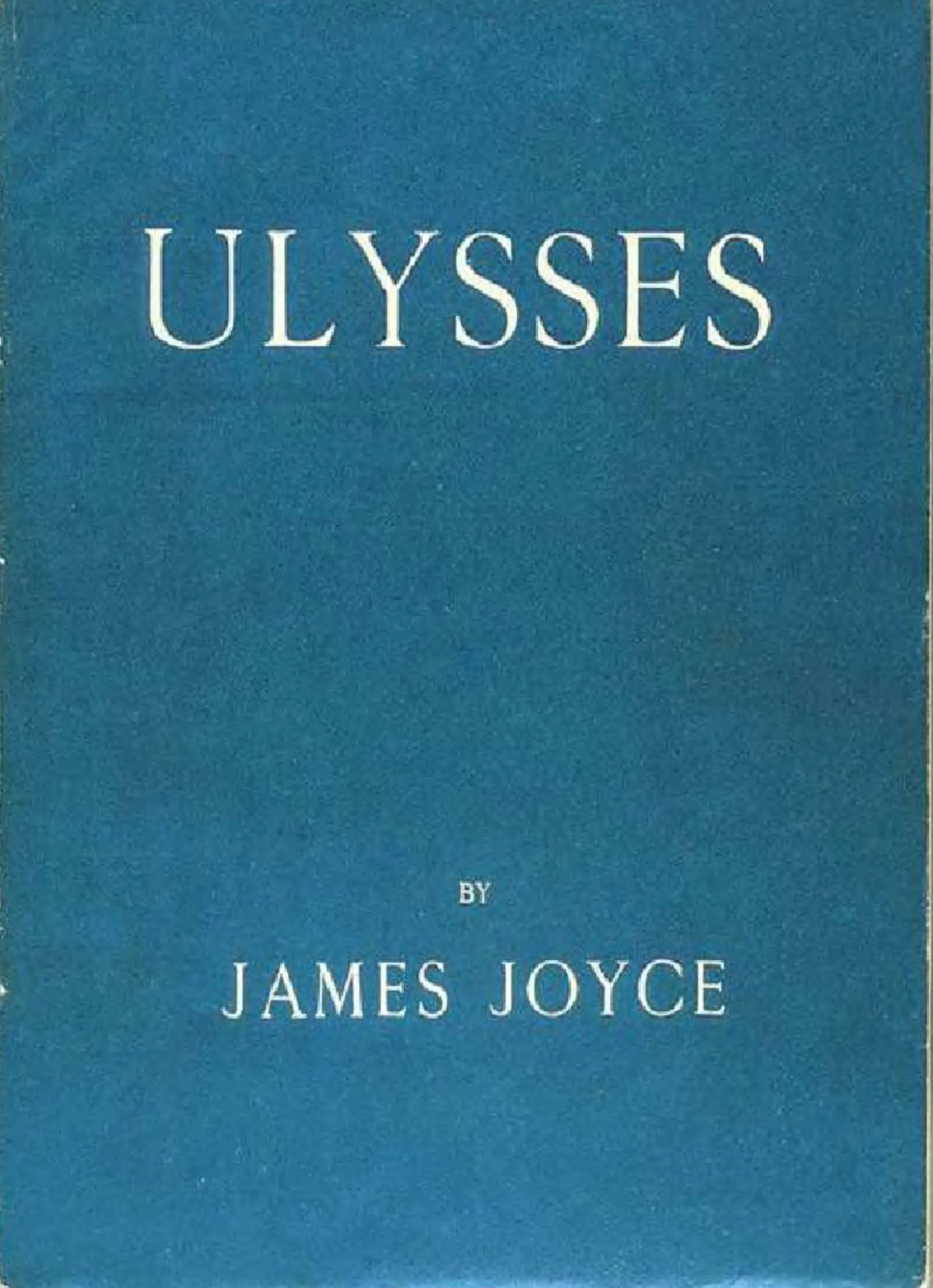
MoLI’s account of copy no. 1 identifies the first book publication as 2 February 1922. Joyce inscribed that copy to Harriet Shaw Weaver on the same date, his fortieth birthday. The object connects publication history with the patron who helped sustain his work. Its later arrival in a library is a separate event from its first appearance in print.
The Morgan’s publishing exhibition describes Sylvia Beach’s subscription edition through Shakespeare and Company. Bookshop publishing, patronage and advance support made a difficult commercial undertaking possible. These records establish a Paris publication network; they do not prove that every country immediately permitted importation or sale.
The 1933 proceeding concerned an imported book
The district-court record names the United States and a book called Ulysses, with Random House appearing as claimant. It was an import-forfeiture proceeding, rather than a criminal trial of Joyce. The parties agreed to have the court decide the issues without a jury, incorporating the book into the case.
On 6 December 1933, Judge John M. Woolsey dismissed the government’s libel for forfeiture and refused forfeiture and destruction. He considered Joyce’s literary purpose and the effect of reading the work. The result concerned this book under the import restriction; it was not an order ending every literary censorship dispute.
Sources for this section: [3]
Identify who wrote each part of the appeal
The Second Circuit decided the appeal on 7 August 1934. Augustus N. Hand wrote the majority opinion. Learned Hand sat on the panel, but attributing the written opinion to him confuses two judges. The majority affirmed the decree, assessing challenged passages within the book’s artistic purpose and overall effect.
Martin Manton dissented. He objected to the treatment of material he regarded as obscene and argued for a different outcome. His separate opinion is part of the historical record, but its conclusion is not the court’s holding. A quotation found near the end of the judgment must be located within the majority or dissent before being used to describe the result.
Sources for this section: [4]
Compare three records without making one answer every question
A physical book, a trial-level judgment and an appellate decision preserve different kinds of action. The first establishes an edition; the second records a decision on the government’s claim; the third records review of that decision. The chronology shows that successful publication and successful legal resistance were separated by years.
The U.S. judgments did not reverse time and become the first publication of the novel. They were not Supreme Court decisions or rulings for every jurisdiction. Keeping those limits visible makes the history more informative than a single claim that the book was banned and then universally freed.
A source-reading exercise with an answer
Test this statement: Joyce won a Supreme Court trial in 1933, which allowed Sylvia Beach to publish Ulysses for the first time. Identify three errors and name the record that corrects each.
Suggested answer: the 1933 decision came from a federal district court; the proceeding concerned forfeiture of a book, not a criminal trial of its author; and the first book publication had already occurred in 1922. The 1934 appellate record adds the reviewing court, majority writer, dissent and affirmation. This exercise concerns those historical documents, not the current legal status of a different work.
Continue the chronology
Related history guides
Connected biographies
Writers, texts and the institutions around them
1882–1941
James Joyce
Novelist, short-story writer and poetJames Joyce was an Irish writer who made Dublin a setting for far-reaching experiments in fiction. Living much of his adult life in continental Europe, he developed stories and novels that explored everyday experience, individual consciousness and the possibilities of literary language.Read biography
1888–1923
Katherine Mansfield
Short-story writer, poet, critic and letter writerKatherine Mansfield was a New Zealand-born writer whose short fiction explored perception, family life and social divisions. She developed her career in European literary circles while repeatedly returning in imagination to the New Zealand settings of her childhood.Read biographyQuick answers
Common questions
- Was Ulysses first published in 1933?
- No. The first book edition appeared in Paris on 2 February 1922. The 1933 date belongs to the U.S. district-court decision.
- Did Learned Hand write the 1934 majority opinion?
- No. Augustus N. Hand wrote it. Learned Hand was another member of the panel.
- Does Manton’s dissent describe the court’s final result?
- No. He disagreed with the majority. The court affirmed the decree refusing forfeiture.
Primary and institutional sources
How this history was checked
Compared the museum’s first-copy record, the Morgan’s indexed publishing exhibition and the published district and appellate opinions. The Morgan live page was unavailable during review; indexed exhibition text was used. The physical copy, subscription accounts and court manuscripts were not independently inspected. The chronology, comparison and exercise are original synthesis of these identified records. This article was reviewed on 27 October 2026.
- Museum of Literature IrelandCopy no. 1 of Ulysses: publication and inscription
- Morgan Library & MuseumPublishing Ulysses: Beach, Weaver and the subscription edition
- U.S. District Court, S.D.N.Y. / Justia transcriptionUnited States v. One Book Called Ulysses, 5 F. Supp. 182 (6 December 1933)
- U.S. Court of Appeals, Second Circuit / Justia transcriptionUnited States v. One Book Entitled Ulysses, 72 F.2d 705 (7 August 1934)
- Erakis and Wtfiv / Wikimedia CommonsUlysses22.jpg: cover extraction, parent scan and public-domain notices