In this biography
Quick facts
- Born
- 23 March 1971
- Birthplace
- Vancouver, British Columbia
- Country
- Canada
- Nationality
- Canadian
- Known for
- Canada’s first Indigenous justice minister and attorney general, independent MP and author on reconciliation
- Community
- We Wai Kai Nation
- Education
- University of Victoria BA; University of British Columbia law degree
- Justice minister and attorney general
- 2015–January 2019
- Parliamentary service
- Vancouver Granville, 2015–2021
Why this life matters
Wilson-Raybould’s career connects Indigenous self-government, public law and the contested boundaries between cabinet politics and the attorney general’s responsibilities.
Timeline
Key moments
Education and entry to law
Born in Vancouver; completes a Victoria BA in 1996, studies law at UBC and enters the British Columbia bar in 2000.
Prosecution and treaty work
Works as a provincial Crown prosecutor and then at the BC Treaty Commission.
Indigenous political leadership
Serves as BC regional chief of the Assembly of First Nations, alongside community governance work.
Federal cabinet
Wins Vancouver Granville and becomes justice minister and attorney general; moves to Veterans Affairs in January 2019 and leaves cabinet in February.
Independent parliamentarian
Is removed from the Liberal caucus in April 2019 and wins re-election as an independent that October; does not seek another term in 2021.
Writing on leadership
Publishes The Inbetween Leader with Roshan Danesh and discusses it during an October book tour.
Family and legal education shaped different forms of leadership
Jody Wilson-Raybould was born in Vancouver on 23 March 1971. A member of the We Wai Kai Nation, she is descended from the Musgamagw Tsawataineuk and Laich-Kwil-Tach peoples within the wider Kwakwaka’wakw world. Her traditional name is Puglaas. Her father, Indigenous leader Bill Wilson, and her grandmother helped ground her understanding of community, law and responsibility.
She completed a BA in political science and history at the University of Victoria in 1996, followed by a law degree at the University of British Columbia. Admission to the British Columbia bar in 2000 opened a professional career that would move between prosecution, negotiation and political office.
Treaty work preceded national parliamentary prominence
Wilson-Raybould worked as a provincial Crown prosecutor in Vancouver before joining the BC Treaty Commission. There she became a commissioner after initially working as an adviser. Treaty negotiations involved governments and First Nations with different histories, interests and views about whether agreements could adequately recognize their rights.
In 2009 she was elected BC regional chief of the Assembly of First Nations and also served in her own community’s governance. Her work emphasized rebuilding First Nations institutions and the practical meaning of self-government. With Tim Raybould and the BCAFN, she helped develop a detailed governance toolkit. These experiences made her an established Indigenous leader before she became a first-term federal MP.
Federal office brought both policy work and legal responsibilities
Elected for Vancouver Granville in October 2015, Wilson-Raybould entered Justin Trudeau’s cabinet as Minister of Justice and Attorney General of Canada. She was the first Indigenous person to hold that portfolio. Her tenure included work on assisted-dying legislation, protections concerning gender identity and expression, and cannabis legalization, alongside the government’s wider justice agenda.
She also sought changes in how the federal Crown dealt with Indigenous peoples. On 11 January 2019 she publicly issued a civil-litigation directive promoting recognition of rights, settlement and less adversarial conduct. It built on earlier internal practice. This was a direction to government litigators, not a court judgment resolving Indigenous claims.
The SNC-Lavalin controversy tested the limits of cabinet politics
Wilson-Raybould declined to intervene in the prosecution service’s decision not to invite SNC-Lavalin to negotiate a remediation agreement. In January 2019 she was moved to Veterans Affairs and the associate defence portfolio; she resigned from cabinet on 12 February. Her subsequent testimony described sustained pressure to reconsider the SNC decision.
The August 2019 Trudeau II Report found that Trudeau had contravened section 9 of the Conflict of Interest Act by improperly seeking to influence her decision. It was an ethics-law finding, not a criminal conviction. The episode exposed a conflict between political objectives and the attorney general’s prosecutorial responsibilities, rather than making Wilson-Raybould a judge deciding the company’s guilt.
Independent re-election separated constituency work from party affiliation
Removed from the Liberal caucus on 2 April 2019, she continued in the Commons as an independent. In the October election she retained Vancouver Granville without a major party’s nomination. She was the only candidate elected as an independent to that Parliament, a distinctive result after the public conflict with her former party.
The result gave her a different mandate to represent the constituency without restoring cabinet office. In July 2021 she announced that she would not seek another term, criticizing harmful partisanship and ineffective institutions. Her parliamentary service ended that September. The end of ministerial office, removal from caucus and departure from Parliament were separate stages, not one resignation.
Books extended her arguments beyond elected office
Wilson-Raybould’s books include From Where I Stand, the political memoir “Indian” in the Cabinet and True Reconciliation. Writing allowed her to connect experience inside government with arguments about Indigenous governance, public accountability and the choices available to readers outside formal politics.
In 2026 she and lawyer Roshan Danesh published The Inbetween Leader: Cultivating Courage and Unity in a Complex World, her fifth book. During an October APTN interview she described leadership that builds shared understanding without erasing differences. She contrasted that approach with the competitive habits she had encountered in party politics. Authorship thus continued themes from her earlier community and public service rather than depending on a current parliamentary role.
Quick answers
Frequently asked questions about Jody Wilson-Raybould
- What does Puglaas refer to?
- Puglaas is Wilson-Raybould’s traditional name. She is a member of the We Wai Kai Nation and a descendant of the Musgamagw Tsawataineuk and Laich-Kwil-Tach peoples.
- Was she the first woman justice minister?
- No. Her distinction was being the first Indigenous person to hold the federal justice minister and attorney general portfolio. Women, including Kim Campbell, had held it earlier.
- Did she leave Parliament when she resigned from cabinet?
- No. Her cabinet service ended in February 2019. She later won re-election as an independent and remained an MP until September 2021.
- Is the civil-litigation directive the same as the SNC-Lavalin issue?
- No. The January 2019 directive addressed the conduct of civil litigation involving Indigenous peoples. The SNC controversy concerned a separate criminal prosecution and attempted influence over the attorney general.
Keep exploring
Lives connected to this story
- Kim Campbell
Compare an earlier woman justice minister’s career and the different responsibilities of cabinet leadership.
- Justin Trudeau
Read the wider record of the prime minister whose government she joined and later challenged.
- Phil Fontaine
Explore another Indigenous leader’s negotiation, advocacy and reconciliation work.
Sources and further reading
Explore the evidence
These references support the biography and offer further reading. Official records, first-person accounts and independent reporting provide different perspectives; image records document attribution and licensing.
- 1. RulersJody Wilson-Raybould: birth date, birthplace and ministerial offices
- 2. University of VictoriaThe Honourable Jody Wilson-Raybould, Puglaas: history graduate profile
- 3. University of VictoriaJody Wilson-Raybould: law and justice alumni career profile
- 4. The TyeeZoë Ducklow and Katie Hyslop: Jody Wilson-Raybould, She Has Always Just Gone for It, 14 February 2019
Selected substantive biography and policy passages were read. The article’s suggestion that she was the first woman in the justice portfolio is not adopted. Older university and journalistic accounts also differ on the precise treaty-commission election year, which is omitted.
- 5. House of Commons of CanadaJody Wilson-Raybould: parliamentary service, affiliations and ministerial dates
The actual roles table controls affiliation and service dates. It ends MP service on 19 September 2021, not the next day’s election date. No present elected office is assumed.
- 6. House of Commons / Standing Committee on Justice and Human RightsEvidence, meeting 135, 27 February 2019: selected exchange on civil and prosecution directives
- 7. Conflict of Interest and Ethics Commissioner / Ethics CanadaTrudeau II Report, 14 August 2019: summary and section 9 finding
The official summary, selected findings and Trudeau’s recorded position were read, not every evidentiary passage. The finding is distinguished from a criminal judgment; the existing dedicated SNC guide supplies the broader event treatment.
- 8. Department of Justice CanadaAttorney General issues Directive on Civil Litigation Involving Indigenous Peoples, 11 January 2019
- 9. APTN NewsLeanne Sanders: Jody Wilson-Raybould talks leadership and challenges facing Canada on book tour, 8 October 2026
The actual dated 8 October 2026 article was read for the new book, co-author and interview. Older profiles calling True Reconciliation the latest book are not used for present bibliography status. No medical advice or unsupported prognosis is drawn from the interview.
- 10. APTN News / The Canadian PressWilson-Raybould not seeking re-election, 8 July 2021
- 11. Wikimedia Commons / Erich SaideJody Wilson-Raybould, 30 January 2014: CC BY-SA 3.0 and VRT-confirmed copyright-holder permission
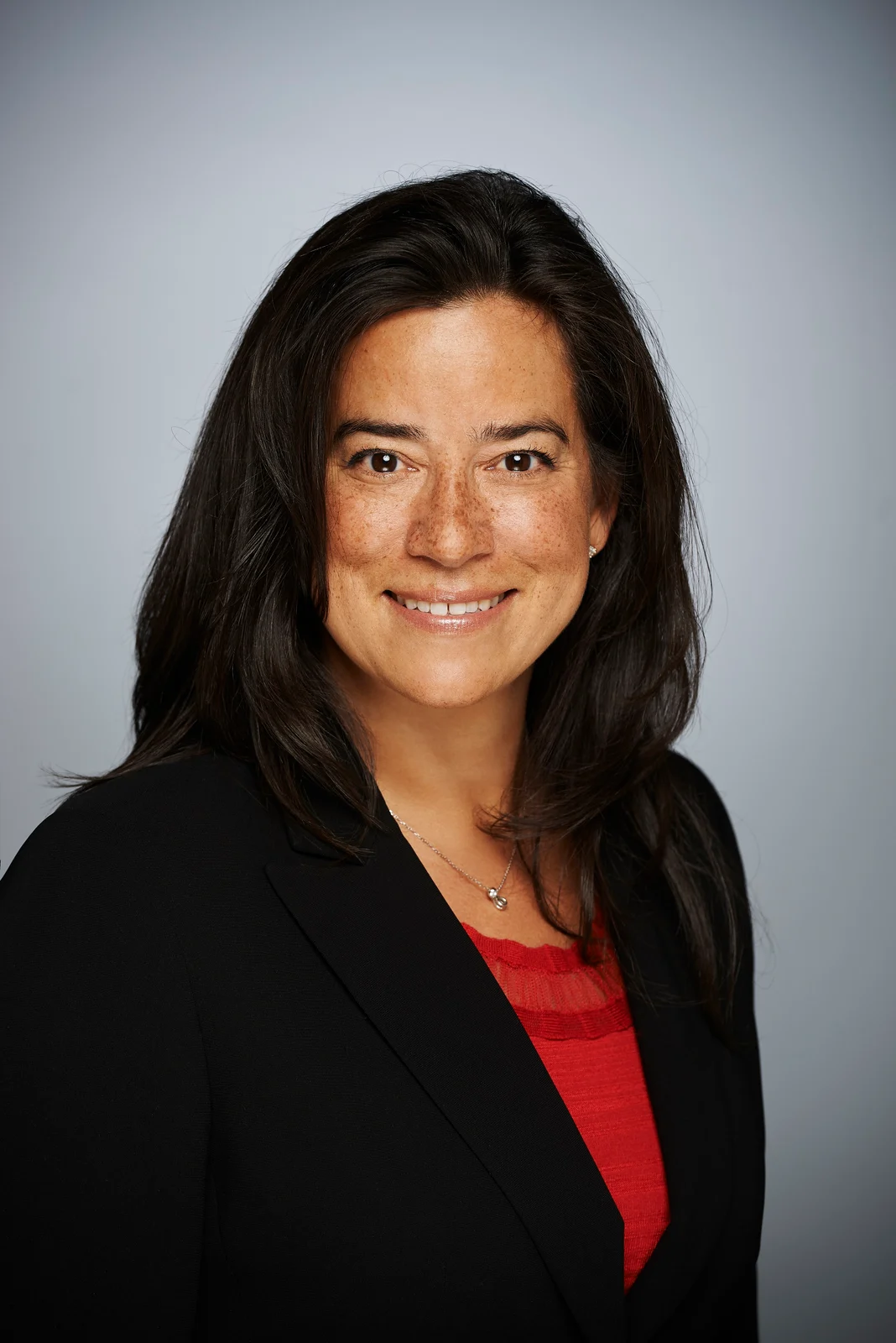
Erich Saide’s CC BY-SA 3.0 grant is supported by VRT-confirmed copyright-holder permission, ticket 2015091110018881. The current complete 2385 by 3573 supplied frame is used rather than either square or separately extracted portrait versions. The 2014 image predates federal office.