In this biography
Quick facts
- Born
- 1 October 1924
- Died
- 29 December 2024
- Birthplace
- Plains, Georgia, United States
- Country
- United States
- Nationality
- American
- Known for
- The Camp David negotiations, an energy and conservation agenda, and decades of humanitarian work after the presidency
- Birth
- 1 October 1924, Plains, Georgia
- Naval career
- Naval Academy graduate, 1946; left active service in 1953
- Georgia leadership
- State senator, 1963–1967; governor, 1971–1975
- Presidency
- 20 January 1977–20 January 1981
- Later institution
- Founded the Carter Center with Rosalynn Carter in 1982
- Death
- 29 December 2024, Plains, Georgia, aged 100
Why this life matters
Carter’s career connects the possibilities and limits of presidential leadership with sustained work outside office, including diplomacy, conservation and practical humanitarian partnerships.
Timeline
Key moments
Georgia upbringing and naval service
Born in Plains, graduated from the Naval Academy in 1946, married Rosalynn Smith and served as a submarine officer before returning to Georgia.
Entered state government
Served two terms in the Georgia Senate, lost a 1966 gubernatorial bid and became governor in 1971.
Won the presidency
Defeated Gerald Ford in November 1976 and took office as the 39th president on 20 January 1977.
Mediated an Egyptian–Israeli agreement
Hosted the Camp David summit that produced two frameworks in September 1978; further negotiations led to the March 1979 treaty.
Faced crisis and electoral defeat
Inflation and the Iran hostage crisis damaged his presidency; he lost to Ronald Reagan and left office on 20 January 1981.
Built a long humanitarian career
Co-founded the Carter Center, volunteered with Habitat, received the 2002 Nobel Peace Prize and died in Plains on 29 December 2024.
Georgia politics provided a route to national office
Carter won election to the Georgia Senate in 1962 and served two terms, taking particular interest in education and election reform. He failed in his first attempt to become governor in 1966 but won four years later. As governor from 1971 to 1975, he reorganized state administration and promoted conservation. His public identity combined business experience, religious conviction and an argument for more responsive government.
He announced his presidential campaign in December 1974, when he was little known nationally. Extensive campaigning and success in Iowa helped him win the Democratic nomination. After Watergate, his position outside Washington’s leadership was an advantage. He defeated President Gerald Ford in November 1976 and entered office on 20 January 1977, with Walter Mondale as vice president.
Domestic reforms confronted inflation and energy insecurity
Carter sought to reorganize federal energy policy amid shortages and dependence on imported oil. He signed legislation establishing the Department of Energy in August 1977; the department began operating that October. Conservation, energy research and coordination of previously divided functions were central concerns. His administration also supported regulatory changes and created a separate Department of Education, reflecting an ambitious agenda beyond foreign affairs.
Conservation produced a particularly durable result. In December 1980 he signed the Alaska National Interest Lands Conservation Act, protecting extensive lands through parks, preserves, refuges and other designations. Yet administrative reforms and legislation did not overcome the public’s immediate economic anxieties. High inflation and renewed energy disruption weakened confidence in his leadership and constrained the political support needed to pursue his program.
Diplomatic achievement coexisted with a damaging hostage crisis
Carter made personal mediation a major instrument of diplomacy. At Camp David in September 1978, he worked with Egyptian president Anwar Sadat, Israeli prime minister Menachem Begin and their delegations to develop two frameworks. These were not a final peace treaty. Further difficult negotiations produced the Egyptian–Israeli treaty signed in March 1979, while the proposed Palestinian autonomy process remained unresolved.
In November 1979, Iranian militants seized the American embassy in Tehran. Prolonged captivity and a failed rescue mission in 1980 became defining blows to his presidency. Carter lost the election to Ronald Reagan but continued negotiations through his final days. The remaining hostages were released on 20 January 1981 after Reagan took office, distinguishing the negotiated agreement from the actual departure of the captives.
The post-presidency became a second public career
In 1982 Jimmy and Rosalynn Carter founded the Carter Center. Its work joined conflict mediation, human rights, election observation and public health. Programs relied on staff, local communities, governments and international partners rather than the authority of a presidential office. Carter’s involvement in the campaign against Guinea worm disease became especially visible, but the disease was not eradicated during his lifetime.
The Carters also began volunteering with Habitat for Humanity in 1984, helping build and repair housing and drawing attention to affordable homes. They were prominent volunteers, not Habitat’s founders. Carter received the Nobel Peace Prize in 2002. He died at home in Plains on 29 December 2024, aged 100, leaving a record that includes both a troubled presidency and sustained humanitarian commitments.
Quick answers
Frequently asked questions about Jimmy Carter
- When was Jimmy Carter president?
- He served from 20 January 1977 to 20 January 1981, after defeating Gerald Ford in the 1976 election. He lost his reelection campaign to Ronald Reagan in 1980.
- Were the Camp David Accords the peace treaty?
- No. The September 1978 summit produced two frameworks. A separate treaty between Egypt and Israel followed in March 1979, after further negotiations. The wider Palestinian autonomy proposal did not become a comprehensive settlement.
- Did Carter found Habitat for Humanity?
- No. Jimmy and Rosalynn Carter became volunteers in 1984 and prominent advocates for its housing work. They co-founded the separate Carter Center in 1982.
- When did Carter receive the Nobel Peace Prize?
- He received it in 2002 for decades of work on peace, democracy, human rights and development, not as an award made during the 1978 summit.
Keep exploring
Lives connected to this story
- John F. Kennedy
Compare an earlier presidency’s combination of international ambition, domestic reform and Cold War pressures.
- Lyndon B. Johnson
Explore another president’s efforts to connect federal legislation with social opportunity, alongside the limits imposed by foreign-policy crises.
Sources and further reading
Explore the evidence
These references support the biography and offer further reading. Official records, first-person accounts and independent reporting provide different perspectives; image records document attribution and licensing.
- 1. The Carter CenterJimmy Carter: biography, revised January 2025
- 2. National Park ServiceJames Earl Jimmy Carter, Jr.
Used selectively for early life, state politics and conservation. Stale living-person wording and a claim that hostages were released before his term ended are not repeated.
- 3. Naval History and Heritage CommandLieutenant James Earl Carter Jr., USN
Direct access timed out; indexed institutional text corroborates naval service. The narrative does not call him a commissioned nuclear-submarine commander or use an unsupported rank.
- 4. Department of EnergyOur History: creation of the Department of Energy
- 5. U.S. Department of State, Office of the HistorianCamp David Accords and the Arab-Israeli Peace Process
Read the substantive cached/indexed historical body returned by the web reader; the retired live page may expose only a notice. Original 1978 frameworks and 1979 treaty independently support the key distinction.
- 6. U.S. Department of State, Office of the HistorianThe Iranian Hostage Crisis
- 7. Public Papers of Ronald Reagan, via American Presidency ProjectExchange with reporters on the release of the American hostages, 20 January 1981
- 8. Habitat for HumanityHabitat Humanitarians: The Carters
- 9. Habitat for HumanityHabitat’s history
- 10. National ArchivesJames Earl Jimmy Carter; 558522
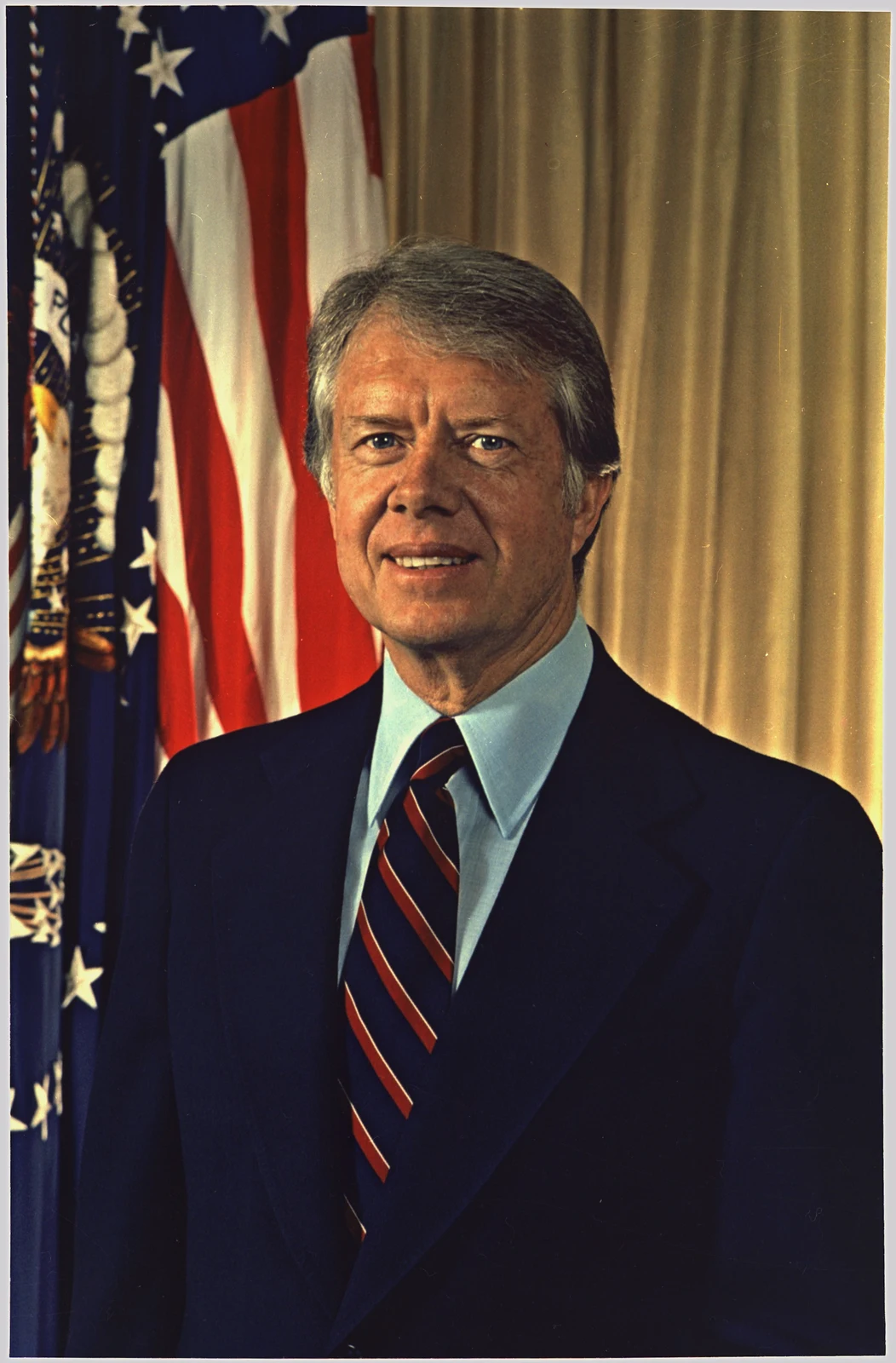
Catalog access was unavailable. Exact NARA-bot mirror metadata and version history establish the selected 1978 scan and federal-duty public-domain classification. Individual photographer and exact day are not supplied.
- 11. National Archives cooperation mirror, Wikimedia CommonsOriginal NARA portrait, metadata, version history and rights